
12 Common Joint Rolling Mistakes and How to Avoid Them
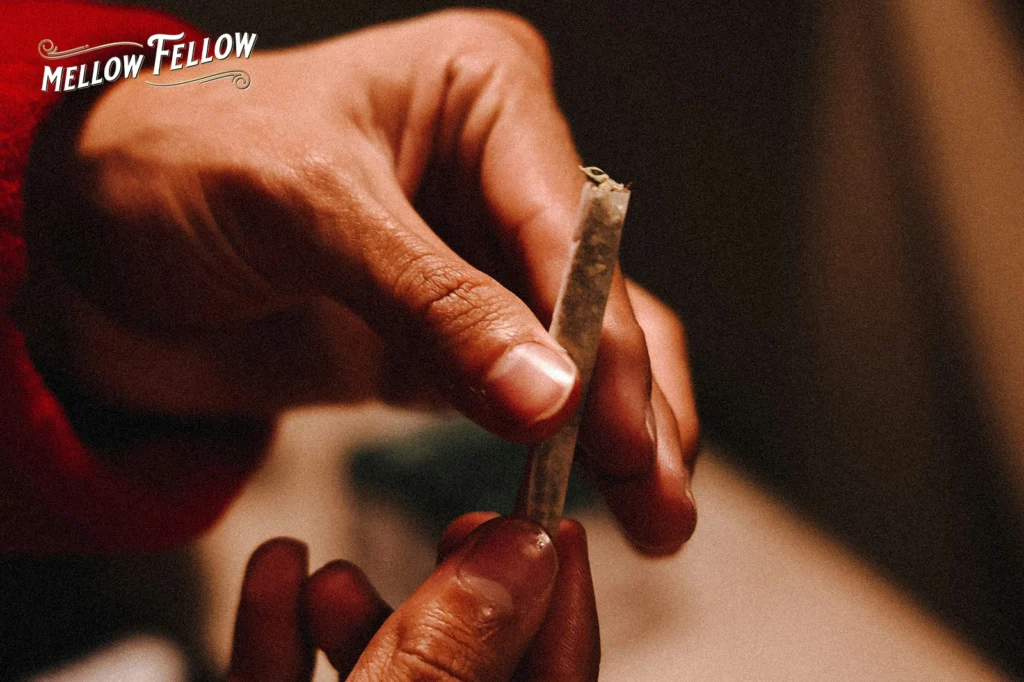
Quick Answer: Most common joint rolling mistakes come down to four things: inconsistent flower, uneven density, restricted airflow, or an uneven first light. Grind the flower consistently, remove hard stems, distribute it evenly, keep the roll firm but slightly springy, fit the filter snugly without choking it, and establish an even cherry before taking a strong draw.
Knowing the steps for rolling a joint and consistently rolling a good joint are two different skills.
You can place the filter correctly, tuck the paper, seal it, twist the end, and still end up fighting a side burn five minutes later. That is because a good roll depends on more than whether the paper looks neat. Grind size, moisture, internal density, filter resistance, paper tension, and the way the joint is first lit all affect how air and heat move through it.
If you still need the basic sequence, start with Mellow Fellow’s guide to rolling the perfect joint. This guide tackles the next problem: figuring out what went wrong when a joint looks finished but does not smoke the way you expected.
We will break down 12 common joint rolling mistakes, the symptoms each one creates, and what to change on your next roll. We will also cover when the problem is not your rolling at all, plus the Mellow Fellow pre-roll options that remove the hand-rolling step completely.
Key Takeaways
- An uneven grind or uneven flower distribution is one of the fastest ways to create a joint that burns down one side.
- A joint should be firm enough to hold its shape but not so compressed that airflow disappears.
- Rolling too loose can be just as problematic as rolling too tight because large air pockets produce inconsistent combustion.
- Filters or crutches help stabilize the roll and maintain an open mouthpiece, but a badly fitted filter can create its own airflow problems.
- Damp flower may struggle to stay lit, while very dry flower can burn rapidly and harshly.
- Over-wetting the gum strip can weaken the paper and create a damp section that burns differently from the rest.
- Lighting matters. An otherwise decent joint can start canoeing if only one side of the tip develops a cherry.
- Pre-rolls eliminate hand-rolling mistakes, but lighting, storage, airflow, and draw technique can still affect how they burn.
- Infused THCp hash holes require more caution than an ordinary hand-rolled joint because Mellow Fellow’s current 2g versions are explicitly labeled for experienced consumers.
Joint Rolling Problems: Symptoms, Causes, and Quick Fixes
Before rebuilding your rolling technique from scratch, identify the actual problem.
| Joint Problem | Most Likely Rolling Mistake | What to Change |
| Joint canoes or burns down one side | Uneven grind, uneven distribution, air pockets, or uneven lighting | Make grind and density more consistent, then toast the entire tip before drawing |
| Joint is very hard to pull | Roll is too tight, flower is too finely ground, or filter is restricted | Use less pressure and check airflow before lighting |
| Joint burns extremely fast | Roll is too loose or flower is very dry | Increase density slightly and avoid large internal gaps |
| Joint keeps going out | Flower may be damp, packed too tightly, or ground too coarsely | Check moisture, grind more evenly, and reduce compression |
| Filter falls out | Filter is undersized or paper is not tucked firmly around it | Size the filter to the finished diameter and begin the tuck at that end |
| Flower falls into your mouth | Filter is absent, loose, or poorly shaped | Add a properly fitted crutch with an internal fold |
| Paper tears while rolling | Stem puncture, excessive pressure, or too much moisture | Remove stems, handle gently, and use less moisture on the gum strip |
| Joint bends near the filter | Too little flower or weak packing immediately above the filter | Redistribute flower and reinforce the first section of the roll |
| Joint feels lumpy | Flower was not shaped evenly before the tuck | Spend more time forming a uniform cylinder before sealing |
| Tip lights unevenly | Tip is twisted too tightly or flame hits only one side | Keep the closure light and rotate while toasting |
That diagnosis-first approach matters because contradictory advice is everywhere. If one person tells you to “roll tighter” while another says to “loosen it up,” either could be right depending on the actual failure.
Airflow is the deciding factor.
Why Common Joint Rolling Mistakes Affect Airflow and Burn
A joint is basically a narrow column of combustible plant material surrounded by paper. Air has to travel through that column every time you draw.
If one area is much denser than another, air does not move through both areas equally. If a section contains a large pocket of empty space, airflow can become concentrated there instead. Once one portion of the burning edge gets more oxygen or heat than the rest, a small imbalance can turn into the familiar one-sided burn known as canoeing.
Controlled cannabis research confirms that smoking behavior itself varies considerably. A Johns Hopkins-led study measuring cannabis smoking topography recorded measurable differences in puff volume, duration, and airflow velocity throughout a joint. That does not prove that a hard pull automatically causes canoeing, but it does reinforce an important point: the way air is drawn through a joint is part of the smoking system.
Mellow Fellow’s dedicated guide to why pre-rolls canoe digs deeper into uneven combustion. Here, we will concentrate on the mistakes you can prevent while rolling.
12 Common Joint Rolling Mistakes and How to Avoid Them
Most joint rolling problems come down to a few small mistakes with grind, moisture, packing, or technique. Fixing those details can make joints easier to roll, improve airflow, and help them burn more evenly. Here are 12 common joint rolling mistakes and how to avoid them.
1. Grinding Cannabis Too Fine or Too Coarse
A consistent grind is the foundation of a consistent roll.
Large chunks leave irregular gaps between pieces of flower. Tiny powdered particles can settle together densely enough to resist airflow. Mixing both in the same joint gives you different burn conditions from one centimeter to the next.
You are looking for relatively uniform pieces rather than dust.
Grinding flower into powder is especially tempting when the material is dry, since it breaks apart quickly. Resist the urge to keep grinding once the consistency is usable. Likewise, do not drop half-broken buds into the paper and expect the rolling pressure to solve the problem.
A proper grinder makes this much easier because it creates a more predictable particle size than hurriedly tearing flower apart by hand.
If you are preparing several joints, a stable workspace helps keep the process organized. Mellow Fellow’s guide on how to use a rolling tray covers grinder placement, filters, packing tools, and the other small pieces that tend to disappear halfway through a roll.
2. Leaving Stems or Hard Pieces in the Flower
That tiny stem you decide is “probably fine” can become the exact point where the paper tears.
Stems also interfere with density. A hard piece creates a rigid obstruction inside material that otherwise compresses. Flower can settle around it unevenly, and a sharp end may eventually push through the paper while you shape or tuck the joint.
Before filling the paper, do a quick visual check.
Remove:
- Obvious stem sections
- Seeds, if present
- Large hard pieces that did not break down with the rest of the flower
- Extremely powdery material that has collected separately from the main grind
This is a small step, but it prevents several different joint rolling problems at once.
3. Rolling Flower That Is Too Damp or Too Dry
Sometimes your technique is fine and the flower is the problem.
Flower that retains excessive moisture can be difficult to keep burning. The paper may advance while the plant material struggles to maintain combustion. Very dry flower creates the opposite problem: it can crumble during grinding and burn rapidly once lit.
Do not try to fix obviously damp flower by simply rolling it tighter. That can compound the problem by reducing airflow at the same time.
Storage matters here. Keep flower protected from excessive heat, direct light, and uncontrolled humidity rather than leaving it open on a tray for days.
The practical test is texture. Flower should not feel wet, and it should not turn instantly into powder with minimal pressure.
4. Putting Too Much or Too Little Flower in the Rolling Paper
Overstuffing feels like it should create a better joint. Usually it just makes the tuck harder.
When the paper is overloaded, beginners compensate by squeezing the flower more aggressively. The result can be a dense, restricted roll with a gum strip that barely reaches the opposite edge.
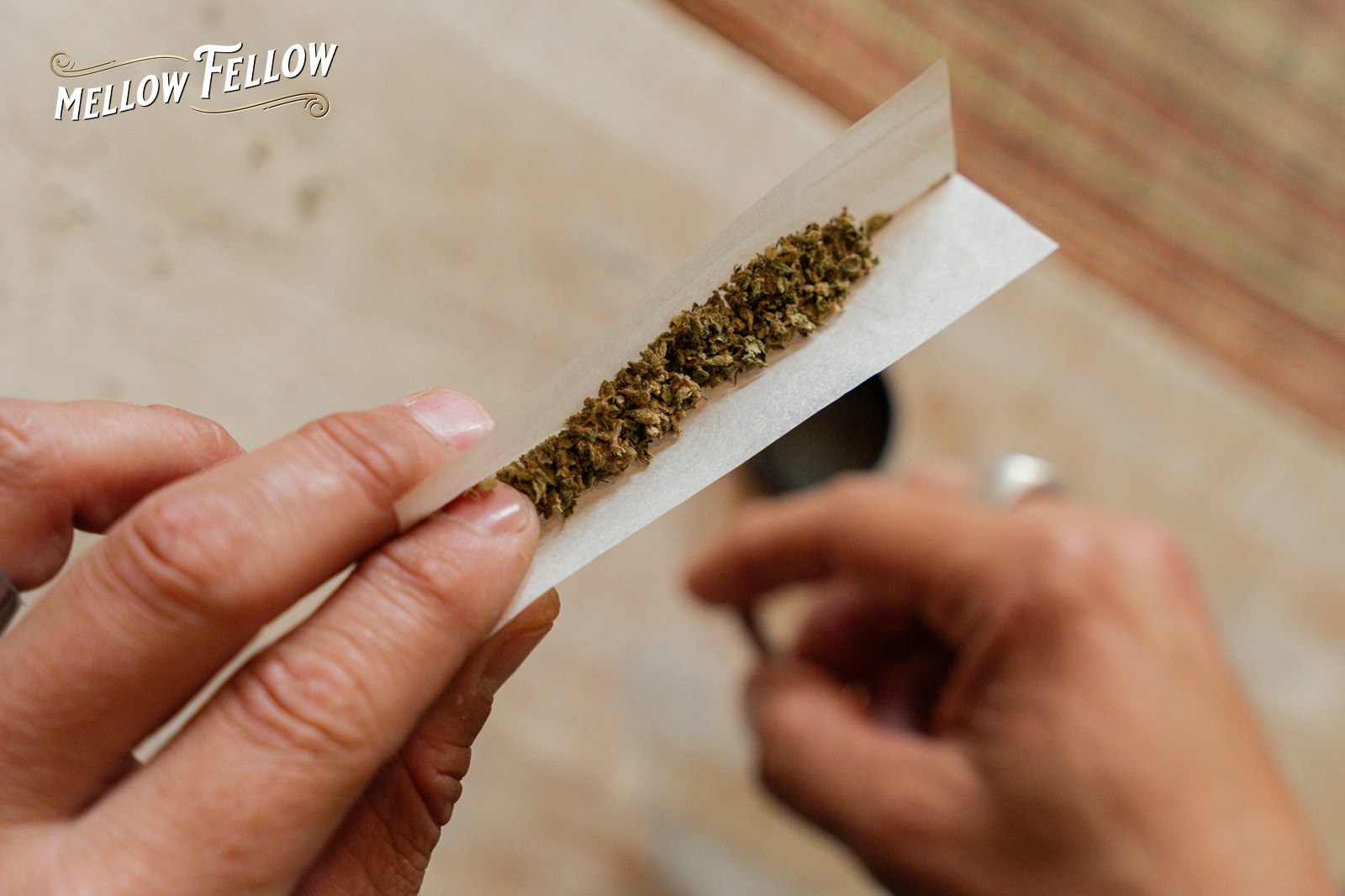
Using too little flower creates different problems. The paper can collapse inward, the joint may feel flat or floppy, and large air gaps can form when you try to shape it.
Match the amount of flower to the paper you are using instead of trying to fit the maximum possible amount into every roll.
This is also why a standard joint and a hash hole should not be approached the same way. A hash hole has to accommodate both flower and a concentrate core. If you want to understand that more advanced construction, Mellow Fellow has a separate step-by-step guide to rolling a hash hole.
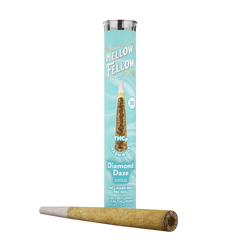
If that sounds like considerably more work than you wanted, it is. Mellow Fellow’s THCp 2g Hash Hole Prerolls – Golden Fellow (Hybrid), Eclipse Kush (Indica), and Diamond Daze (Sativa) come pre-constructed instead.
5. Distributing the Flower Unevenly Before Rolling
A joint can look perfectly straight on the outside while hiding a dense lump on one side and an empty pocket on the other.
That is why distribution happens before the final tuck.
After loading the paper, look across the entire line of flower. Then gently roll the paper back and forth between your fingers to begin shaping the material. You should be able to feel obvious hard spots, hollows, or areas where one side contains much more material.
Correct those before sealing.
Do not assume you can fix every inconsistency by pushing a packing tool through the open end afterward. Once the paper is closed, you have much less control over where the flower moves.
Even distribution is one of the most important ways to reduce joint canoeing before it starts.
6. Rolling the Joint Too Tight
A very firm joint can look impressive and still smoke terribly.
The problem is airflow. If the flower is compressed into a nearly solid plug, you have to draw much harder to move air through it. That makes the session frustrating before you even get to burn consistency.
A finished joint should hold its shape, but it should not feel like a wooden dowel. A small amount of springiness is useful.
One easy check is to test the unlit draw. Before you light the tip, pull gently through the filter. You should feel resistance, but air should move without requiring a hard inhale.
If the joint feels completely blocked, fixing it before lighting is easier than fighting it for the rest of the session.
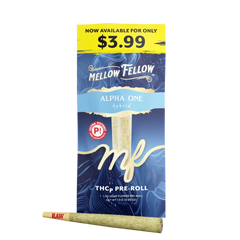
If you consistently roll too tightly, a ready-made 1g option such as THCp 1g Preroll – Alpha One (Hybrid) gives you a no-roll alternative when you would rather skip the trial and error.
7. Rolling the Joint Too Loose
“Tighter” is not always the answer, but neither is “looser.”
A loosely rolled joint contains oversized air pockets. The paper may sag, the flower can shift during handling, and combustion can move unpredictably through the path offering the least resistance.
Loose joints also tend to feel structurally weak near the filter.
Aim for consistent contact between the paper and the shaped flower without crushing the material. The cylinder should feel uniform from end to end.
A gentle tap of the filter end against a flat surface can help the flower settle after rolling, but do not turn the tapping step into aggressive compaction. You are trying to remove random gaps, not build a brick.
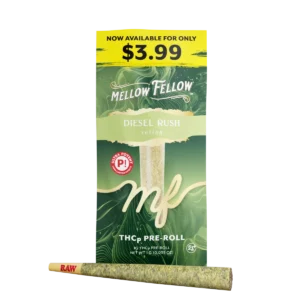
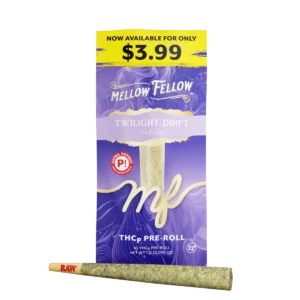
For people who simply do not enjoy this balancing act, the current THCp 1g lineup also includes Diesel Rush (Sativa) and Twilight Drift (Indica).
8. Making the Joint Filter Too Tight, Too Loose, or Misaligned
A filter, tip, or crutch is primarily structural. It gives the mouth end shape, keeps loose flower out of your mouth, and helps maintain an opening for airflow.
It still has to fit correctly.
If you roll the filter into an extremely tight spiral, the internal opening can become unnecessarily restricted. If the filter is too small for the joint, it may slide out or leave a gap between the filter and paper.
A common solution is to make a small W- or M-style accordion fold at one end, then roll the remaining filter material around it. The folds help keep the center from collapsing completely.
The filter should fit snugly inside the finished paper without forcing the mouth end wider than the rest of the joint.
Start the tuck near the filter. Its rigid edge gives you a stable anchor for catching the paper before working toward the open end.
One important distinction: a paper crutch is not a respiratory filter in the cigarette sense. It should not be described as removing the hazards created by cannabis combustion.
9. Rushing the Tuck and Wrinkling the Rolling Paper
For many beginners, the tuck is the part where an otherwise promising joint falls apart.
The usual mistake is trying to seal the paper before the flower has been shaped into a stable cylinder. That leaves you fighting loose material and wrinkled paper at the same time.
Shape first. Tuck second.
Use the filter end as your starting point and get the non-adhesive edge underneath the shaped flower. Once that first section catches, guide the tuck progressively along the joint.
Avoid repeatedly rolling and unrolling the paper while applying more pressure each time. The more you manipulate a thin paper, the easier it becomes to crease, weaken, or tear it.
If you are trying to improve technique rather than simply finish the joint as fast as possible, a clean tuck is one of the highest-value skills to practice.
10. Over-Wetting the Gum Strip or Tearing the Rolling Paper
The gum strip only needs enough moisture to activate the adhesive.
Soaking it creates two problems. First, wet paper is structurally weaker and easier to tear. Second, a saturated seam can remain noticeably damper than the surrounding paper when you light the joint.
Use a light, even pass instead of drenching the entire edge.
Rolling-paper choice deserves some attention too. A 2024 peer-reviewed analysis of the elemental composition of commercially available cannabis rolling papers found substantial variation between products and elevated concentrations of certain elements in some papers. The study did not establish that one current brand or paper material is universally “safe,” and the researchers called for more work under realistic smoking conditions.
The useful takeaway is modest: buy papers from reputable sources and do not assume color, decorative pigments, or unusual paper materials are purely aesthetic.
For a cleaner finish at the open end, you can also learn the Dutch crown technique, which folds the excess paper inward instead of creating a large twisted tail.
11. Packing the Joint Unevenly After Rolling
The packing tool is for small adjustments, not major reconstruction.
A common mistake is pressing down hard from the open end until the top third becomes significantly denser than the middle. Another is repeatedly tamping only one side of a cone.
Use light pressure and check the joint as you go.
The goal is consistent density. If the top is obviously soft, settle it slightly and add a small amount of flower if necessary. If the whole roll already feels firm, more packing is not automatically better.
After packing, give the sides a gentle feel. You should not find one section that is hard while another collapses under minimal pressure.
12. Lighting the Joint Unevenly and Pulling Too Hard
Not every bad burn is caused during rolling.
You can build a good joint and ruin the start by blasting one side with a lighter while inhaling hard.
Instead, establish the burn before demanding much airflow from it. Hold the flame near the tip and rotate the joint so the circumference toasts evenly. Once you see an even cherry forming, take a controlled initial draw.
That matters even more with an infused pre-roll. Mellow Fellow’s guide on how to smoke an infused pre-roll recommends paying close attention to the initial toast and using a slower approach with concentrated products.
Research on cannabis smoking also shows that puff volume and velocity are measurable variables rather than fixed behaviors. Again, that does not mean every forceful puff automatically causes a run, but it is another reason not to treat draw technique as irrelevant.
How to Check a Joint Before You Light It
A 20-second inspection can catch several common joint rolling mistakes while they are still fixable.
- Check The Shape: Look for obvious bulges, flat spots, or a sharp bend near the filter.
- Feel The Density: Run your fingers lightly along the joint and look for sections that feel dramatically harder or softer than the rest.
- Test The Filter: Make sure the crutch does not slide easily and has not collapsed inward.
- Check The Seam: Confirm that the gum strip is attached along its full length and give an overly damp seam time to dry.
- Test The Airflow: Take one gentle unlit draw. Moderate resistance is normal. A nearly blocked draw signals over-compression.
- Inspect The Tip: Avoid an extremely tight knot that exposes only one small section to the flame.
- Settle The Fill: If needed, tap the filter end lightly against the tray and make a small adjustment at the open end.
Do this before reaching for the lighter. Most structural problems become harder to correct after the paper and flower are already burning.
Hand-Rolled Joints vs. Mellow Fellow THCp Pre-Rolls
Sometimes the easiest way to avoid joint rolling mistakes is not to roll one.
Pre-rolls remove the grinder, distribution, tuck, sealing, filter placement, and final packing from your side of the process. You can still create problems by crushing the tube, storing it badly, lighting only one edge, or pulling too aggressively, but the manual construction has already been done.
Mellow Fellow’s current pre-roll lineup gives you two different formats.
| Product | Format | What the Current Product Page Confirms | Best Context |
| THCp 1g Preroll – Alpha One (Hybrid) | 1g THCp pre-roll | 1g pre-roll, hybrid | Straightforward ready-rolled format |
| THCp 1g Preroll – Diesel Rush (Sativa) | 1g THCp pre-roll | 1g pre-roll, sativa | Ready-rolled sativa option |
| THCp 1g Preroll – Twilight Drift (Indica) | 1g THCp pre-roll | 1g pre-roll, indica | Ready-rolled indica option |
| THCp 2g Hash Hole Prerolls – Golden Fellow (Hybrid) | 2g THCp hash hole | 1.5g CBD flower + 0.5g THCp rosin; 790mg total cannabinoids listed per tube | Experienced consumers looking for an infused hash-hole format |
| THCp 2g Hash Hole Prerolls – Eclipse Kush (Indica) | 2g THCp hash hole | 1.5g CBD flower + 0.5g THCp rosin; 790mg total cannabinoids listed per tube | Experienced consumers looking for an indica hash hole |
| THCp 2g Hash Hole Prerolls – Diamond Daze (Sativa) | 2g THCp hash hole | 1.5g CBD flower + 0.5g THCp rosin; 790mg total cannabinoids listed per tube | Experienced consumers looking for a sativa hash hole |
The difference between the two categories matters.
The 1g THCp products are standard pre-roll formats. The 2g hash holes include a rosin core and are explicitly labeled by Mellow Fellow as extremely potent and not recommended for beginners. The current hash-hole product pages advise taking only one or two hits initially to gauge tolerance.
If you have never used an infused joint before, read what infused pre-rolls are before treating one like ordinary flower. Mellow Fellow also has a dedicated comparison explaining how infused and regular pre-rolls differ.
Current Mellow Fellow certificates of analysis can be checked through the Lab Results page. Always match the product and lot you actually have to the corresponding certificate.
When a Pre-Roll Burns Badly, Is It Still a Joint Rolling Mistake?
Not necessarily.
Buying a pre-roll eliminates your own grind, fill, filter, tuck, and seal decisions. That means a canoeing pre-roll requires a slightly different diagnosis.
Start by looking at things you still control:
- Was the pre-roll crushed in a pocket or bag?
- Does one section feel dramatically harder or softer?
- Was it stored somewhere unusually hot or damp?
- Did you toast the entire circumference before drawing?
- Are you taking very hard, frequent pulls?
- Is wind hitting one side of the cherry?
If none of those explains the problem and the same pre-roll repeatedly develops severe airflow or combustion issues, stop assuming your smoking technique must be at fault.
Conclusion: Fix the Joint Rolling Mistake, Not Just the Symptom
A joint that burns badly is giving you information.
A blocked draw points toward excess density or restricted airflow. A fast, flimsy burn points toward a loose pack. Canoeing suggests that something is uneven, whether that is the grind, internal density, first light, airflow, or environment. A joint that repeatedly goes out may be too tight, too damp, or too inconsistently ground.
Once you stop treating every bad joint as the same problem, rolling gets much easier to improve.
Focus on a consistent grind, even distribution, moderate density, a stable filter, a clean tuck, minimal moisture on the seam, and an even first light. Change one variable at a time and you will learn far more than you will by simply squeezing the next joint tighter.
If you would rather skip the rolling stage altogether, Mellow Fellow currently offers Alpha One, Diesel Rush, and Twilight Drift in 1g THCp pre-roll formats, plus the more advanced Golden Fellow, Eclipse Kush, and Diamond Daze 2g THCp hash holes.
Frequently Asked Questions
Why Does My Joint Keep Canoeing?
A joint usually canoes when one side burns faster than the other. Common causes include uneven flower distribution, inconsistent grinding, large air pockets, different moisture levels within the roll, or lighting one side more heavily than the other.
Start with the structure. Make sure the grind and density are consistent. Then rotate the joint while toasting the entire tip before taking a strong draw.
Why Is My Joint So Hard to Pull?
The most common reason is restricted airflow.
You may have rolled the flower too tightly, ground it too finely, compressed the area immediately above the filter, or made the filter itself too restrictive.
Test airflow before lighting. If an unlit joint already requires a strong pull, combustion will not make that structural problem disappear.
Why Does My Joint Burn Too Fast?
A joint that burns unusually fast may be too loose, contain large air gaps, or be filled with very dry flower.
Try creating more consistent density rather than simply making the outside paper tighter. The flower inside should form a uniform column with no obvious hollow areas.
Why Won’t My Joint Stay Lit?
A joint may repeatedly extinguish because the flower is too damp, the pack is too dense, airflow is restricted, or large chunks of flower are preventing consistent combustion.
Check the unlit draw first. If airflow is acceptable but the material still struggles to burn, moisture or grind consistency may be the bigger issue.
How Fine Should I Grind Weed for a Joint?
Aim for a consistent medium grind rather than powder.
Very large pieces create irregular gaps and burn conditions. Extremely fine particles can compress together and restrict airflow. Uniformity matters more than trying to grind the flower as finely as possible.
Should a Joint Be Packed Tight or Loose?
Neither extreme.
A well-rolled joint should be firm enough to retain its shape but slightly springy when handled. Air should move through it with moderate resistance during an unlit test draw.
If you have to pull very hard, it is probably too tight. If the paper collapses, flower shifts around, or the joint feels hollow, it is probably too loose.
Do You Need a Filter to Roll a Joint?
No, but a filter or crutch can make rolling easier.
It adds structure to the mouthpiece, helps keep loose flower out of your mouth, gives you an anchor for the tuck, and helps prevent the end from collapsing.
A paper crutch should not be confused with a respiratory filter that removes combustion hazards.
How Do You Fix a Joint That Is Too Tight?
The best fix is prevention, since loosening a finished joint without damaging it can be difficult.
Before lighting, gently massage an overly dense section rather than crushing or bending it. A thin packing tool may help create a little space from the open end, but forcing a tool aggressively through the center can tear the paper or create a new uneven channel.
For the next roll, use slightly less compression during shaping and packing.
Can Rolling Papers Affect How a Joint Burns?
Yes. Paper thickness, moisture, construction, and the way the seam is sealed can affect burn behavior.
Paper composition also varies between commercial products. A 2024 ACS Omega study found substantial differences in elemental composition across rolling papers, although the researchers emphasized that additional work is needed to determine realistic exposure during smoking.
Choose reputable papers, keep them dry, and avoid assuming that unusual colors or decorative materials are automatically equivalent to plain papers.
Why Does My Joint Filter Keep Falling Out?
The filter is probably too small for the finished diameter or the paper was not tucked securely around it.
Make the crutch slightly larger, place it flush with the paper edge, and begin your tuck from the filter side so the paper wraps snugly around it.
Are Pre-Rolls Easier Than Rolling Your Own Joint?
Yes, in the sense that the construction is already done.
You do not have to grind, distribute, shape, tuck, seal, or pack the flower yourself. You still need to handle the pre-roll carefully, light it evenly, and avoid overly aggressive draws.
Pre-rolls are particularly useful for people who enjoy smoking flower but do not enjoy the manual rolling process.
Are THCp Hash Hole Pre-Rolls Good for Beginners?
Mellow Fellow’s current 2g THCp hash-hole product pages explicitly say no. They warn that the products are extremely potent, can produce intense and long-lasting effects, and are not recommended for beginners.
If you are unfamiliar with THCp or infused pre-rolls, do not use a high-potency hash hole as a way to learn basic joint smoking technique.
Sources
- Elemental Composition of Commercially Available Cannabis Rolling Papers
- Characterizing Smoking Topography of Cannabis in Heavy Users
- Cannabis and Lung Health
- Cannabis and Secondhand Smoke
- Pulmonary Effects of Inhaled Cannabis Smoke
- Characterization of Aerosols From Hemp-Derived Pre-Roll Joints
- Comprehensive Characterization of Mainstream Marijuana and Tobacco Smoke
- Polycyclic Aromatic Hydrocarbons and Cannabinoids in Secondhand Cannabis Smoke