
How to Dutch Crown Finish Your Pre-Rolled Joints
Quick Answer: A Dutch crown finish is a technique for sealing the tip of a pre-rolled joint or cone by folding the paper inward in a neat, overlapping pattern instead of twisting it shut. The result is a flat, flower-shaped closure that holds its shape, burns evenly, and looks noticeably cleaner than a standard twist.
The Dutch crown is one of those finishing moves that separates a well-made pre-roll from a rough one. If you’ve ever lit a cone only to watch the twisted tip burn down unevenly, shed embers, or unravel mid-session, the Dutch crown solves all of that. The fold creates a compact, symmetrical seal that keeps your fill packed and your burn line consistent from first hit to last.
This guide covers what the Dutch crown is, why it works, and exactly how to do it – whether you’re finishing a hand-rolled cone, a pre-roll you’ve filled yourself, or sizing up the craftsmanship on a premium pre-roll before you light it.
Key Takeaways
- A Dutch crown finish folds the paper inward in overlapping sections rather than twisting, producing a flat, petal-style seal.
- The technique reduces uneven burns and loose-tip fallout compared to a basic twist closure.
- It works on any cone paper – standard, king-size, or blunt wrap – and takes practice but can be learned in a single session.
- Proper fill density and even packing are essential before attempting the fold; a loose cone will not crown cleanly.
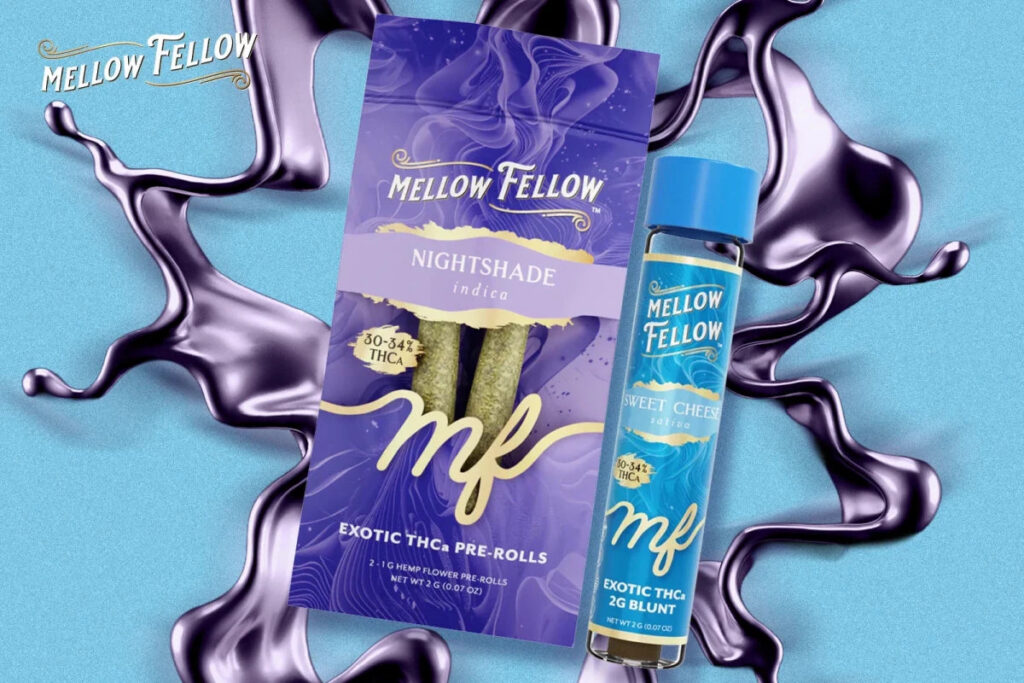
- Mellow Fellow’s THCa and THCp pre-rolls and infused blunts come machine-finished to consistent standards if you want a benchmark for what a clean close looks like.
What Is a Dutch Crown Joint Finish?
The Dutch crown is a paper-folding closure applied to the open tip of a cone-style joint or pre-roll. Where a twist pinches the excess paper into a single point, the Dutch crown works by pressing the paper inward in a series of overlapping folds – typically four to six – around the rim of the cone. Each fold tucks under the previous one, creating a flat, circular cap that resembles a stylized flower or crown when viewed straight on.
The name is widely used in rolling culture to describe this style, though regional names vary. Some call it a book-fold close, a rosette tip, or simply a Dutch. Regardless of the label, the mechanics are identical: controlled inward folds, no twist, no excess paper extending past the cone.
From a functional standpoint the Dutch crown does two things well. First, it concentrates the paper evenly around the circumference of the tip, which means heat distributes more uniformly as the joint burns down toward the closure. Second, the overlapping folds resist opening under light handling or pocket storage in a way that a loose twist cannot.
For a broader look at how joint construction affects burn and flavor, our guide on how to roll a perfect joint covers paper selection, fill ratios, and packing technique from the ground up.
Why Use a Dutch Crown Finish Instead of Twisting?
The standard twist close is fast and easy. It is also the reason a lot of joints canoe, run, or drop burning embers. Here is how the two closures compare across the factors that matter most:
|
Factor |
Dutch Crown Finish |
Standard Twist Close |
|
Burn evenness |
High – paper distributes symmetrically |
Variable – twist burns unevenly as it unravels |
|
Ember control |
Contained by the folded cap |
Loose twist can shed lit paper |
|
Appearance |
Flat, clean, professional |
Pointed tail, looks rough |
|
Storage durability |
Holds shape in a tube or case |
Twist can unfurl with handling |
|
Learning curve |
Moderate – requires practice |
Low – anyone can twist |
|
Best for |
Cones, king-size, infused pre-rolls |
Quick rolls, casual use |
The burn difference comes down to surface area. A twist creates a narrow column of layered paper that ignites from a point, often catching unevenly and pulling the cherry to one side. The Dutch crown creates a flat surface where each folded section ignites at roughly the same moment, giving the burn front a clean, circular start.
Research published in combustion science literature consistently shows that symmetrical ignition geometry reduces lateral temperature gradients in cylindrical combustibles – the same principle that makes the Dutch crown burn better applies beyond just rolling papers.
For context on how paper type interacts with burn quality, a 2021 study on cellulosic material combustion rates (National Center for Biotechnology Information) notes that surface density and fold thickness both influence heat propagation, which is precisely what the Dutch crown manipulates.
If you want to compare rolling styles and formats before committing to one technique, our breakdown of joint vs. blunt vs. spliff covers the format differences in detail.
What You Need Before You Start
No special tools are required, but a few things make the process significantly easier:
- Filled and Packed Cone: The cone should be filled and tamped to medium-firm density before you attempt the crown. A soft or loosely packed cone will collapse during folding.
- Clean Paper Rim: Leave at least 10–15 mm of unfilled paper at the tip. This is the section you will fold. Less than 8 mm makes the crown extremely difficult; more than 20 mm creates too much overlap and a bulky seal.
- Dry Hands: Moisture causes rolling paper to tear or stick prematurely. Dry your fingertips before folding.
- Flat Surface or Firm Support: Supporting the cone body against a flat surface while you fold the tip keeps the fill from shifting.
- Optional – Narrow Stylus or Pen Cap: Some rollers use a narrow cylindrical object to press the first fold down cleanly before working around the crown.
For those using a rolling machine to build the cone before finishing, our piece on whether a joint rolling machine is worth it walks through the tradeoffs between machine-rolled and hand-rolled construction.
How to Dutch Crown a Joint – Step-by-Step
This technique assumes you have a filled cone with 10–15 mm of paper remaining at the tip.
- Hold the cone vertically with the open tip facing up. Grip the body firmly but not so tightly that you compress the fill.
- Locate your first fold point. Identify a section of the paper rim roughly one-quarter of the circumference wide – for a standard king-size cone this is about 5–6 mm of the edge.
- Fold the first section inward. Use your thumb and index finger to press that section of paper flat toward the center of the opening. The fold should be crisp, not rounded. The paper should now cover roughly one-quarter of the opening.
- Rotate the cone slightly – about a quarter turn – and locate the next section adjacent to your first fold.
- Fold the second section inward, tucking its edge slightly under the first fold. This overlap is what locks the crown together. Do not press hard yet; keep the folds light until all sections are placed.
- Repeat for the third and fourth sections, each one tucking under the edge of the fold before it. By the fourth fold you should have a rosette pattern covering the full opening.
- Optional fifth or sixth fold for larger papers or wider cones: some rollers add one or two additional smaller folds to fill any remaining gap in the center.
- Press the center gently with a fingertip or pen cap to flatten the finished crown. The folds should hold without adhesive. If the paper springs back, slightly dampen the very edge of the last fold with your fingertip before pressing.
- Inspect the seal. Viewed from the tip, the crown should show a flat, symmetrical petal pattern with no visible opening at the center. Viewed from the side, the tip should be flat or very slightly concave, not pointed.
- Light from the center of the crown. When you’re ready to smoke, hold the flame directly over the center of the fold. The overlapping layers will catch together, starting an even burn front that works outward through the cone.
Common Mistakes and How to Fix Them
|
Mistake |
Why It Happens |
Fix |
|
Folds spring open after sealing |
Paper too dry, folds not overlapping enough |
Add minimal moisture to the last fold edge; increase overlap by 1–2 mm |
|
Crown tears during folding |
Paper rim too short or hands too damp |
Leave at least 12 mm of paper; dry hands before folding |
|
Center gap remains open |
Too few folds or folds not tucked deeply enough |
Add a fifth fold; press center more firmly |
|
Uneven petal sizes |
Eyeballing fold width inconsistently |
Mentally divide the rim into four equal sections before starting |
|
Fill shifts during folding |
Cone too loosely packed |
Re-tamp fill before attempting crown; medium-firm density is the target |
|
Burns unevenly despite crown |
Crown folds too thick on one side |
Ensure each fold overlaps equally; avoid doubling any single section |
The most common error is leaving too little paper at the rim. A lot of first-time rollers pack the cone right to the edge, which leaves nothing to fold. When filling a cone yourself, always pull back 12–15 mm from the tip before you begin packing, and use a poker or the back of a pen to settle the fill evenly before the final tamp.
If you run into chronic canoeing or uneven burn issues beyond just the tip, our guide on hash hole vs. regular joint construction discusses how fill type, density, and core construction all contribute to burn consistency.
Dutch Crown Technique for Different Pre-Roll Formats
The Dutch crown scales across formats, but each has slightly different requirements:
Standard Single Papers (70–79 mm): Less paper rim available. Keep folds narrow – three or four folds maximum – and overlap more aggressively. A three-fold crown works fine on shorter formats.
King-Size Cones (109 mm+): The most forgiving format for learning the crown. Extra paper at the tip means more room for five or six folds and a wider, more visually distinct rosette pattern.
Blunt Wraps: The thicker, less porous material of a tobacco or hemp blunt wrap behaves differently from thin rolling paper. The folds require more pressure to hold and benefit from a light touch of moisture on the final fold. For technique specifics on blunt construction, our guide on how to roll a blunt covers wrap behavior in detail.
Infused Pre-Rolls: Heavier fill material – concentrate coatings, kief dusting, or hash hole cores – creates more resistance when folding. Make sure the fill is fully tamped and the outer wrap is not compromised before attempting the crown. The Mellow Fellow THCp 2g Hash Hole Pre-Roll in Diamond Daze Sativa and the THCa 2g Hash Hole Pre-Roll in Grape Ape OG Indica both use a dense hash hole construction that illustrates how a clean, machine-applied close holds up under the extra weight of infused fill.
How Professional Pre-Rolls Use Dutch Crown and Fold Closures
High-quality pre-roll producers apply crown or fold closures as standard because it signals craftsmanship and protects product integrity during packaging and shipping. A twist tip on a premium infused pre-roll reads as inconsistent; a clean fold close signals attention to detail throughout the production process.
When evaluating a pre-roll before purchase, the tip closure is a useful quality indicator. A clean, flat crown or tight book fold suggests careful packing and consistent construction. A loose, uneven twist may indicate under-filling or rushed production.
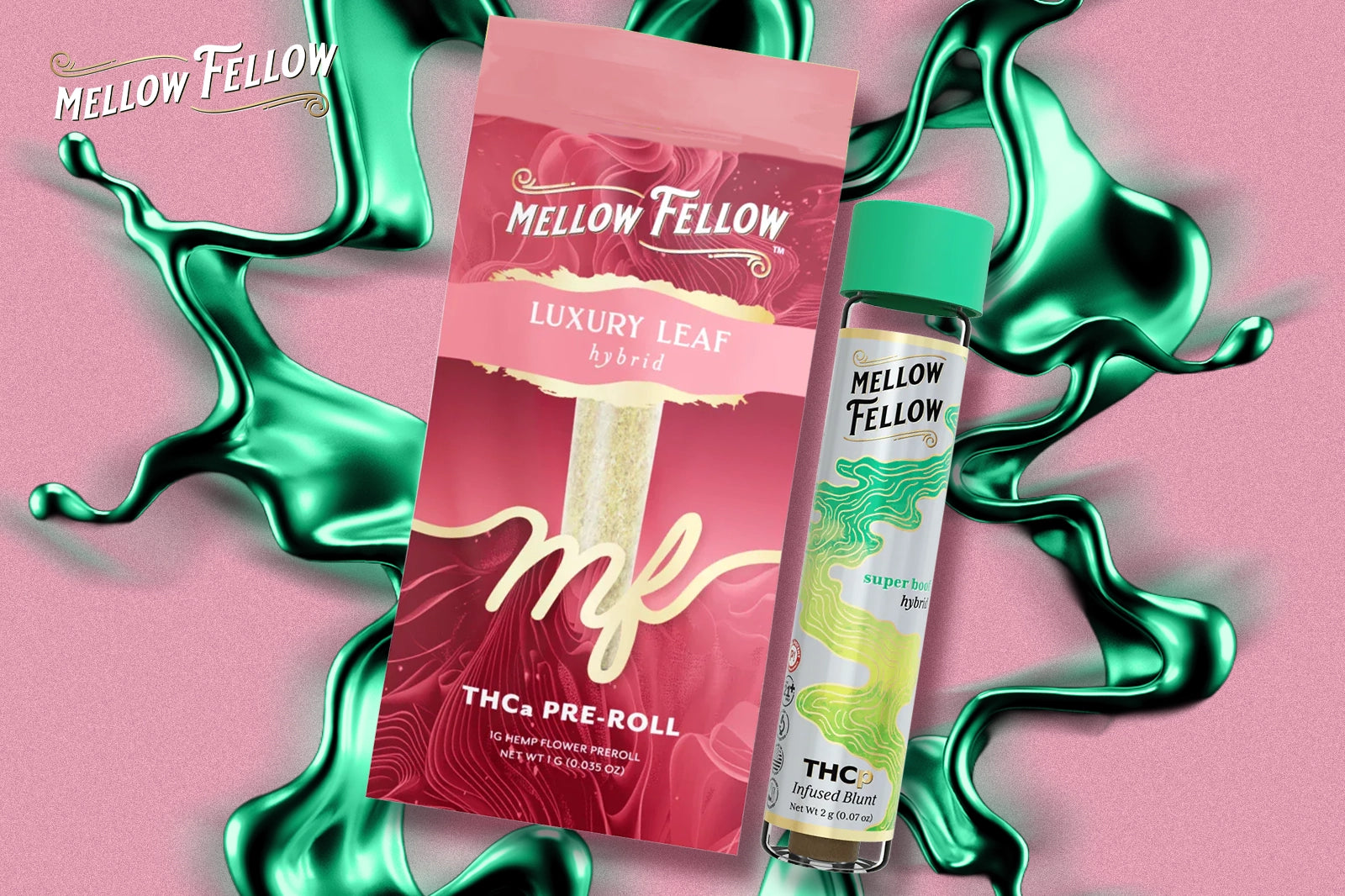
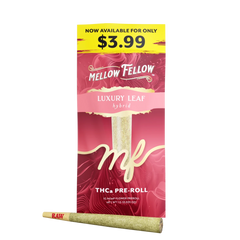
Mellow Fellow’s smokable lineup applies this standard across its pre-roll range. The THCp 2g Hash Hole Pre-Roll in Golden Fellow Hybrid and the THCa 1g Pre-Roll in Luxury Leaf Hybrid are good examples of finished construction done to a consistent standard – useful as a physical reference for what a well-closed tip should look and feel like before you light.
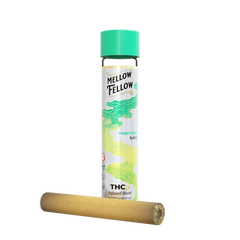
For those who prefer larger format smoking, the THCp 2g Infused Blunt in Super Boof Hybrid and the THCa 2g Prerolled Infused Exotic Blunt in Sweet Cheese Sativa demonstrate how the same closure logic applies to blunt-format pre-rolls – a clean tip seal on a heavier wrap holds better than a twist under the weight of an infused fill.
Academic work on paper folding geometry and structural stability, including research published through the American Mathematical Society on origami fold mechanics, provides mathematical backing for why overlapping radial folds create stronger structures than single-point closures – the Dutch crown is, functionally, an applied version of those principles at small scale.
Mellow Fellow Pre-Rolls Worth Finishing the Right Way
If you are building your rolling skills or simply want to see clean construction in action, these Mellow Fellow smokables are worth having on hand:
Pre-Rolls:
- THCp 2g Hash Hole Pre-Roll – Golden Fellow Hybrid – dense hash hole core, well-suited for studying how even fill affects burn
- THCp 2g Hash Hole Pre-Roll – Diamond Daze Sativa – bright, energetic sativa profile with consistent construction throughout
- THCa 2g Hash Hole Pre-Roll – Grape Ape OG Indica – indica-forward with a heavy, even-burning fill
- THCa 1g Pre-Roll – Luxury Leaf Hybrid – single-gram format, good for shorter sessions and tip-close study
- THCa Pre-Rolls 2pc 2g – Private Reserve Exotic Nightshade Indica – two-piece pack, consistent fill across both
Infused Blunts:
- THCp 2g Infused Blunt – Kali Mist Sativa – clean sativa profile, heavier wrap that shows how a fold close holds on thicker material
- THCa 2g Prerolled Infused Exotic Blunt – Sweet Cheese Sativa – exotic blend, well-constructed blunt format
- THCp 2g Infused Blunt – Super Boof Hybrid – balanced hybrid, THCp-infused with consistent wrap tension
Browse the full THCp pre-rolls collection, the THCa pre-rolls collection, and the 2g prerolled blunts to see what clean pre-roll construction looks like across formats. The full flower collection is also available for those who prefer to roll from scratch.
Dutch Crown vs. Other Joint Finishing Methods
The Dutch crown is not the only clean-close option. Here is how it compares to the main alternatives:
- Book Fold (Two-Section Fold): A simpler two-section inward fold used on cigarettes and machine pre-rolls. Faster than the crown but less decorative and slightly less secure on wider cone formats.
- Pinch and Tuck: A hybrid between a fold and a twist that pinches the paper to a point and tucks it inward. Faster than the crown but creates a slight point that can burn unevenly.
- Standard Twist: The easiest close. Adequate for casual use. Burns unevenly and sheds embers at higher frequency than fold-based methods.
- Rose/Spiral Fold: A more decorative version of the crown that spirals the folds rather than overlapping them radially. Visually striking but structurally weaker than the standard Dutch crown.
For most situations, the Dutch crown is the best balance of ease, durability, and burn quality. If you are using alternative papers or unconventional rolling materials, our piece on rolling paper alternatives covers how different materials affect fold behavior.
Research on curved fold origami structures published in a peer-reviewed EPL physics paper from the University of Massachusetts Amherst and Brown University provides mathematical backing for why overlapping radial folds create stronger structures than single-point closures.
The study shows that concentric and radial fold patterns produce geometries with negative Gaussian curvature that resist deformation under stress – which is the structural reason the Dutch crown holds better than a twist under everyday handling.
A separate study on rigid-foldable cylindrical origami structures published in Scientific Reports (Nature) further confirms that radially closable fold patterns deliver superior mechanical stability compared to simpler single-point closures.
Ready to Roll Right
The Dutch crown is a small technique with a meaningful payoff. A clean inward fold at the tip of a pre-roll improves burn consistency, reduces ember drop, and produces a finished product that holds up better in storage and looks noticeably more considered than a basic twist. The learning curve is moderate – most people get a workable crown by their third or fourth attempt – and the physical requirements are minimal: a properly filled cone, dry hands, and 12–15 mm of paper left at the rim.
If you want a baseline for clean pre-roll construction before you practice on your own rolls, Mellow Fellow’s THCa pre-rolls and THCp pre-rolls are finished to consistent standards and available in formats from single-gram to 2g hash hole. The 2g infused blunt lineup shows the same standard applied to heavier wrap material. Use them as a reference, then apply what you have learned here to your own builds.
Browse the full Mellow Fellow flower and smokables collection to find the right starting material for your next roll.
- Rigid-foldable cylindrical origami with tunable mechanical behaviors | Scientific Reports
-
1210.0778
National Center for Biotechnology Information - American Mathematical Society :: Homepage