
How to Roll the Perfect Joint
Quick Answer: Rolling a joint takes practice, proper material prep, and the right technique. Start with quality rolling papers, evenly ground flower, a filter tip, and use the tuck-and-roll method to create a tight, even cone that burns smoothly from start to finish.
Rolling a joint can look effortless in experienced hands but feel frustrating at first. Papers tear, flower spills, shapes turn uneven, or the joint burns down one side. These early mistakes are normal and improve quickly with better preparation and clear technique.
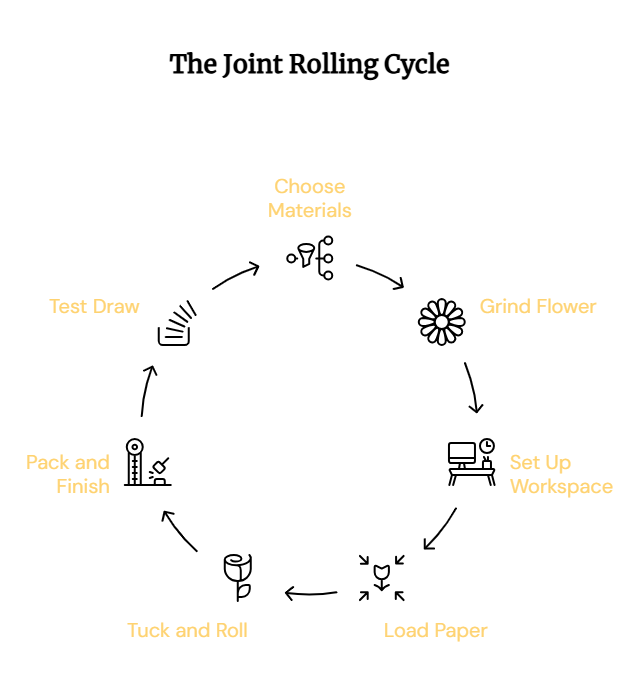
This guide covers the essentials: choosing papers and filters, preparing flower, mastering the tuck and roll, and fixing common beginner issues. You will also learn how packing density, cone shape, and airflow create an even, smooth burn so you can build consistent rolling skills.
Key Takeaways
- Grind consistency affects airflow – aim for breadcrumb texture, not powder.
- Filter tips prevent loose flower in your mouth and improve structural stability.
- The tuck-and-roll motion is where most beginners struggle but makes the difference.
- Pack lightly near the filter and slightly firmer at the tip for even burn.
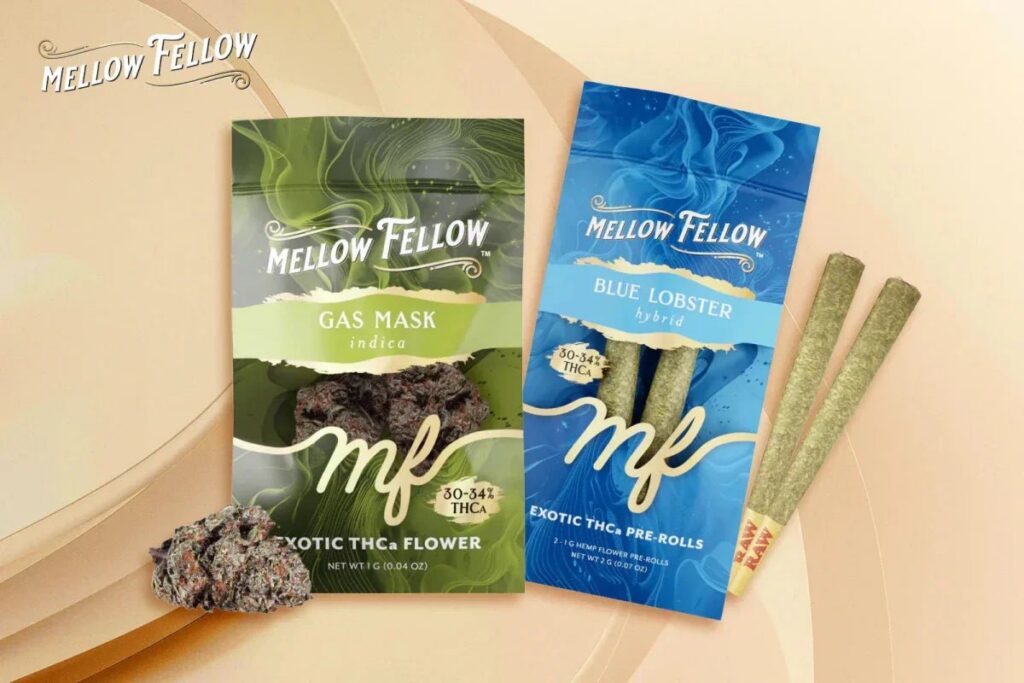
- Mellow Fellow’s THCa prerolls offer a ready-made reference for cone shape and packing density.
1. Choose Your Rolling Papers and Filter
Rolling papers vary in size, material, and thickness. Beginners usually do best with standard 1¼-inch hemp or rice papers because they burn slower and are easier to handle than ultra-thin options. Skip flavored papers at first since they can hide technique problems. The right choice ultimately depends on your skill level and personal preference.
Select the Right Filter Tip
Filter tips, or crutches, help create a cleaner smoking experience. You can use pre-made tips or roll your own from thin cardboard. A good filter keeps flower out of your mouth, supports the joint’s shape, and maintains steady airflow. Form it into a small cylinder with a slight W or M fold to prevent collapse – an essential joint-rolling basic.
Paper Weight and Material
Paper weight matters more than most beginners realize. Thicker papers are easier to handle but burn slightly faster and can add a papery taste. Thinner rice or hemp papers burn cleaner but tear more easily if your hands are damp or you tuck too aggressively. Start with medium-weight hemp papers and move to thinner options once your technique is solid.
|
Paper Type |
Thickness |
Burn Rate |
Best For |
|
Hemp |
Medium |
Moderate |
Beginners, consistent burn |
|
Rice |
Thin |
Slow |
Experienced rollers, clean taste |
|
Wood Pulp |
Thick |
Fast |
Practice rolls, less forgiving |
|
Organic/Unbleached |
Medium-Thin |
Moderate-Slow |
Health-conscious users |
2. Grind Your Flower to the Right Consistency
Grind consistency controls how a joint burns. Too fine restricts airflow and causes harsh relights, while too coarse creates gaps and uneven runs. Aim for a breadcrumb texture with small chunks and some finer material. If you do not have a grinder, carefully break the flower apart by hand and remove stems.
Use a Quality Grinder for Best Results
A good grinder creates consistent texture. Break larger buds by hand first, then grind in short bursts to avoid over-processing. Without a grinder, use clean scissors and a small glass or hand-break the flower for similar results.
Check Your Grind Before Loading
Pinch a small amount before loading. It should hold together lightly without clumping. If sticky, let it air out briefly. Slightly moist flower rolls easier and burns more evenly than overly dry material.
Mellow Fellow’s Premium Flower Options for Perfect Joints
When you’re practicing your rolling technique, starting with quality flower makes all the difference. Here’s what works best for different skill levels and preferences:
- Exotic THCa Flower – 1g Sachets – Banana Sundae (Sativa) – Pre-measured single gram portions perfect for practicing consistent joint sizes, bright sativa profile with uplifting effects.
- Exotic THCa Flower – 1g Sachets – Garlic Mintz (Indica) – Relaxing indica effects in convenient sachets, ideal moisture content for smooth rolling.
- THCp 3.5g Infused Flower + One Hitter – Fire Haze (Sativa) – Energizing sativa blend with included one-hitter for smaller sessions while you practice rolling.
- THCp 3.5g Infused Flower + One Hitter – Vanilla Kush (Indica) – Smooth indica with proper moisture and grind-friendly texture, comes with backup smoking method.

These sachets and infused flower options come with optimal moisture content and consistency, making them ideal for beginners learning proper grind texture. If you want to understand how different strains affect your experience, find out about strain-specific effects before choosing your rolling material.
3. Set Up Your Workspace and Materials
Clear a flat, well-lit surface before rolling. Uneven spots like couches or laps make control harder, while a rolling tray keeps loose flower contained and organized.
Prepare Your Hands and Environment
Place papers, ground flower, filter tip, and a packing tool within reach. Wash and dry your hands so oils or moisture do not tear or stick the paper.
Minimize Air Movement
Reduce fans, open windows, or vents that could blow flower away. Practice a few folds with an empty paper first to get comfortable with the motion before rolling.
4. Load the Paper with Flower and Filter
Hold the paper with the adhesive strip facing up and away. Place the filter at one end so it sits flush with the edge. Proper placement is the first step to rolling with a cardboard tip.
Distribute Flower Evenly Along the Crease
Lay ground flower in a thin line along the center, leaving space near the filter and slightly more at the open end. Use less than expected, about 0.5 to 0.75g for a standard 1¼ inch paper, since beginners often overpack.
Shape the Cone Before Rolling
Even out the flower, then taper slightly toward the open end to form a cone. Press gently to settle it without fully packing. Final compression happens during the roll.
|
Joint Size |
Paper Size |
Flower Amount |
Smoking Time |
|
Personal |
1¼-inch |
0.5-0.75g |
5-10 minutes |
|
Standard |
King Size |
1-1.5g |
10-15 minutes |
|
Group |
King Size Cone |
1.5-2g+ |
15-20+ minutes |
5. Master the Tuck-and-Roll Technique
This step trips up most beginners. Pinch the paper between your thumbs and forefingers on both sides of the flower line, thumbs underneath and fingers on top. Roll the paper back and forth with small motions to shape the flower into a firm cylinder. This motion creates the foundation for a tight joint.
Start the Tuck at the Filter End
As the shape forms, begin the tuck at the filter. Push the non adhesive edge down and under the flower, guiding it behind the cylinder. Move slowly and keep light tension on the paper. If it wrinkles, pull it out gently and try again.
Roll Forward and Seal
Continue rolling forward from the filter toward the open end in small sections. Keep the paper snug without tearing. When the adhesive edge reaches the top, moisten it lightly and press to seal. Smooth the seam from filter to tip and let it rest briefly so the seal holds.
Being familiar with how cannabis affects different people can help you decide how much flower to use in your joints. If you’re experiencing tolerance issues, proper rolling technique ensures you’re getting consistent delivery with each session.
6. Pack and Finish the Joint
Hold the joint with the open end facing up. Use a pen, small stick, or slim tool to gently press the flower down from the top. Push lightly to settle the material and remove air pockets without blocking airflow. This helps create a slow, even burn.
Twist the Tip for a Clean Finish
Pinch and twist the extra paper at the tip to close it. Some leave a small tail for lighting, while others twist it tight to the flower. A firm twist helps the joint keep its shape during transport.
Test the Draw Before Lighting
Check that the joint feels firm but not hard. It should not show light through the paper, and air should pull smoothly when you test the draw. If too tight, poke a thin channel from the filter side. If too loose, reroll with slightly more flower or a tighter tuck.
Ready to skip the learning curve? See how professionals do it with these perfectly constructed options:
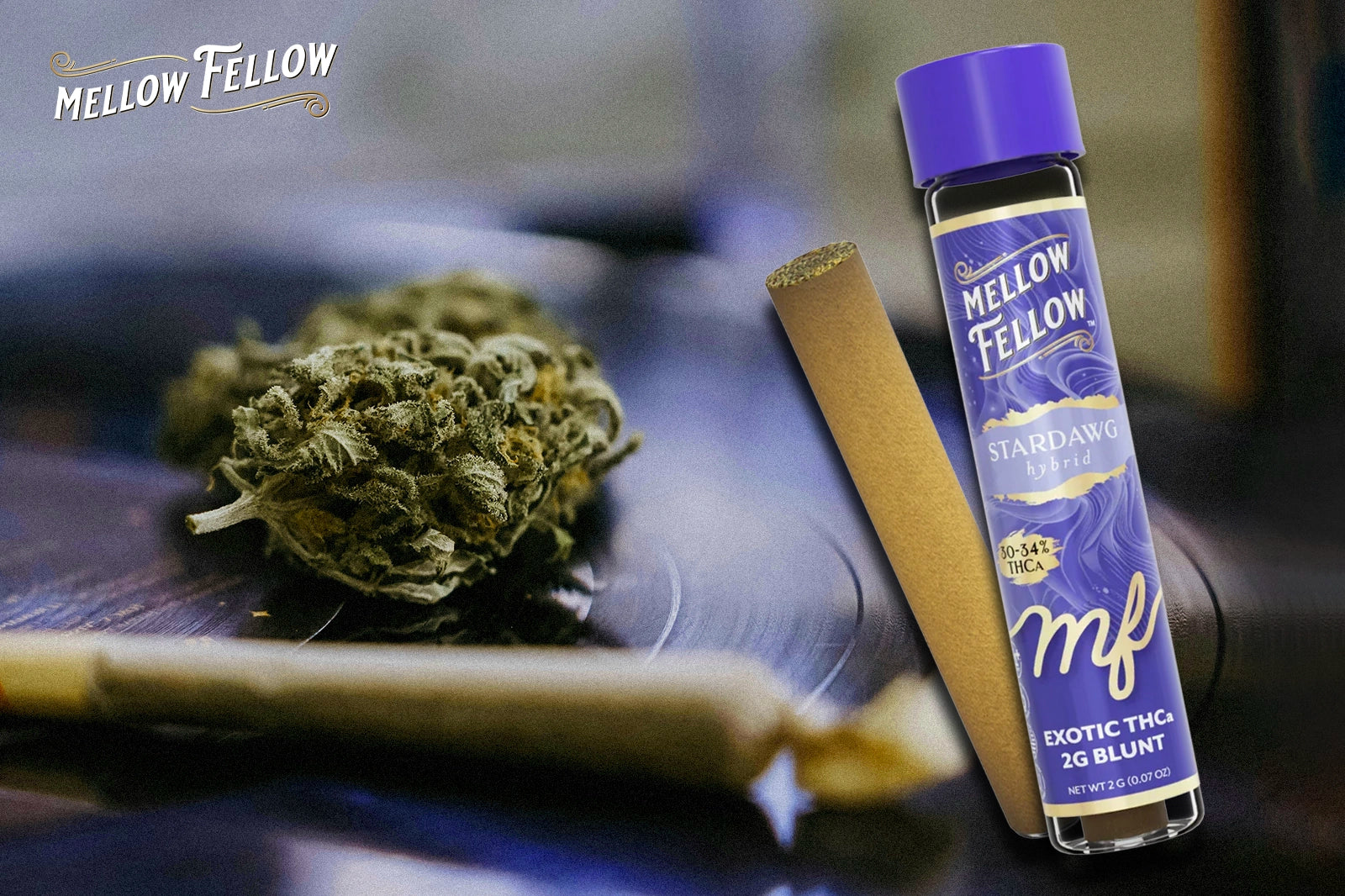
- THCa 2g Prerolled Infused Exotic Blunt – Jelly Roll (Indica) – Smooth indica profile with expert cone construction and consistent packing density throughout
- THCa 2g Prerolled Infused Exotic Blunt – Stardawg (Hybrid) – Balanced hybrid effects with tight construction and reliable even burn from start to finish
- THCp 2g Infused Blunt – Mellow Kush (Sativa) – Energizing sativa blend demonstrating perfect cone shape and optimal airflow design
- THCp 2g Infused Blunt – Kali Mist (Sativa) – Clean sativa energy with professional-grade rolling technique you can study and replicate
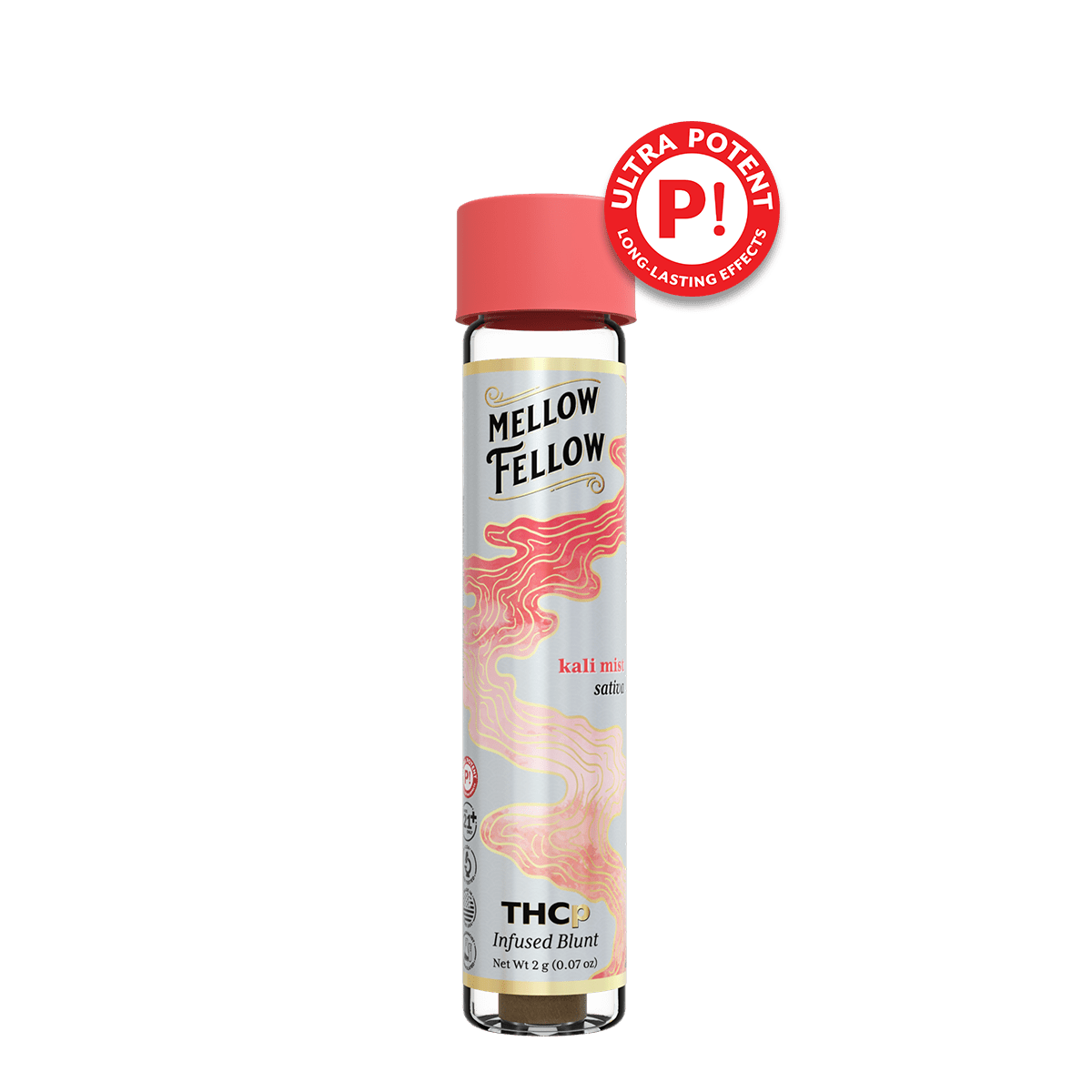
These prerolls show you exactly what proper density, cone structure, and twist-off technique should look like. Use them as reference guides while developing your own skills. They’re perfect examples of how to roll a joint that smokes evenly from start to finish.
Troubleshoot Common Rolling Problems
Even experienced rollers run into problems from time to time. The good news is that most joint issues have simple fixes once you know what to look for. Use this quick troubleshooting guide to spot common mistakes and get cleaner, smoother burns every time.
Paper Keeps Tearing
Your hands may be too damp, or you’re applying too much pressure during the tuck. Dry your hands thoroughly and use lighter tension. Thicker papers are more forgiving for beginners learning rolling a joint for beginners.
Joint Burns Unevenly (Canoeing)
This usually means uneven packing or an air gap along one side. Make sure your flower is distributed evenly before you start rolling, and check that the tuck is consistent along the entire length. Understanding how to roll a joint that does not run requires even distribution and consistent tucking.
Flower Falls Out the Ends
You didn’t pack enough near the filter or left the tip too loose. Add slightly more flower next time, and twist the tip tightly after packing.
Draw Is Too Tight
Overpacking is the main cause. Use less flower, or poke a thin channel through the center with a toothpick or paperclip before lighting.
Joint Won’t Stay Lit
The flower may be too moist, packed too tightly, or ground too fine. Let your flower dry slightly, use a coarser grind, and pack with less pressure.
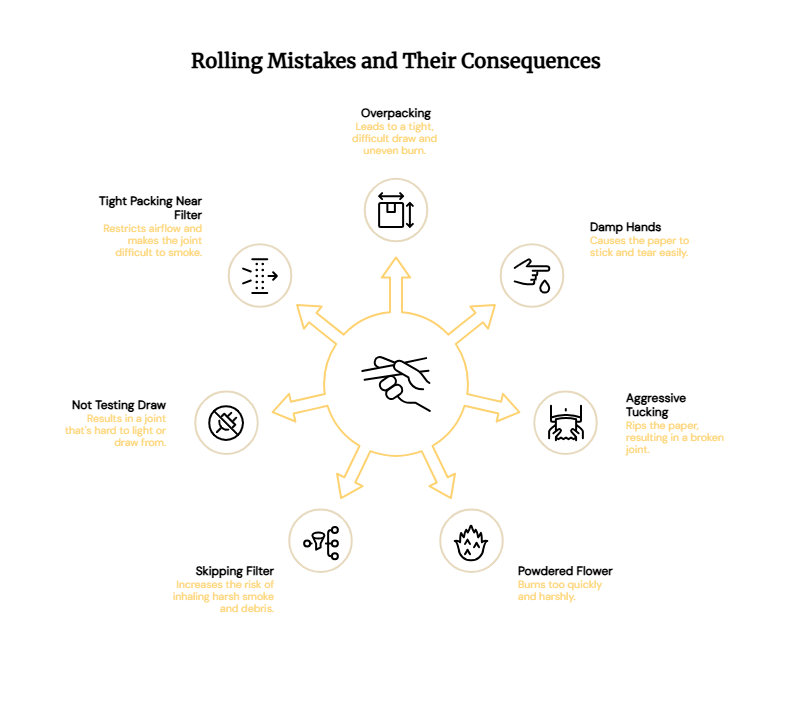
Common Rolling Mistakes to Avoid
- Using too much flower (most beginner joints are overpacked)
- Rolling with damp or oily hands
- Tucking too aggressively and tearing the paper
- Grinding flower into powder instead of breadcrumb texture
- Skipping the filter tip
- Not testing the draw before lighting
- Packing too tightly near the filter end
If you’re exploring alternatives to traditional THC, Mellow Fellow’s infused prerolls let you experience different cannabinoid profiles while observing expert rolling construction.
Practice Makes Consistent
Rolling the perfect joint isn’t about innate talent – it’s about repetition and small adjustments. Your first ten joints will probably look rough. Your next ten will be better. By the time you’ve rolled fifty, the motion becomes automatic and your results stay consistent.
Keep your materials fresh, your workspace clean, and your technique deliberate. Watch how the paper behaves as you tuck, pay attention to where the flower settles, and adjust your pressure and speed based on what you feel. Every joint teaches you something, even the ones that don’t turn out perfect.
Ready to see expert-level construction? Browse Mellow Fellow’s full preroll collection for perfectly rolled options that demonstrate professional technique, consistent quality, and reliable performance every time.
Frequently Asked Questions
How Do You Roll the Perfect Joint?
Start with evenly ground flower, use a filter tip, distribute flower in a slight cone shape, master the tuck-and-roll motion starting at the filter, and pack lightly after sealing.
What Is the Easiest Way to Roll a Joint?
Use pre-made cones or rolling machines for beginners, but for hand-rolling, the boat technique (pre-creasing the paper into a U-shape) makes tucking much easier.
How Tight Should a Joint Be Rolled?
Firm enough that it holds its shape but loose enough that air flows freely when you test-draw – it should feel like sipping through a straw, not sucking through a coffee stirrer.
Should You Use a Filter When Rolling a Joint?
Yes, filters prevent flower from reaching your mouth, add structural support, improve airflow, and make the joint easier to hold and share.
Why Does My Joint Burn Unevenly?
Uneven burning comes from inconsistent packing, air gaps along one side, or uneven grind consistency – distribute flower evenly and tuck consistently along the full length.
How Much Weed Goes in a Joint?
A standard 1¼-inch paper holds 0.5 to 0.75 grams comfortably; king-size papers fit 1 to 1.5 grams without overpacking.
What Papers Are Best for Rolling Joints?
Hemp or rice papers in medium weight work best for beginners – they’re forgiving, burn slowly, and don’t add much taste to the smoke.
How Do You Roll a Joint Without a Filter?
Roll as normal but leave extra paper at one end to act as a handle, though this method is messier and less structurally stable than using a proper filter.
How Do You Roll a Joint That Does Not Run?
Use evenly ground flower, distribute it uniformly before rolling, maintain consistent tuck tension along the length, and avoid overpacking which creates airflow gaps.
How Do You Roll a Slow Burning Joint?
Use thinner rolling papers, pack with moderate firmness (not too tight or loose), keep flower evenly distributed, and choose flower with balanced moisture content.