
Is THCp Natural or Synthetic? Origins, Science, and What It Means for You
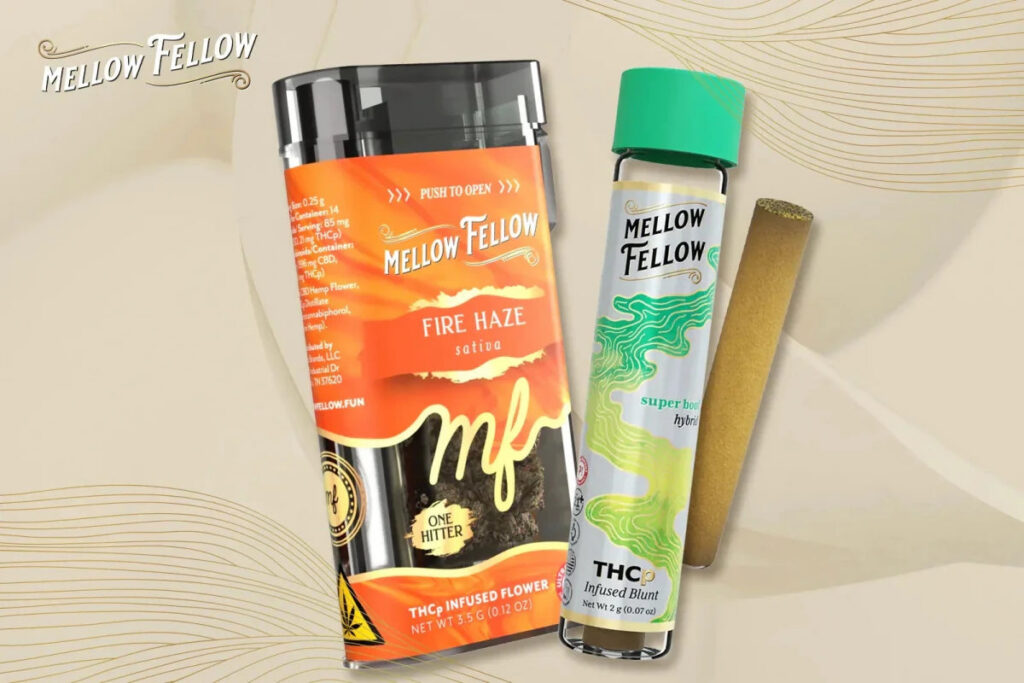
Quick Answer: THCp is a real, naturally occurring cannabinoid found in cannabis plants – but only in tiny trace amounts. Most THCp in commercial products is made in a lab starting from hemp-derived CBD, which is standard across the alt-cannabinoid market. This doesn’t make it unsafe or “fake.” The molecule is structurally identical to the THCp the plant makes. What separates good THCp from bad is manufacturing quality and third-party lab testing, not whether it came straight from a plant.
THCp sits right at the centre of one of the biggest debates in cannabis right now: natural vs lab-made. You have probably seen claims on both sides, but the reality is far more straightforward. THCp is a legitimate compound found in the plant, yet nearly everything on the market is produced through controlled lab processes. Understanding how both of those facts can be true at the same time is the key to making smarter, safer buying decisions.
Key Takeaways
- THCp is a genuine plant cannabinoid, confirmed by peer-reviewed research in 2019
- It occurs naturally in cannabis, but at levels too low to extract commercially.
- Most THCp sold today starts from hemp-derived CBD and is converted in a lab – the resulting molecule is chemically identical to plant THCp.
- THCp binds to the brain’s CB1 receptor approximately 33 times more strongly than standard Delta-9 THC, which is why small doses feel potent.
- Third-party COAs are the clearest way to verify purity and confirm what is actually in a product.
How Cannabis Plants Produce THCp Naturally
Every cannabinoid in the cannabis plant begins life the same way. The plant builds a foundational compound called CBGA (cannabigerolic acid) – think of it as the raw ingredient all cannabinoids are made from. From there, specific enzymes convert CBGA into the cannabinoids we know: THC, CBD, CBG, and others.
THCp forms through that same process, just with one difference. When the plant produces standard THC, it builds a molecule with a five-carbon “tail” attached to its structure. THCp has a seven-carbon tail instead. According to research published in the Journal of Cannabis Research on cannabinoid biosynthesis, this happens when slightly different starting materials are used during the plant’s natural production process – a rare but real variation.
That longer tail is the reason THCp is so potent. It fits more snugly into the CB1 receptors in your brain, which is what creates the stronger effect at lower doses.
The catch is that this variation happens infrequently. The concentration of THCp found in cannabis plants is extremely low – far too small to extract and sell at any commercial scale. This was confirmed by the Italian research team that discovered THCp in 2019, who identified it using advanced lab equipment that most cannabis testing labs don’t even have.
The 2019 Discovery That Changed How We Understand THCp
THCp was identified for the first time in December 2019 by a group of Italian scientists led by Professor Giuseppe Cannazza at the University of Modena. Their study, published in Scientific Reports, found THCp while analyzing a specific Italian cannabis variety called FM2.
What made the discovery remarkable was that no one had been looking for it. The team was using metabolomics – a technique that builds a detailed chemical fingerprint of a plant – when they spotted two previously unknown cannabinoids: THCp and its CBD counterpart, CBDP.
Their lab tests showed THCp had roughly 33 times the binding affinity for CB1 receptors compared to standard THC. When tested on mice, THCp produced THC-like effects at about half the dose, suggesting it is meaningfully more potent in practice.
Cannazza’s team noted that concentrations in the FM2 strain were “extremely low,” and that the compound had simply never been searched for before. That raised an interesting question: could some cannabis strains that seem stronger than their THC percentage would predict actually contain undetected THCp?
Natural THCp vs Synthetic THCp: What the Difference Actually Means
This is where many buyers get confused, so it helps to look at the options clearly.
|
Category |
Starting Material |
Process |
End Molecule |
|
Plant-extracted THCp |
Cannabis or hemp biomass |
Extraction + decarboxylation |
Trace THCp alongside other cannabinoids |
|
Semi-synthetic THCp |
Hemp-derived CBD |
Chemical conversion in a lab |
Isolated THCp, structurally identical to plant THCp |
|
Fully synthetic THCp |
Non-cannabis chemicals |
Total chemical synthesis |
THCp identical in structure, no botanical origin |
Nearly all THCp on the market is semi-synthetic – made from hemp-derived CBD that is chemically converted into THCp in a lab. This is important to understand: it does not mean the product is dangerous or artificial in the way that lab-invented compounds like Spice or K2 are. The molecule produced is the same molecule the cannabis plant makes. The difference is the starting point and the process, not the end result.
A 2024 review on designer THC compounds published by PMC/NIH noted that THCp, along with THCh and THCb, “although being naturally occurring, cannot be obtained by a semi-synthetic process starting from CBD or Δ9-THC” in a simple one-step way – meaning full synthesis from scratch is often required to make it commercially. That review also noted all three of these compounds are now widely sold in commercial products including vapes, gummies, and distillates.

Because the hemp-derived starting material keeps the product within the framework of the 2018 Farm Bill, reputable brands can sell THCp legally at the federal level, as long as the final product contains less than 0.3% Delta-9 THC by dry weight – as confirmed by the USDA Agricultural Marketing Service hemp production regulations.
For a deeper look at how THCp compares to other cannabinoids in the potency department, the THCp potency guide covers the receptor binding data and what it means for real-world dosing.
How Lab-Made THCp Is Produced
Most commercial THCp starts as hemp-derived CBD, which is first extracted from hemp biomass. From there, the process involves a series of controlled chemical reactions that restructure the CBD molecule. The goal is to rebuild it with the longer seven-carbon tail that defines THCp’s structure.
Here is a simplified version of how that happens:
- Hemp biomass is processed to isolate CBD
- The CBD undergoes a chemical reaction that modifies its molecular structure
- The resulting compound is purified using chromatography (a separation process)
- The purified THCp is tested by a third-party lab to confirm identity, potency, and the absence of contaminants like residual solvents or heavy metals
The quality of this process varies significantly by manufacturer. A well-run lab produces clean, consistent THCp. A poorly run one may leave behind residual chemicals from the synthesis process. This is why the COA matters so much – it is the only objective record of what ended up in the final product.
Where THCp Fits Among Naturally Occurring Minor Cannabinoids
THCp is not the only naturally occurring cannabinoid that is commercially produced through lab processing. This is actually the norm across the alt-cannabinoid market. Understanding that context helps frame what “natural” and “synthetic” really mean in practice.
|
Cannabinoid |
Occurs Naturally in Cannabis |
How It Reaches Commercial Products |
|
Delta 8 THC |
Yes (trace) |
Isomerized from CBD |
|
HHC |
Yes (trace, in pollen) |
Hydrogenation of THC or CBD |
|
THCV |
Yes (moderate in some strains) |
Extraction or synthesis |
|
THCp |
Yes (trace) |
Semi-synthesis / full synthesis |
|
THCH |
Yes (trace) |
Semi-synthesis |
|
Delta 10 THC |
Trace |
Isomerization |
Research into cannabigerolic acid biosynthesis – the foundational pathway that feeds into all of these cannabinoids – confirms that minor cannabinoids like THCp, THCH, and THCB arise from the same biological machinery as THC and CBD, just expressed at much lower levels. Lab processing amplifies what the plant produces in tiny amounts into something usable.
This context matters when you see marketing that emphasizes “natural THCp.” A product containing measurable, effective doses of THCp at a price that is commercially viable almost certainly involves lab processing. What reputable brands can genuinely offer is transparent sourcing, hemp-derived starting materials, and verified purity on every batch.
For comparisons with similar cannabinoids, the THCh vs THCp breakdown and the rare cannabinoids overview put the broader category in context.
Browse THCp disposable vapes from Mellow Fellow to see current options with clear cannabinoid labeling and batch-specific COAs.
What to Look for in Authentic THCp Products
Because lab processing is standard, the best way to evaluate a THCp product is to look at the documentation, not the marketing language.
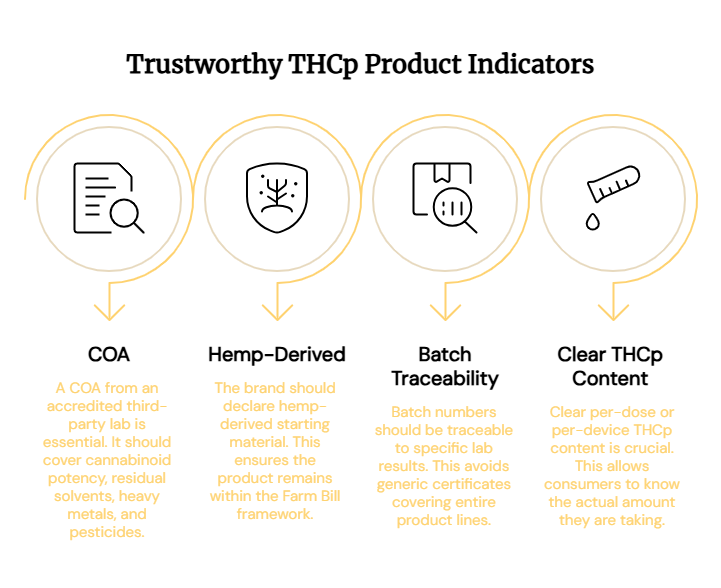
Key indicators of a trustworthy THCp product:
- A COA from an accredited third-party lab that covers cannabinoid potency, residual solvents, heavy metals, and pesticides
- Hemp-derived starting material declared by the brand, keeping the product within the Farm Bill framework
- Batch numbers traceable to specific lab results, not just a generic certificate that covers a whole product line
- Clear per-dose or per-device THCp content so you know what you are actually taking
Mellow Fellow publishes batch-specific lab results through its testing page, giving buyers a direct way to check what is in each product before purchasing.
For a plain-language guide to reading those results, the lab results explainer walks through every section of a typical COA.
Mellow Fellow THCp Products: Verified and Ready to Try
Mellow Fellow’s THCp lineup is built around consistent formulation, clear dosing, and full lab transparency. Whether you prefer vapes, edibles, infused flower, blunts, or concentrates, there is a format to match your preference and experience level.
Disposable Vapes
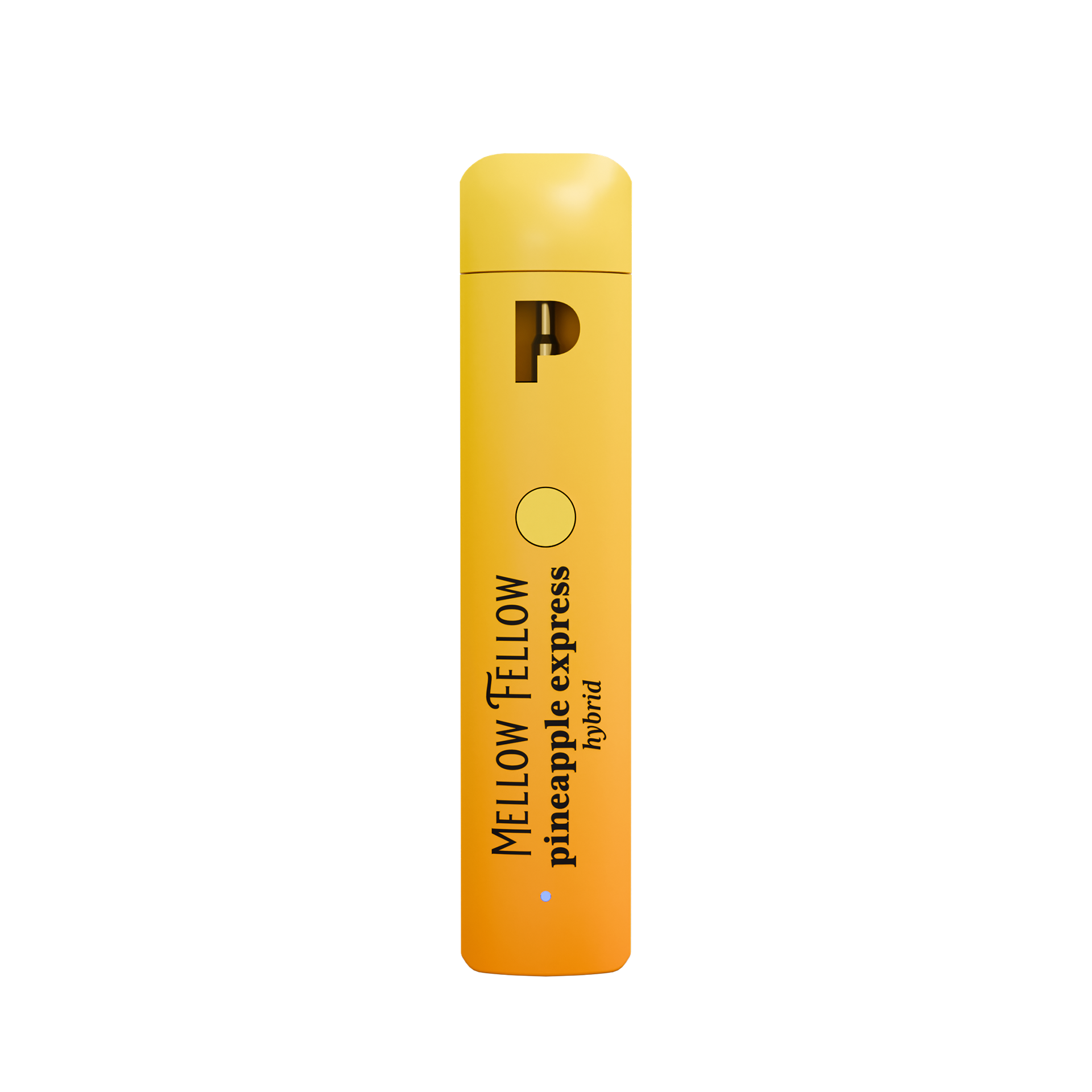
The THCp 0.5g Disposable Vape in Pineapple Express (Hybrid) is a balanced, fruit-forward option that works well for social settings or light afternoon sessions. The THCp 0.5g Disposable Vape in Blue Dream (Sativa) is a common daytime pick – clear, uplifted, and less sedating than indica-leaning options. Both are draw-activated with no setup required. See the full THCp 0.5g Disposable Vapes collection for all available strains.
Vape Cartridges
For users with a 510-thread battery, the THCp 0.5ml Vape Cartridge in TKO (Hybrid) delivers a pungent, earthy draw with a balanced effect profile. The THCp 0.5ml Vape Cartridge in Blueberry Muffins (Indica) is a smooth, sweet evening option well-suited to winding down. Browse the THCp 0.5ml Vape Cartridge collection for additional strain options.
Edibles
The THCp Bursts Edibles in Cookies & Cream at 2.5mg are designed for first-time THCp edible users – the low per-piece dose makes it easy to find a comfortable serving size without committing to too much too fast. The THCp Bursts Edibles in Chocolate Strawberries at 25mg are a better fit for experienced users looking for a stronger, longer-lasting effect. Browse the full THCp Bursts Edibles collection for all flavors and doses.
Infused Blunts
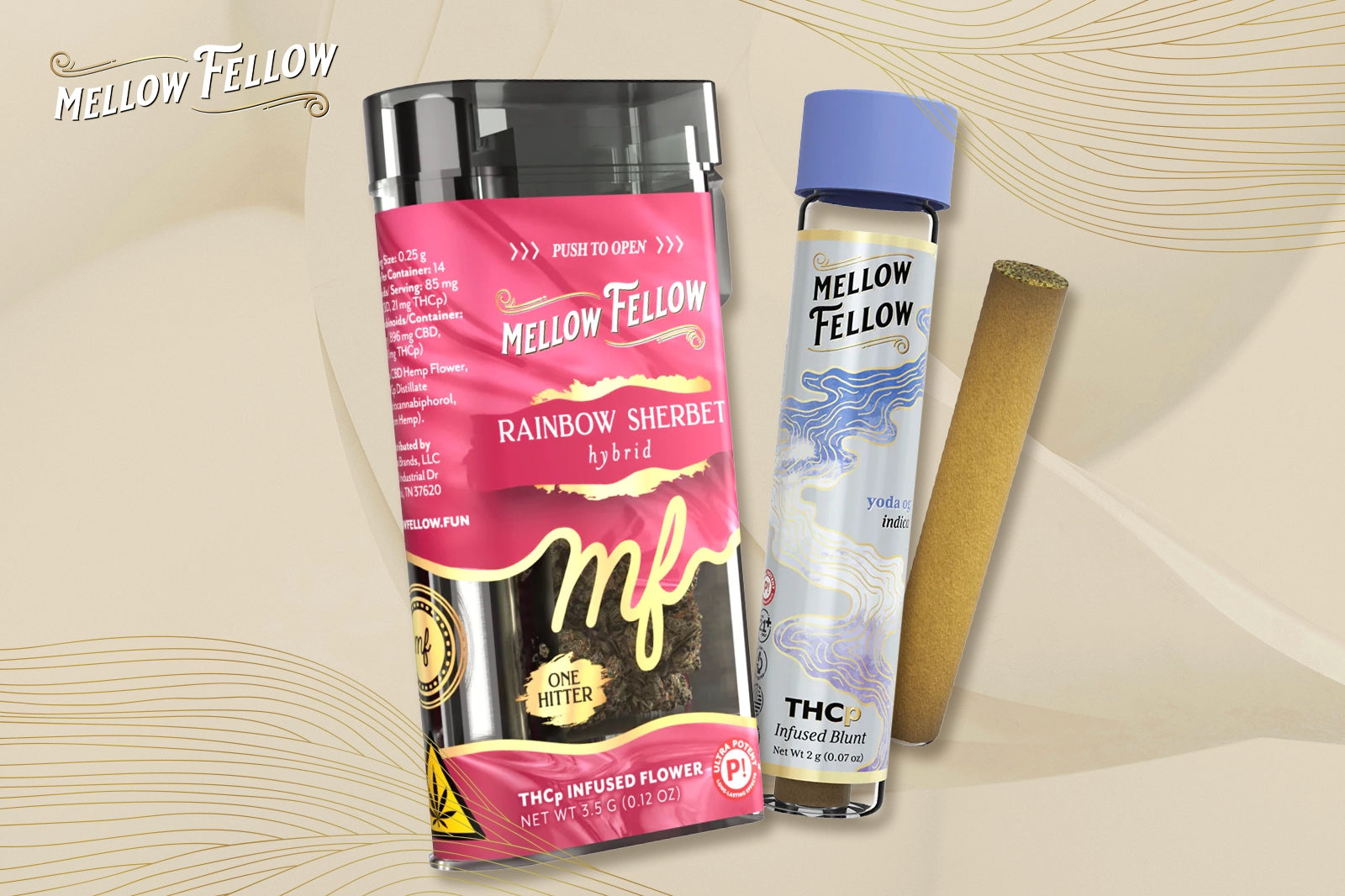
The THCp 2g Infused Blunt in Super Boof (Hybrid) and the THCp 2g Infused Blunt in Ice Cream Mintz (Indica) both use THCp-infused hemp flower for a slow, measured burn. See the THCp 2g Infused Blunts collection for current availability.

Terp Sauce Blends
For a concentrate-style experience with THCp integrated into a full blend, the terp sauce syringes pair THCp with complementary cannabinoids for layered effects. The Introvert Blend Terp Sauce 2ml Syringe in Pot of Gold (Indica), the Euphoria Blend Terp Sauce 2ml Syringe in Gas Candy (Hybrid), and the Wanderlust Blend Terp Sauce 2ml Syringe in Pure Kush (Indica) are all available through the Terp Sauce collection.
Find THCp products near you through the store locator, or shop the complete THCp collection online.
So, Is THCp Synthetic?
THCp is both natural and lab-made, and that is not a contradiction. The plant produces it in trace amounts, while modern extraction and synthesis make it usable at scale. What actually matters is not the origin story, but the quality of the final product.
Clean processing, accurate dosing, and verified lab results are what separate a reliable THCp experience from a risky one. If you focus on COAs and transparent sourcing, you can confidently choose products that deliver exactly what they claim.
Shop the full Mellow Fellow THCp collection – every product verified by batch-specific lab results and built for consistent, predictable effects.
Sources
- The biosynthesis of the cannabinoids – PMC
- A novel phytocannabinoid isolated from Cannabis sativa L. with an in vivo cannabimimetic activity higher than Δ9-tetrahydrocannabinol: Δ9-Tetrahydrocannabiphorol | Scientific Reports
- An emerging trend in Novel Psychoactive Substances (NPSs): designer THC – PMC
- Hemp Production (website updates in progress) | Agricultural Marketing Service