
Live Resin vs Live Rosin: Effects, Flavor, Price, and How to Choose
Quick Answer: Live resin and live rosin are both terpene-rich cannabis concentrates made from fresh-frozen plants, but live resin uses solvents while live rosin is solventless. The choice comes down to preference: live resin is more affordable and widely available, while live rosin offers a solvent-free, premium experience with similar potency.
Live resin and live rosin both start with fresh-frozen cannabis, but one uses solvents to pull the extract and the other uses only heat and pressure. That single difference shapes everything: flavor, potency, price, and which product fits your habits.
Key Takeaways
- Live resin is made with hydrocarbon solvents; live rosin is solventless, using only heat and pressure.
- Both preserve terpenes better than cured-extract concentrates because they start with fresh-frozen plant material.
- Research published in the Journal of Cannabis Research found that air-drying cannabis for just one week causes a 31-55% loss in terpene content compared to freshly harvested material.
- Live rosin typically costs more due to lower yield and more labor-intensive production.
- Live resin is more widely available in vapes, carts, and edibles at accessible price points.
- Neither is definitively stronger; cannabinoid content and formulation matter more than extraction method.
- Mellow Fellow’s live resin products are pharmacist-formulated and third-party lab tested for every batch.
What Is Live Resin?
Live resin is a cannabis concentrate made by extracting cannabinoids and terpenes from fresh-frozen plant material using hydrocarbon solvents, most often butane or propane. Freezing the plant immediately after harvest locks in volatile terpene compounds that would otherwise degrade during a standard dry-and-cure process.
After extraction, licensed processors purge residual solvents under vacuum at low heat. The result is a terpene-rich extract that retains the full aromatic profile of the living plant. Finished live resin can range in texture from a sauce-like consistency to a more stable wax, depending on post-processing steps.
Because it scales well, live resin is the most common premium extract format found in disposable vapes, vape cartridges, and edibles.
What Is Live Rosin?
Live rosin is a solventless concentrate produced by applying controlled heat and pressure to fresh-frozen cannabis or fresh-frozen bubble hash. No chemical solvents are used at any stage. The process typically involves washing the fresh-frozen material with ice water to separate trichomes into bubble hash, then pressing that hash through a heated rosin press to release the final extract.
Because the yield per pound of starting material is lower and the process requires more steps and equipment, live rosin commands a higher retail price than most live resin products. The solventless nature appeals to consumers who want minimal processing between plant and product.
How Live Resin vs Live Rosin Differences Come Down to Process
The extraction method is the defining split between the two.
Live resin process:
- Harvest and immediately freeze fresh cannabis at cryogenic temperatures
- Run frozen material through a hydrocarbon extraction system (butane or propane)
- Purge residual solvents in a vacuum oven at low temperatures
- Post-process for texture (sauce, sugar, wax, or badder)
Live rosin process:
- Harvest and immediately freeze fresh cannabis
- Wash frozen material with ice water to produce bubble hash (fresh-frozen hash)
- Press bubble hash in a rosin press using heat (typically 160-220°F) and mechanical pressure
- Collect pressed rosin without solvent exposure at any stage
Research on terpene retention shows that fresh-frozen starting material significantly outperforms cured flower in preserving volatile aromatic compounds, regardless of whether solvent or solventless extraction follows.
A study in the Journal of Cannabis Research confirmed that monoterpenes – including beta-myrcene – degrade rapidly when cannabis is air-dried, with losses of up to 55.2% after just three months of storage, supporting the shared advantage of both live formats over conventional concentrates.
To understand how these terpene profiles translate into specific vape experiences, our complete list of cannabis terpenes and their effects covers the full spectrum.
Live Resin vs Live Rosin: Solventless vs Solvent Concentrates
The solventless vs solvent concentrates debate matters most to consumers who prioritize clean inputs.
Live resin uses solvents. Butane and propane are flammable hydrocarbons. Professional, licensed extraction facilities use closed-loop systems that recover and recycle solvent, and finished products undergo rigorous residual solvent testing.
USP General Chapter <467> establishes the accepted thresholds for residual solvents in extracts – when lab results show non-detectable levels, the product meets established safety benchmarks. Mellow Fellow publishes third-party COAs for every batch at our testing page.
Live rosin is solventless. Heat and pressure do not introduce chemical residues. For consumers who prefer zero solvent contact, live rosin offers that assurance by design.
Both extracts can be clean and safe when produced correctly. The differentiator is process preference, not a categorical safety gap. For a deeper look at how live resin compares to other extract formats, see our guide on live resin vs. distillate carts.
|
Factor |
Live Resin |
Live Rosin |
|
Starting material |
Fresh-frozen cannabis |
Fresh-frozen cannabis or hash |
|
Extraction method |
Hydrocarbon solvents (butane/propane) |
Heat and pressure only |
|
Solvent residue |
Purged; verified by COA |
None |
|
Typical yield per lb |
Higher |
Lower |
|
Terpene preservation |
High |
High |
|
Common formats |
Vapes, carts, edibles, sauce |
Dabs, rosin carts, premium disposables |
|
Relative price |
Moderate to premium |
Premium to ultra-premium |
Live Resin vs Live Rosin Flavor and Terpene Profile
Both concentrates preserve terpenes at a higher level than cured-extract products. Fresh-frozen plant material retains the aromatic esters and monoterpenes that give each strain its distinct character. That said, nuances exist in the terpene profile of each.
Research published in Cannabis Science and Technology explains that fresh-frozen extraction – whether solvent-based or solventless – captures a completely different terpene profile from cured-extract products. Enzymes in fresh cannabis continue converting compounds even after harvest, meaning live formats carry a snapshot of the plant at peak ripeness.
Live resin sauce, especially when kept at low temperatures and consumed soon after opening, delivers a complex, strain-accurate aroma. The solvent extraction pulls a wide spectrum of volatile compounds efficiently. Live rosin, particularly high-quality fresh-press or cold-cure rosin, also carries a rich terpene profile and often has a slightly rounder vapor due to the lower processing temperatures used during pressing.
An original University of Mississippi study cited by High Times found that fresh buds contained the highest terpene content by a wide margin, and that most terpene loss occurs in the first week of drying – reinforcing why fresh-frozen starting material is the foundation of both methods.
For a breakdown of which terpenes shape specific moods and experiences, see our guides on best terpenes for euphoria and best terpenes for focus.
The short answer: which tastes better between live resin or live rosin comes down to the specific cultivar, extraction quality, and personal preference rather than a blanket rule.
Live Resin vs Live Rosin Potency and Effects
Neither live resin nor live rosin is categorically stronger than the other. Potency depends on the cannabinoid content of the starting material and how the extract is formulated, not the extraction method alone.
A high-quality live resin from a potent cultivar can test at 70-85% total cannabinoids. A well-pressed live rosin from the same cultivar may land in a similar range. Where effects diverge is in terpene-driven modulation. Both formats preserve the terpene compounds that interact with cannabinoids to shape the overall experience.
A 2021 study in Scientific Reports found that four terpenes – alpha-humulene, geraniol, linalool, and beta-pinene – produced cannabinoid-like behaviors in mice and selectively enhanced cannabinoid activity, offering early evidence supporting the idea that terpenes modulate the overall effect of cannabis.
A comprehensive review published in PMC (2024) explored the entourage effect across 29 studies, noting that terpenes such as myrcene, linalool, D-limonene, and caryophyllene each show distinct physiological properties that may interact with cannabinoids – though researchers note further clinical trials are still needed to confirm synergistic effects.
For practical purposes: the live resin high vs. live rosin high is largely shaped by the cannabinoid blend and terpene profile of the specific product, not whether solvents were used. If you want to understand how specific cannabinoids like THCp affect the experience, our THCp potency guide covers this in detail.
Live Resin vs Live Rosin Price Differences
Why is live rosin more expensive? Three reasons:
- Lower yield. Pressing hash produces less extract per pound of starting material than closed-loop hydrocarbon extraction.
- More labor. The ice-water wash, drying, and press steps add time and skilled labor relative to a single extraction run.
- Higher input cost. Premium fresh-frozen starting material and quality hash bags add to cost before a single press is made.
Live resin benefits from scalable extraction infrastructure and higher yields, which keeps prices more accessible without sacrificing terpene quality. For consumers who want a premium extract experience at a practical price, live resin vapes and edibles offer strong value.
If budget is a consideration, checking bundle deals is a straightforward way to sample multiple live resin formats.
Mellow Fellow Live Resin Products Worth Trying
Mellow Fellow formulates all live resin products in-house with pharmacist-reviewed cannabinoid blends. Every product is batch-tested and carries a QR-linked COA.
Live Resin Disposable Vapes
If you want terpene-rich vapor with a long-lasting reservoir, start here. The 4 mL size suits daily users who want fewer reloads and consistent airflow.
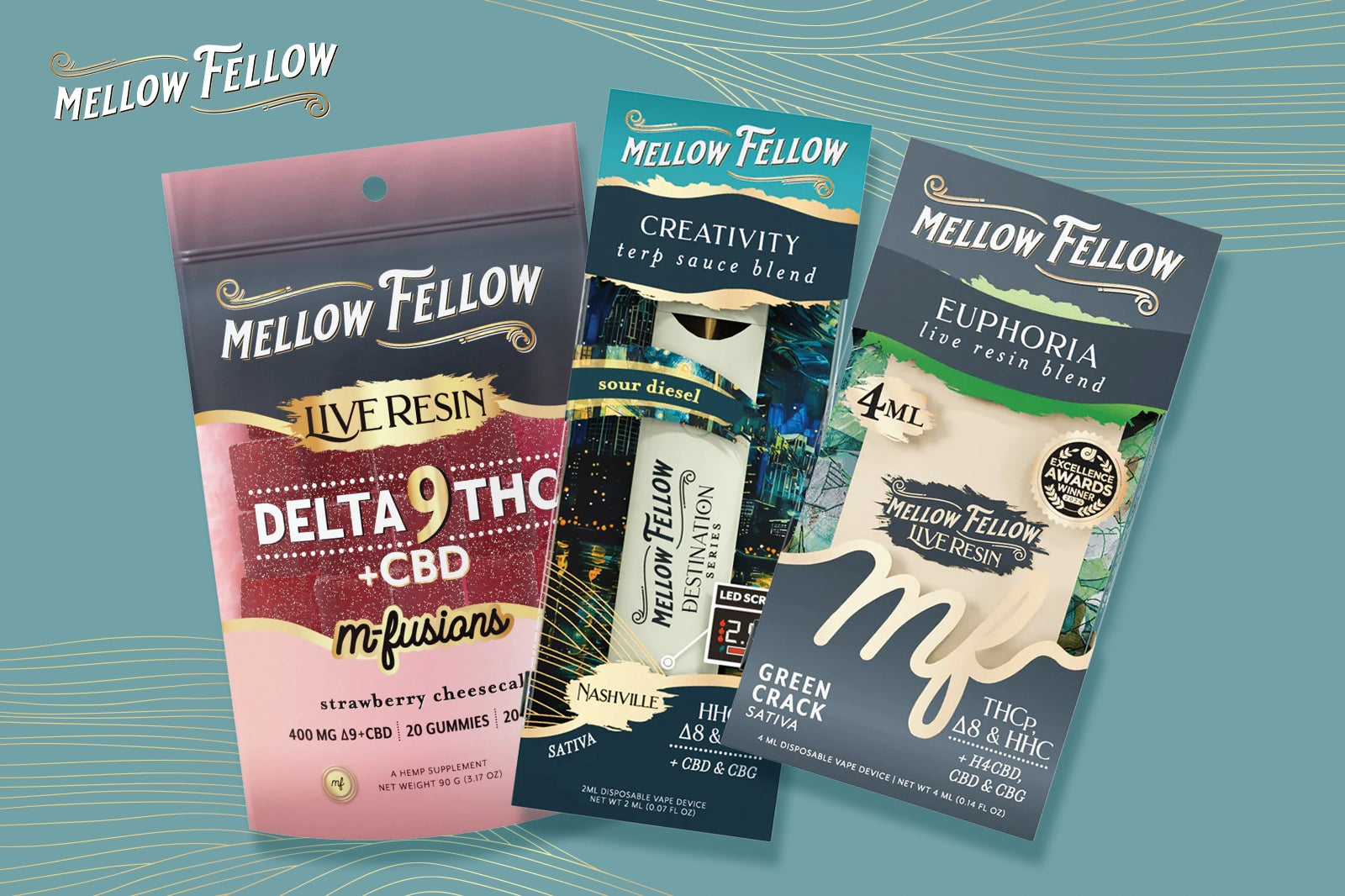
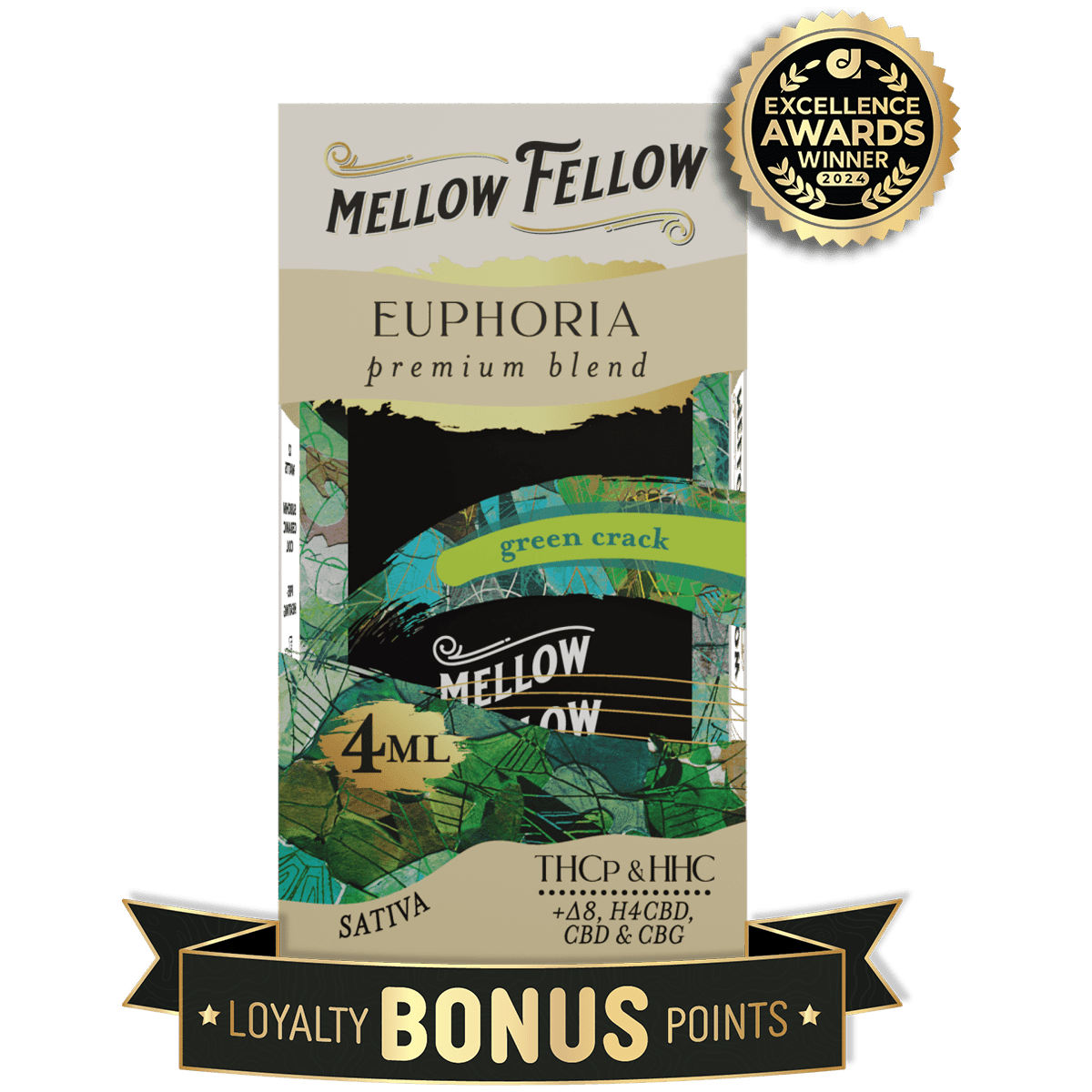
- Euphoria Blend 4ml Live Resin Disposable Vape – Green Crack (Sativa): A sativa-leaning blend pairing Green Crack’s citrus-forward terpene profile with a cannabinoid stack built for uplifted, social-ready effects.
- Dream Blend 4ml Live Resin Disposable Vape – Granddaddy Purp (Indica): An indica-forward option with the earthy, grape-adjacent notes of Granddaddy Purp, formulated for evening wind-down.
Browse the full live resin disposable vapes collection for all strain and blend options.
Live Resin Vape Cartridges
For users who prefer a 510-thread setup with swappable carts:
- Euphoria Blend 1ml Live Resin Vape Cartridge – Chemdawg (Hybrid): Chemdawg’s fuel and earth profile in a hybrid-leaning Euphoria formulation.
- Desire Blend 1ml Live Resin Vape Cartridge – Cali Gas (Hybrid): A desire-forward blend with Cali Gas terpenes for a more sensory, present experience.

See all options in the live resin vape cartridges collection.
Live Resin Edibles
For longer-lasting effects with terpene-forward flavor in edible form:
- Delta-9 Live Resin Edibles 400mg – Rambutan Kaffir Lime Kumquat: An exotic tropical flavor profile with 400 mg live resin Delta-9 across the package.
- Delta-9 Live Resin Edibles 400mg – Strawberry Cheesecake: A crowd-pleasing dessert flavor backed by the same live resin formulation.
For timing and dosage tips on live resin edibles, see our guide on are live resin gummies stronger and live resin edibles vs. regular edibles.
Browse the live resin edibles collection for the full lineup.
For Terp Sauce Fans
If you prefer terp sauce over live resin, Mellow Fellow’s THCa-blended terp sauce syringes are worth exploring. The 2mL syringe format makes dosing precise and dabbing straightforward.
Shop the full terp sauce products collection. To understand how terp sauce compares to other extract formats, see our breakdown of terp sauce vs. live resin.
Current standout options:
- Creativity Blend – Terp Sauce 2ml Syringe – Polar Pop (Sativa)
- Introvert Blend – Terp Sauce 2ml Syringe – Pot of Gold (Indica)
- Charged Blend – Terp Sauce 2ml Syringe – Timewreck (Sativa)

Mellow Fellow also has amazing terp sauce vapes, such as the Euphoria Blend Green Crack Terp Sauce Cartridge.
For more on the differences between terp sauce and live resin formats, see Live Rosin vs. Distillate Carts: What’s the Difference?
Final Thoughts on Liver Rosin vs Live Resin
If you are new to concentrates, live resin vapes offer the most accessible entry point. The device does the work, dosing is consistent, and the terpene experience is noticeably richer than standard distillate products. Start with short pulls and gauge the effect before adding more.
For help using a live resin cart for the first time, see our guide on how to use live resin disposable carts.
If you are an experienced user who dabs regularly and prioritizes solventless inputs, live rosin is worth the additional cost. For a head-to-head format comparison, see live resin carts vs. normal carts and are live resin carts healthier.
Browse all lab results and batch COAs at the Mellow Fellow testing page before you buy, or use the store locator to find a retailer near you.
Sources
- The Entourage Effect in Cannabis Medicinal Products: A Comprehensive Review – PMC
- Cannabis sativa terpenes are cannabimimetic and selectively enhance cannabinoid activity | Scientific Reports
- What Does Drying Buds Do to Terpenes? | High Times
- The Transformation of Cannabis Terpenes from Harvest to Shelf | Cannabis Science and Technology – Cannabis Industry News, Insights
- 467 RESIDUAL SOLVENTS
- The preservation and augmentation of volatile terpenes in cannabis inflorescence | Journal of Cannabis Research | Springer Nature Link
Leave a Reply