
What Makes a Hash Hole Different From a Regular Joint?
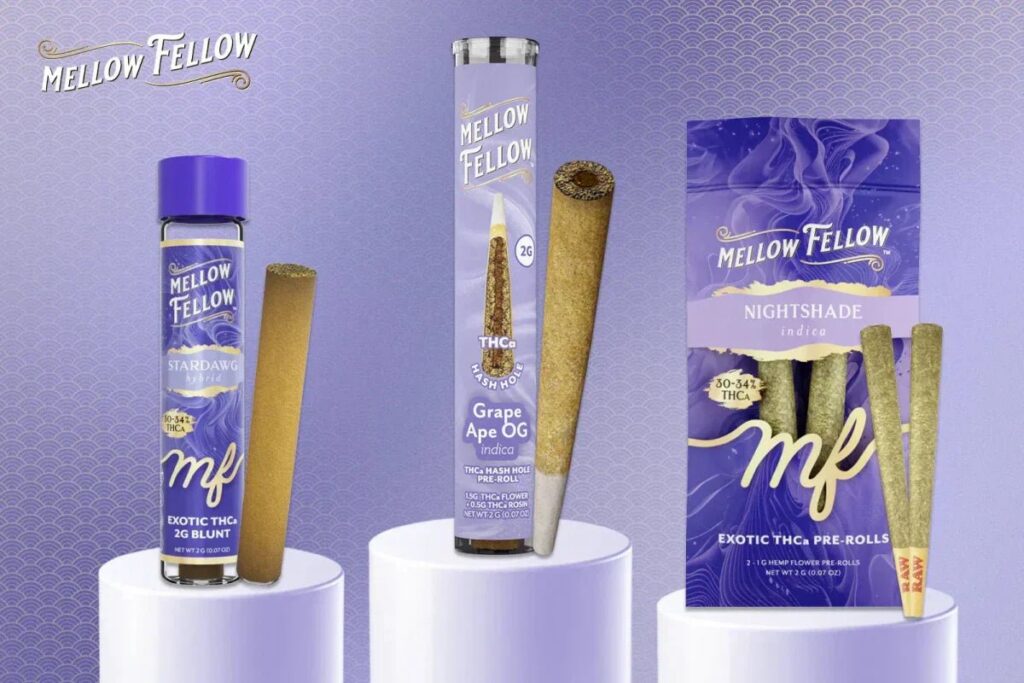
Quick Answer: A hash hole is a joint packed with flower and a rope of hash or live rosin coiled through the center. A regular joint contains only ground flower. The result is a slower, more even burn, a distinctive donut-shaped ash ring, and noticeably higher potency – making the hash hole vs regular joint comparison one of the clearest format gaps in cannabis today.
Hash holes and regular joints may look similar at first glance, but they deliver very different smoking experiences. One uses flower only, while the other adds a potent hash or rosin core for slower burns, richer flavor, and stronger effects. This guide breaks down the real differences in structure, potency, burn rate, and which format makes the most sense for your next session.
Key Takeaways
- Hash holes contain a rosin or hash core inside flower; regular joints use ground flower only.
- Hash hole potency runs significantly higher because concentrates can reach 60-80% THC by weight, compared to 15-30% in dry flower.
- The rosin core creates the signature donut ring ash pattern and slows the overall burn rate.
- Full-spectrum solventless hash preserves terpenes and minor cannabinoids often absent from standard joints.
- Hash holes are a premium craft option; regular joints remain the accessible, low-barrier entry point.
- Try Mellow Fellow’s Hash Hole Pre-Rolls, with both THCp and THCa options available.
Hash Hole Structure
A regular joint is simple: ground cannabis flower rolled in paper. The construction has stayed the same for decades. A hash hole shares that basic wrapper and flower fill, but adds one defining element – a rope of hash rosin, typically 0.3 to 1 gram, coiled lengthwise through the center of the flower column before rolling.
That rosin snake is what everything else flows from. As you smoke, the concentrate at the core melts and combusts more slowly than the surrounding flower. The flower burns outward, the hash melts inward, and the two meet in a slow, controlled front that produces the circular ash formation – the donut – the format is named after.
Why the Build Technique Matters
The structural difference is small to look at before lighting but substantial in practice. Regular joints rely entirely on even flower packing for a clean burn. Hash holes rely on the interaction between two materials with different combustion behaviors. A few things determine whether a hash hole performs correctly:
- Rosin Consistency: too soft and it bleeds; too stiff and it cracks during rolling
- Pack Density: gaps around the rosin core cause uneven airflow and canoeing
- Rosin Placement: an off-center core shifts the burn front and kills the donut shape
This is why professionally rolled hash holes behave so differently from rushed ones, and why the format has a higher skill ceiling than any standard infused pre-roll.
Shop Mellow Fellow Hash Hole Pre-Rolls for a stronger, slower-burning smoke.
Hash Rosin vs Dry Flower: Composition Differences
To understand why the smoking experience diverges, it helps to compare what each format actually contains.
|
Property |
Regular Joint (Flower) |
Hash Hole (Flower + Rosin) |
|
THC Range |
15-30% |
40-70%+ combined |
|
Terpene Profile |
Present, partially lost to heat |
Amplified via full-spectrum rosin |
|
Cannabinoid Breadth |
Moderate (major cannabinoids only) |
Broader minor cannabinoid retention |
|
Extraction Method |
None |
Heat and pressure (solventless) |
|
Texture Before Rolling |
Dry, ground |
Soft, ropy concentrate |
Solventless hash rosin is made by applying heat and pressure to dry-sift or bubble hash, which is derived from fresh-frozen or dried cannabis. No hydrocarbon solvents are involved.
Research on novel solventless extraction techniques shows that cold-chain sifting processes preserve the native cannabinoid and terpene profiles of fresh inflorescence, including the volatile monoterpenoids that are typically lost in other methods.
A published PMC study on solventless extraction confirmed that these approaches can concentrate total cannabinoids from around 25% to over 60% while retaining terpene ratios close to the original plant.
Dry flower, even high-quality flower, loses a portion of its terpene load during grinding, storage, and combustion. The rosin in a hash hole acts as a terpene reservoir that releases as it melts rather than all at once.
Mellow Fellow’s Hash Hole Pre-Rolls
For consumers looking for something stronger than a standard infused joint, Mellow Fellow’s hash holes bring together premium flower, concentrated rosin, and strain-specific terpene profiles in a larger 2g format. These pre-rolls are designed to burn slowly, hit harder, and deliver fuller flavor throughout the session. You can browse every option in the full Hash Hole Pre-Roll collection.
THCp Hash Holes
The THCp Hash Hole collection focuses on maximum potency and long-lasting effects. Each pre-roll combines THCp flower with infused rosin to create a denser smoke and noticeably stronger experience geared toward seasoned consumers.
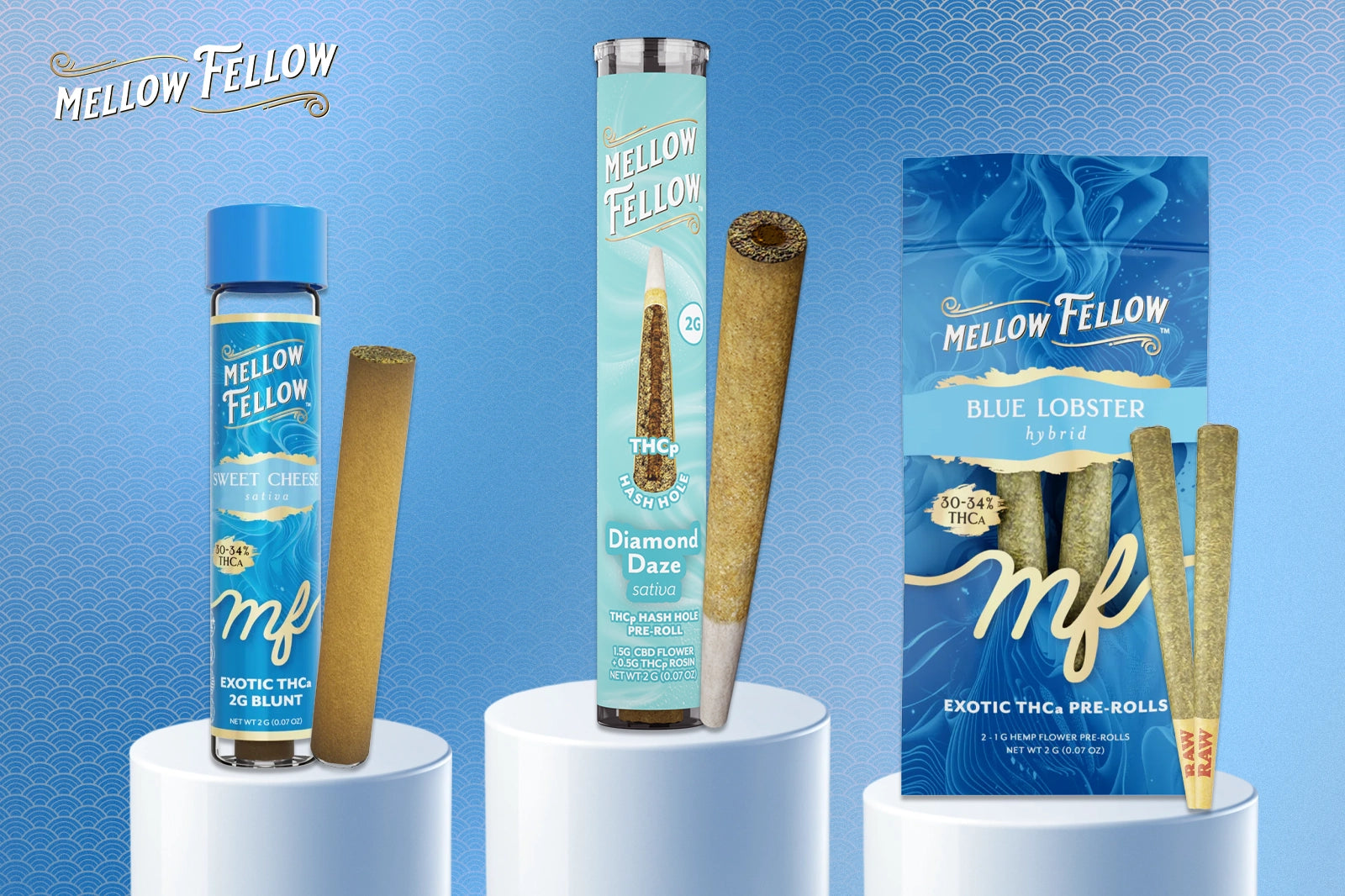
Diamond Daze (Sativa)
Diamond Daze delivers a fast-moving cerebral buzz paired with bold citrus flavor, subtle spice, and earthy undertones. The sativa profile keeps things energetic and mentally active, while the infused rosin core adds depth to both the flavor and smoke texture. It’s a strong option for daytime sessions when you still want intensity.
Golden Fellow (Hybrid)
Golden Fellow brings a more balanced experience with herbal sweetness, creamy undertones, and a hybrid effect that lands somewhere between relaxed and uplifted. The THCp infusion gives the strain extra staying power without overwhelming the terpene profile. It’s smooth, flavorful, and built for long sessions.
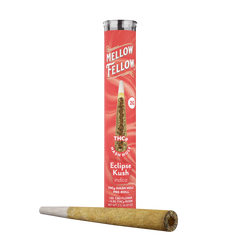
Eclipse Kush (Indica)
Eclipse Kush leans heavier and slower with earthy sweetness, vanilla haze notes, and a dense body effect that settles in steadily. The slow burn helps preserve the flavor profile while the rosin core thickens the smoke considerably. This strain fits best into evening use or laid-back weekends when relaxation takes priority.
THCa Hash Holes
Mellow Fellow’s THCa Hash Hole Pre-Rolls keep the spotlight on classic cannabis strain flavors while boosting potency through infused THCa rosin. These pre-rolls are terpene-rich, flavorful, and built for a fuller smoking experience.
Grape Ape OG (Indica)
Grape Ape OG combines sweet grape candy notes with earthy herbal depth and a deeply calming indica-style finish. The inhale stays smooth and slightly fruity, while the exhale becomes richer and more skunky as the session continues. Its slower burn and thick smoke make it especially satisfying later in the evening.
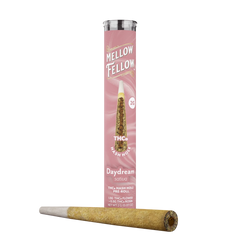
Daydream (Sativa)
Daydream features bright berry flavor layered with soft citrus and a noticeably uplifting head high. The sativa profile feels creative and social without becoming too overwhelming, while the rosin core intensifies the terpene expression throughout the smoke. It’s a lively strain that works well during the day or early evening.
Space Cake (Hybrid)
Space Cake blends creamy sweetness with light fruit notes and a balanced hybrid effect that starts mentally stimulating before easing into a calmer finish. The smoke feels dense and smooth thanks to the concentrated rosin center, and the flavor stays consistent well into the second half of the pre-roll.
How a Hash Hole Burns vs a Regular Joint
Burn behavior is one of the clearest practical differences between the two formats and the main reason hash holes appeal to experienced group smokers.
Regular Joint Burn Patterns
- Burn rate is determined by grind consistency, packing density, and moisture content
- Uneven packing or humidity variation leads to canoeing (one side burning faster)
- Ash column is cylindrical and collapses as the cherry advances
- A typical 1g joint lasts 8-15 minutes depending on draw frequency
Hash Hole Burn Patterns
- The rosin core creates a thermal barrier that slows the overall burn front
- Outer flower combusts first, forming the donut ring around the slower-melting center
- The donut ash holds structural integrity longer than standard ash
- A well-built 1g hash hole typically lasts 20-35 minutes
What the Donut Ring Means
The donut shape is not cosmetic – it signals that the rosin core is positioned correctly and that combustion is progressing outward from the flower while the concentrate melts from within. A collapsed or uneven ring usually means air gaps in the pack or off-center rosin placement.
A PMC review on cannabis combustion and vaporization temperatures found that cannabis joints burn at temperatures well above those of standard vaporizers, with combustion occurring above 400-600°C. Because hash rosin has a higher viscosity and lower surface area than ground flower, it burns more gradually at the center – which is the physical reason the donut ring forms and holds its shape.
Hash Hole Potency vs Regular Joint
Potency is where the two formats separate most sharply.
How the Numbers Compare
A standard joint with well-grown flower sits in the 18-28% THC range. According to NIDA cannabis potency data, concentrates available in legal dispensaries can exceed 40% THC. Hash rosin used in hash holes typically tests between 65-85%, with the total potency of the finished infused joint landing somewhere between 40-65% depending on the flower-to-rosin ratio.
Why High-Potency Cannabis Affects the Experience
A systematic review on high-potency cannabis and health published in Frontiers in Psychiatry found that people using higher-potency cannabis products do not always titrate their intake proportionally, meaning higher-potency formats often result in meaningfully greater cannabinoid exposure per session. For a hash hole, that translates to a longer, fuller experience compared to a regular joint of the same physical size.
For users who are newer to cannabis or have lower tolerance, a regular joint is the more appropriate starting point. A hash hole is a format for people who already know their response to high-potency products and want a fuller, slower session. Our guide on the entourage effect explains why the combination of cannabinoids and terpenes in a full-spectrum format adds another layer to that experience.
Find your next Hash Hole Pre-Roll and choose the strain that fits your session.
Full-Spectrum Experience: Terpenes and Minor Cannabinoids
The phrase “full-spectrum” has a specific meaning in the context of hash holes. Good hash rosin retains not just THC but also minor cannabinoids like CBG, CBN, and THCA precursors, along with a wide terpene panel.
How Terpene Retention Differs Between Formats
Research on cannabis vapor pressure and terpene volatility confirms that terpenes – particularly monoterpenes – are significantly more volatile than cannabinoids and are lost during conventional drying, curing, and combustion at a higher rate. During joint combustion, a significant fraction of terpenes are destroyed before they reach the user. The rosin core in a hash hole melts at a lower effective temperature than surrounding combustion, meaning more volatile terpenes survive into the inhale.
Terpenes like myrcene, limonene, and beta-caryophyllene shape the subjective quality of the experience beyond simple potency – a point supported by processing and extraction research published in PMC showing that extraction method directly determines which volatile compounds reach the final product. A regular joint from quality, fresh-cured flower can deliver a meaningful terpene experience, but the gap in concentration and preservation between flower and rosin is significant.
When to Choose a Hash Hole vs a Regular Joint
Both formats have a place. The decision comes down to experience level, occasion, and what the session is for.
|
Situation |
Better Format |
|
First-time or low-tolerance user |
Regular joint |
|
Sharing in a group over a long session |
Hash hole |
|
Quick, light smoke |
Regular joint |
|
Terpene-forward, full-spectrum cannabis experience |
Hash hole |
|
Budget-conscious purchase |
Regular joint |
|
Special occasion or premium craft cannabis |
Hash hole |
|
Newer to concentrates |
Regular joint first |
If you’re curious about infused formats more broadly, our guide on infused pre-rolls covers the category in detail, including how different types of concentrate change the smoking experience.
How Hash Holes Are Made vs Regular Joints
Let’s take a look at how hash holes differ from regular joints in terms of how they are made.
Rolling a Standard Joint
A regular joint takes ground flower, a paper, and a filter. The skill ceiling is low and the process is accessible to any consumer. Consistency in grind and pack density is the main variable.
Building a Hash Hole Pre-Roll
- Hash or rosin at the right temperature and consistency to form into a stable rope
- Even flower packing around the core without air gaps that cause canoeing
- Correct paper gauge and filter to manage the extra weight and slower burn
Most quality hash holes sold commercially are built by experienced extractors and rollers working with specific flower-to-concentrate ratios tested for even burn. Starting material quality, pressing temperature, and applied pressure determine rosin consistency and cannabinoid yield. Low-quality rosin – high in fats and lipids, low in actual cannabinoid content – produces poor burn behavior regardless of rolling skill.
For a look at how different cannabis products compare in experience and consumption method, our smoking vs edibles guide and how to smoke an infused pre-roll provide useful context.
Hash Hole vs Regular Joint: Which One Is Right for You?
The hash hole is not a replacement for a regular joint – it’s a different format built for a different kind of session. Regular joints remain the most accessible, affordable, and beginner-friendly way to smoke cannabis flower. They require no special materials, no technical rolling skill, and no tolerance to high-potency concentrates.
Hash holes are for experienced consumers who want a slower, longer, more terpene-rich experience and are already familiar with how their body responds to high-potency products. The donut burn pattern, the fuller cannabinoid profile, and the extended session time all serve that specific use case well.
If you’re still getting to know different cannabis formats, start with flower. If you’ve been smoking for a while and want a craft experience that lasts, a well-made hash hole is one of the most distinct options the infused pre-roll space has produced. When you’re ready to see what’s available, browse our pre-rolls collection or check our third-party lab results to review cannabinoid and terpene panels before buying.
Sources
- Processing and extraction methods of medicinal cannabis: a narrative review – PMC
- Do Cannabis Users Reduce Their THC Dosages When Using More Potent Cannabis Products? A Review – PubMed
- Vapor Pressure, Vaping, and Corrections to Misconceptions Related to Medical Cannabis’ Active Pharmaceutical Ingredients’ Physical Properties and Compositions – PMC
- Cannabis (Marijuana) | National Institute on Drug Abuse (NIDA)
- Thermography of cannabis extract vaporization cartridge heating coils in temperature- and voltage-controlled systems during a simulated human puff – PMC
- Novel Solventless Extraction Technique to Preserve Cannabinoid and Terpenoid Profiles of Fresh Cannabis Inflorescence – PMC