
Why Do Pre-Rolls Canoe: Causes, Fixes, and How to Stop Uneven Burns
Quick Answer: Pre-rolls canoe when one side of the joint burns faster than the other, creating an asymmetric cherry that eats through paper and flower unevenly. The most common causes of pre-roll canoeing are lighting a pre-roll unevenly, inconsistent grind, a pack that is too tight or too loose, and cannabis moisture content that is too dry or too wet. Catching a canoeing joint early makes it fixable in seconds – knowing the causes makes it preventable every time.
Few things are more frustrating mid-session than watching a well-rolled pre-roll turn into a lopsided burn that chews through one side while the other barely touches. Pre-roll canoeing – also called running, side-burning, or a pre-roll burning unevenly – is one of the most common complaints among cannabis consumers, and it happens to experienced smokers and newcomers alike.
The good news is that joint canoeing is almost always preventable, and when it does happen, it is fixable. This guide covers every root cause of uneven pre-roll burn, step-by-step fixes for a canoeing pre-roll in progress, and the prevention habits that keep things burning clean from the first light to the last pull.
Key Takeaways
- Pre-roll canoeing is caused by a combination of factors: uneven lighting, grind inconsistency, improper packing density, and incorrect moisture content in the flower.
- Leafly’s analysis of cannabis burn factors reports that cannabis with a moisture content between 3% and 8% produces the most consistent burn rate – too dry or too wet both cause problems.
- Rotating the pre-roll while lighting and during the first few pulls is the single most effective prevention habit for stopping pre-roll side burn.
- Paper quality and porosity directly affect how evenly a joint burns – thinner, higher-porosity papers reduce the risk of canoeing significantly.
- High-quality professionally rolled pre-rolls with consistent grind and proper fill weight canoe far less often than uneven hand-rolled joints.
- Infused pre-rolls, including hash hole formats, can canoe more readily due to concentrate distribution and require slower, more deliberate lighting.
What Is Pre-Roll Canoeing?
Pre-roll canoeing – also called running or side-burning – describes what happens when one side of a joint burns significantly faster than the other. The result looks like the hull of a canoe: one edge is fully combusted and eaten away, while the other side is intact or barely burning. The uneven cherry rides up one side of the paper while the other goes cold.
The canoeing pre-roll problem is not just aesthetic. It wastes flower, produces uneven smoke, and often forces multiple relights. In worse cases, the paper burns through entirely on one side before the flower inside finishes, leaving you holding a collapsed cone. Understanding why pre-rolls run on one side is the first step to stopping it.
Why Do Pre-Rolls Canoe: The 6 Main Causes
Canoeing has several root causes, and most of the time more than one is at play. Identifying the specific cause in your situation helps you apply the right fix rather than guessing.
Lighting a Pre-Roll Unevenly
The most common cause of a canoeing joint is an uneven light at the start. When you hold a flame to one side of the tip rather than rotating around the entire circumference, one section of the paper and flower ignites first. That side gets a head start it never gives back. Wind makes this worse.
Even a light breeze pushes the flame consistently to one side, creating an asymmetric cherry before the first inhale. Lighting a pre-roll properly – rotating the joint slowly while applying heat evenly around the full circumference before drawing – prevents most lighting-caused canoeing before it starts.
Grind Consistency and Pre-Roll Airflow Issues
Uneven grind creates uneven airflow channels inside the pre-roll. Coarse chunks of flower and fine powder packed together burn at completely different rates. Coarser material creates air pockets that allow more oxygen to reach certain spots, accelerating combustion there. Fine powder compacts tightly and restricts airflow in adjacent zones, slowing the burn.
Leafly’s cannabis burn rate guide notes that consistent particle size is one of the most reliable predictors of an even burn, and that grinding to a homogeneous texture produces more stable combustion than breaking flower apart by hand. A medium-coarse, uniform grind – not powder, not large chunks – is the target. Machine-rolled pre-rolls that grind to a specified consistency before filling canoe less often for exactly this reason.
Packed Too Tight or Too Loose in the Pre-Roll
Packing density has a direct relationship with airflow, and airflow determines where combustion happens fastest. A pre-roll packed too tight restricts airflow so severely that you have to pull hard just to draw smoke. That hard pull forces more oxygen from the outside of the paper rather than evenly through the fill, accelerating burning on the exposed surface and creating uneven cherry on joint.
A joint packed too loose has the opposite problem: large air gaps inside the cone mean the flame migrates toward whatever path offers the least resistance, which is rarely a straight line down the center. Futurola’s guide to common pre-roll cone packing mistakes confirms that warped or inconsistently packed cones directly cause canoeing by disrupting the internal airflow balance that a well-shaped cone depends on.
Wet Weed or Dry Weed Causing a Canoeing Joint
Cannabis moisture content is one of the most impactful variables in burn consistency. Leafly puts the ideal moisture content for cannabis between 3% and 8% for the most desirable and even burn rate.
Flower that is too dry burns faster and hotter than surrounding material. When some sections of the fill are drier than others – which happens when flower is stored without humidity control or exposed to air unevenly – those sections combust faster and create the lopsided cherry that defines canoeing.
A peer-reviewed study published in PMC on cannabis postharvest drying and curing (2025) confirmed that moisture content varies significantly based on drying method and storage conditions, with hot air drying reaching safe-storage moisture levels of around 6% within 8 hours while ambient air drying over a week produced less uniform results. That moisture non-uniformity translates directly to burn rate non-uniformity inside the pre-roll.
Wet weed in a pre-roll causes a different but equally problematic pattern: high moisture creates resistance to combustion in some sections while the drier areas burn normally, again producing an uneven cherry. The outer layer of a poorly cured bud may dry faster than the interior, creating a moisture gradient that causes joint airflow issues mid-session.
Rolling Paper Quality and the Best Rolling Papers for Even Burn
The rolling paper itself plays a meaningful role in whether a joint burns evenly or canoes. Futurola’s complete guide to rolling paper design and airflow explains that paper porosity – how much air passes through the paper itself rather than through the fill – directly controls static burn rate and combustion stability across the joint’s circumference. Papers with uniform porosity promote steady combustion from end to end, preventing canoeing and constant relighting.
Budget papers with inconsistent coating or uneven thickness create zones of differential burn rate around the joint even when the fill is perfect. Zig-Zag’s analysis of ultra-thin paper burn properties confirms that thinner papers with more even porosity are significantly less prone to running or canoeing because the paper contributes less interference to the combustion of the underlying material.
A paper that burns faster than the fill causes canoeing toward the paper surface; a paper that burns slower causes the fill to race ahead and tunnel. Choosing the best rolling papers for an even burn is a real lever for preventing side burn on a pre-roll.
Saliva, Moisture on the Paper, and Airflow Disruptions
Licking a rolling paper to seal it leaves moisture spots on the outside. Those spots burn slower than the dry sections, creating a built-in burn rate difference around the circumference of the joint. Over-wetting the seal during a hand-roll – or licking the tip of a pre-roll before lighting – is a common source of pre-roll burning unevenly on one side even when everything else is done correctly.
Stems, seeds, and large leaf fragments inside the fill block airflow unevenly. When a stem sits across the fill channel of a cone, it creates a low-airflow zone on one side of the joint and a high-airflow zone on the other, and the high-airflow side burns faster. This is one of the more overlooked causes of pre-roll canoeing – the pack may look even from the outside, but an obstruction inside redirects combustion from the first pull.
How to Fix a Canoeing Joint Mid-Smoke
A canoeing pre-roll is rarely unrecoverable if you catch it early. The goal is to slow down the fast-burning side and speed up the slow side until the cherry evens out. These are the fastest fixes for a canoeing pre-roll in progress:
- Wet Your Finger and Dampen the Fast Side: Apply a small amount of moisture to the area of paper that is running ahead. This slows combustion on that side by briefly reducing the paper’s flammability. Apply lightly – too much moisture and you will extinguish the cherry entirely.
- Rotate the Pre-Roll: Turn the joint so the slow-burning side faces down. Gravity pulls heat and air downward, which accelerates combustion on the underside. Hold it rotated for several seconds between pulls and check whether the cherry is evening out.
- Apply Indirect Heat to the Slow Side: Hold a lighter flame near – but not touching – the slow-burning side to gently bring that section up to combustion temperature. Do not hold the flame directly on the paper, as you will scorch it. Brief, indirect heat is enough to close the gap.
- Take Slower, Steadier Pulls: Aggressive draws pull more air and accelerate the burn on whichever side is already ahead. Slowing your inhale reduces the combustion rate differential and gives the slower side a chance to catch up without the faster side racing further ahead.
- Let It Rest: If you are passing in a group, setting the joint down briefly while the slower side catches up can even things out without any intervention. The cherry continues to burn slowly during rest, so the slower section can close the gap without the fast side burning further ahead on each pull.
How to Stop a Pre-Roll from Canoeing: Prevention Habits
Preventing canoeing is far easier than correcting it mid-session. These habits cover every stage from storage to the final pull.
Before You Light:
- Store flower at 55-65% relative humidity using humidity packs to maintain consistent moisture content across the fill
- Grind to a consistent medium-coarse texture using a quality two- or four-piece grinder – avoid both powder and large chunks
- Check that the pre-roll feels uniformly dense along its length before lighting – soft spots or stiff zones both predict uneven pre-roll burn
- Break up any visible large pieces, stems, or seeds before packing a hand-rolled joint to prevent airflow obstructions
When Lighting:
- Use a hemp wick or standard lighter rather than a butane torch, which applies heat too intensely to one point
- Rotate the pre-roll while holding the flame below the tip, making at least one full rotation before taking the first inhale
- Toast the tip for 3-5 seconds before drawing to ensure the full circumference is lit evenly
- Light away from wind whenever possible, since even a light breeze pushes heat to one side and creates an asymmetric cherry
While Smoking:
- Rotate the joint a quarter turn every two or three pulls to distribute heat evenly around the circumference
- Keep pulls slow and steady rather than drawing hard and fast, as aggressive pulls amplify any existing burn asymmetry
- Pass promptly when sharing – letting the joint sit unattended burns the paper while the fill cools unevenly
- Check the cherry after every few pulls during the early stage of the pre-roll, since catching a canoe when it is only a few millimeters ahead is far easier than correcting a centimeter-deep side burn
Pre-Roll Construction Quality and Canoeing Risk
The construction of the pre-roll itself is one of the strongest predictors of whether it will burn evenly. Quality construction – consistent grind, proper fill weight, appropriate moisture, and good paper – eliminates most of the variables that cause canoeing before the pre-roll even leaves the packaging.
|
Construction Factor |
Low Canoeing Risk |
High Canoeing Risk |
|
Grind Consistency |
Fine, uniform medium-coarse throughout |
Mixed particle sizes, stems and seeds present |
|
Fill Density |
Even throughout, moderate and uniform firmness |
Tight spots or air gaps along the length |
|
Moisture Content |
55-65% RH storage, 3-8% flower moisture |
Over-dried crumbly flower or freshly cured damp bud |
|
Paper Quality |
Thin, even-porosity paper with consistent burn rate |
Thick, inconsistent, or chemically treated budget papers |
|
Tip or Filter |
Structured crutch with open, consistent airflow |
No tip, or tip packed so tight it restricts draw |
|
Roll Method |
Machine-rolled or experienced hand-roll with even fill |
Uneven hand-roll with moisture on the seal |
Futurola’s research into cone shape and burn rate confirms that even small changes in cone angle, paper density, and flower distribution drastically alter burn behavior, and that premium pre-rolls rely on precision-engineered cones rather than just high-quality flower to achieve an even burn.
Why Do Infused Pre-Rolls Canoe More Often?
Infused pre-rolls – including hash hole formats and concentrate-wrapped joints – canoe more readily than standard pre-rolls because the concentrate adds mass, density, and heat to specific areas of the fill. Hash holes in particular contain a spiral of concentrate running through the center of the joint. If the hash rope is not centered evenly or not fully integrated with the surrounding flower, it burns at a different rate than the surrounding material and pulls the cherry asymmetrically.
Hash hole pre-rolls are worth understanding before you light one, because the lighting and smoking technique differs from a standard pre-roll. The concentrate core requires slightly more heat and a slower initial lighting process to reach combustion temperature evenly. Rushing the light on a hash hole is one of the fastest ways to create a canoe that is very difficult to correct later. Our guide on hash hole vs. regular joint burn mechanics covers the structural differences in more detail.
Infused pre-rolls also tend to produce a stickier, denser ash column that can block airflow toward one side of the cherry as it builds, compounding any existing burn asymmetry. Taking smaller, slower pulls and rotating more frequently during the first third of the session helps manage this significantly. For a closer look at hash hole construction and rolling technique, see our walkthrough on how to roll a hash hole.
Burn Rate Comparison: Pre-Roll Formats and Canoeing Risk
Not all pre-roll formats carry the same canoeing risk. The format, fill weight, and construction method all factor into how likely a given pre-roll is to run on one side during a session.
|
Pre-Roll Type |
Typical Burn Rate |
Canoeing Risk |
Key Notes |
|
Standard 1g Pre-Roll |
Moderate |
Low-Moderate |
Depends on grind consistency and paper quality |
|
Standard 2g Pre-Roll |
Moderate-Slow |
Moderate |
Longer burn increases exposure to asymmetric draw technique |
|
Hash Hole 2g Pre-Roll |
Slow |
Moderate-High |
Concentrate core requires deliberate and even lighting |
|
Machine-Rolled Pre-Roll |
Consistent |
Low |
Uniform grind and fill density reduce canoeing risk significantly |
|
Hand-Rolled Joint |
Variable |
Moderate-High |
Depends heavily on rolling technique and grind uniformity |
|
Infused and Concentrate-Wrapped |
Slow |
High |
Concentrate burns at a different rate than paper and flower |
|
Cone Joints vs Hand-Rolled Joints |
Moderate |
Lower for quality cones |
Cone geometry promotes more consistent airflow than hand-rolled tubes |
Mellow Fellow Pre-Rolls Built for a Clean, Even Burn
One of the most reliable ways to reduce pre-roll canoeing is to start with a professionally constructed pre-roll that uses properly cured flower, consistent grind, and quality paper. Mellow Fellow’s THCa and THCp pre-roll lines are built with exactly this in mind – uniform fill, appropriate moisture, and tight construction that holds its shape through a full session. Both collections are available through the THCa pre-roll collection and the THCp pre-roll collection.
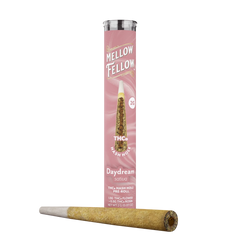
For more on what to expect from a quality THCa pre-roll format, see our detailed guide to THCa pre-rolls.
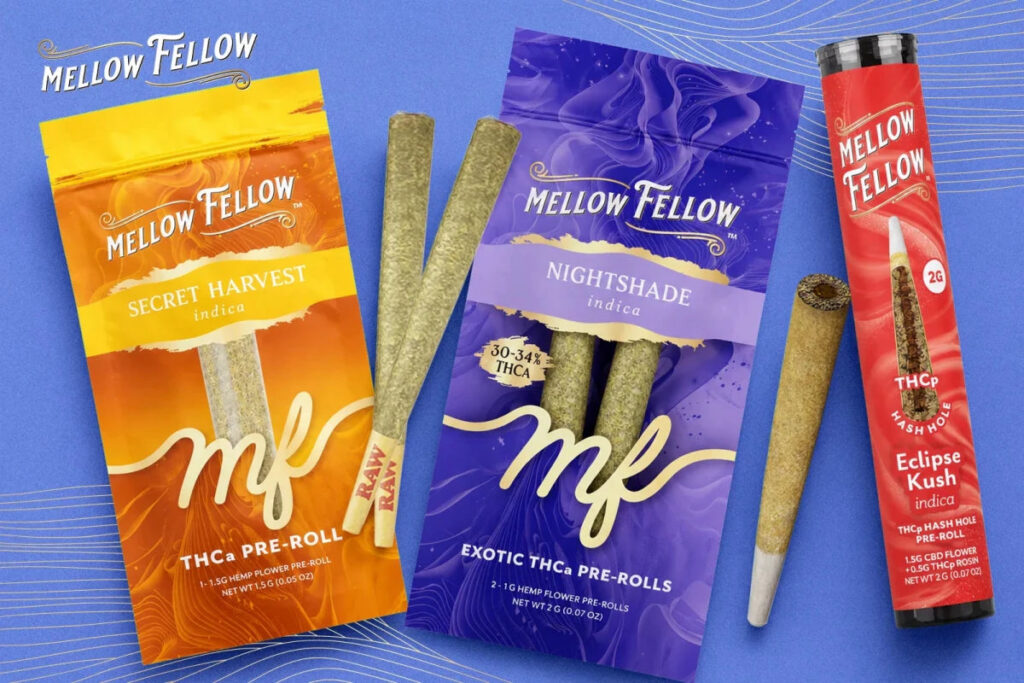
- THCa 1g Pre-Roll – AK Reserve Sativa: A single-gram sativa-dominant pre-roll with an energizing, clear-headed profile. Consistent grind and even fill make this one of the cleanest-burning options in the lineup for daytime use.
- THCa 1g Pre-Roll – Secret Harvest Indica: A relaxing indica-dominant pre-roll with a smooth, even draw. Well-suited to slower evening sessions where burn consistency matters. Pairs well with the best indica strains for sleep if you are exploring which profile works best for winding down.
- THCa 2g Hash Hole – Daydream Sativa: A two-gram hash hole sativa with a concentrate core spiral for enhanced potency and flavor. Light slowly with a full rotation of the tip before drawing, and rotate throughout for the cleanest burn.
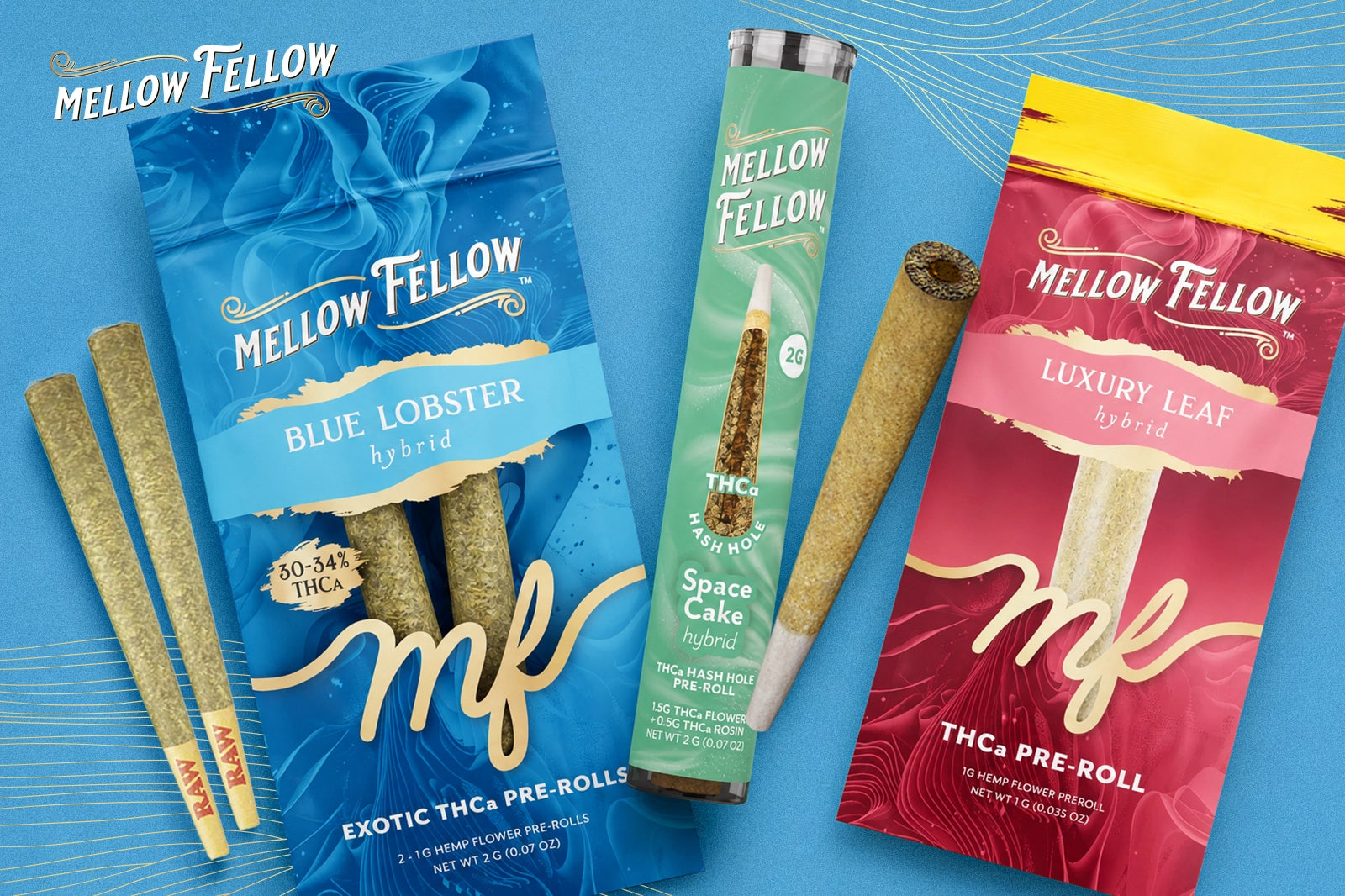
- THCa 2g Hash Hole – Space Cake Hybrid: A hybrid profile hash hole with balanced effects. The hash hole construction benefits from patient lighting and steady, deliberate pulls throughout the session to prevent the concentrate core from pulling ahead.
- THCa 2pc 2g Pre-Roll Pack – Private Reserve Exotic MF Reserve Indica: A two-piece indica pack using exotic reserve-grade flower. Even fill across both pre-rolls in the pack means predictable, consistent burn from start to finish across both joints.
- THCp 2g Hash Hole – Golden Fellow Hybrid: A THCp-infused hash hole in a balanced hybrid profile. THCp’s higher potency means this pre-roll burns best at a slow, deliberate pace – rush it and the concentrate core can run ahead on one side.
- THCp 2g Hash Hole – Diamond Daze Sativa: A sativa-dominant THCp hash hole with uplifting, cerebral effects. As with all hash hole formats, rotating during the first third of the session significantly reduces canoeing risk.
Conclusion: Even Pre-Roll Burns Start Before the First Light
Pre-roll canoeing is almost never random. It has specific, addressable causes – uneven lighting, inconsistent grind, improper packing density, moisture issues in the flower or paper, or low-quality rolling materials – and every one of them is correctable with the right habit or product choice.
The most reliable prevention combines a properly constructed pre-roll made from well-cured flower and quality paper, a slow rotating light, and steady pulls rather than hard, aggressive draws. For infused pre-rolls and hash hole formats, technique matters even more: patient lighting and deliberate rotation during the first third of the session eliminates most canoeing before it starts.
Browse Mellow Fellow’s THCa pre-roll collection and THCp pre-roll collection for professionally constructed pre-rolls with consistent fill, proper moisture, and clean burn from first light to finish.
Sources
- https://www.leafly.com/news/cannabis-101/factors-that-make-cannabis-burn-fast-or-slow
- https://pmc.ncbi.nlm.nih.gov/articles/PMC11821007/
- https://www.ncbi.nlm.nih.gov/pmc/articles/PMC9404914/
- https://www.ncbi.nlm.nih.gov/pmc/articles/PMC8911901/
- https://futurola.com/blogs/news/how-rolling-paper-design-impacts-airflow-the-complete-guide-to-a-better-smoking-experience
- https://futurola.com/blogs/news/cone-shape-vs-burn-rate-in-pre-rolls
- https://futurola.com/blogs/news/packing-a-pre-rolled-cone-10-common-mistakes-and-how-to-avoid-them
- https://zigzag.com/blogs/zig-zag-blogs/why-ultra-thin-rolling-papers-deliver-a-superior-burn