
What Is Infused Weed? Infused Flower Explained
Quick Answer: Infused weed is cannabis or hemp flower enhanced after harvest with added cannabinoids, concentrates, terpenes, or a combination of ingredients. Unlike regular flower, its final cannabinoid and terpene profile does not come exclusively from compounds naturally present in the plant.
“Infused” is one of those cannabis terms that sounds self-explanatory until you actually see it on a package.
One infused flower might be coated with cannabinoid distillate. Another might be dusted with kief. A third could contain rosin, live resin, THCa diamonds, added terpenes, or several of those ingredients together. The base material might be an intact bud, ground flower, hemp flower, or flower already packed into a pre-roll.
That makes infused weed a category rather than one specific recipe.
The useful question is not simply whether flower is infused. It is what was added to it, how that changes the finished cannabinoid or terpene profile, and whether the label and Certificate of Analysis confirm what you are buying.
This guide focuses on that definition. For narrower topics, Mellow Fellow already has separate guides to infused pre-rolls, THCp flower, how THCp flower is made, and hash holes.
Key Takeaways
- Infused weed is flower that has had cannabinoids, concentrates, terpenes, or other cannabis-derived ingredients added after harvest.
- Regular flower gets its cannabinoid and terpene profile from the plant itself, while infused flower combines the base flower with added material.
- Distillate, kief, hash, live resin, rosin, THCa diamonds, cannabinoid isolates, and terpene blends can all appear in infused flower products.
- Infused flower may be sold as whole buds, ground flower, or incorporated into an infused pre-roll.
- “Infused” does not identify one specific ingredient or guarantee one specific potency level.
- Added terpenes can change aroma or flavor without necessarily creating a major increase in cannabinoid content.
- The product label and batch-specific COA are more useful than marketing terms such as moon rocks, caviar, frosted flower, or diamond-infused weed.
- Mellow Fellow’s current THCp infused flower lineup is an example of hemp flower whose finished cannabinoid profile includes cannabinoids added after harvest.
What Does Infused Weed Mean?
Infused weed means that something has been intentionally added to cannabis or hemp flower after the plant was harvested.
That additional material may contain cannabinoids, concentrated cannabis resin, isolated trichomes, terpenes, or several ingredients at once.
Regular dried flower is different. Its cannabinoids and terpenes were produced by the plant during cultivation and remained in the flower through harvesting, drying, and curing.
Health Canada’s overview of cannabis products makes a useful distinction between dried herbal cannabis and concentrated products. It separately identifies dried flower, chemically concentrated extracts such as oils and waxes, and physically concentrated materials such as hash and kief.
Infused flower combines those worlds. Flower remains the base material, but another cannabis or cannabinoid ingredient is added to it.
A simplified formula looks like this:
Base cannabis or hemp flower + added cannabinoid, concentrate, terpene, or trichome material = infused flower
The exact combination varies considerably between products.
What Does THC Infused Mean?
When a label says something is THC infused, it generally means a THC-containing ingredient has been added to the original product.
For flower, that could mean cured cannabis or hemp has been enhanced with a THC-rich distillate, concentrate, resin, crystalline material, or another cannabinoid ingredient.
The phrase is broader outside the flower category. A THC-infused beverage, gummy, or food also contains added THC, but the base product is obviously not cannabis flower.
In this article, “THC infused” refers specifically to flower-based products.
What Is Infused Cannabis, Infused Marijuana, or Infused Bud?
In casual product language, infused cannabis, infused marijuana, infused bud, infused weed flower, and infused cannabis flower generally point to the same core idea: plant material that has been enhanced after harvest.
The important distinction is not which slang term appears on the menu. It is what the producer added.
A jar simply labeled “infused flower” gives you less useful information than a label that identifies the base flower, added cannabinoid or concentrate, total cannabinoid content, and batch testing.
Infused Weed vs. Regular Flower
The simplest difference between infused weed and regular flower is where the finished product’s chemistry comes from.
| Feature | Regular Flower | Infused Flower |
| Base material | Dried cannabis or hemp flower | Dried cannabis or hemp flower |
| Cannabinoids | Produced naturally by the plant | Natural flower cannabinoids plus any added cannabinoids |
| Terpenes | Primarily retained from the plant | May include natural flower terpenes plus added terpene material |
| Added concentrate | No | Often, but the exact ingredient varies |
| Kief or hash added after harvest | No | Possible |
| Distillate added after harvest | No | Possible |
| Resin, rosin, or diamonds added | No | Possible |
| Finished profile | Determined by the harvested flower | Determined by the flower and the infusion |
| Best way to verify contents | Product label and COA | Product label and COA, with special attention to added ingredients |
This distinction matters because appearances can be misleading.
A highly resinous natural flower may look extremely frosty because the plant produced dense trichomes. That does not automatically make it infused.
Conversely, infused ground flower may not look dramatically different from ordinary ground material even though an additional cannabinoid ingredient was mixed into it.
The definition depends on post-harvest addition, not simply appearance.
What Can Infused Flower Be Infused With?
There is no single ingredient that turns flower into infused flower.
Several concentrate and cannabinoid categories are used across the cannabis and hemp markets.
Cannabinoid Distillates
Cannabinoid distillate is a refined concentrate containing a high proportion of one or more target cannabinoids.
Depending on the product, the added distillate might contain Delta 8 THC, Delta 9 THC, THCp, HHC, CBD, or another cannabinoid.
Distillate is relevant to infused flower because it can add cannabinoids without requiring the base plant to have naturally produced those compounds at the final labeled concentration.
That difference is especially important for commercially available THCp flower. THCp is a real phytocannabinoid that was isolated and characterized in the original 2019 Scientific Reports study identifying tetrahydrocannabiphorol, but commercial THCp flower is generally made by adding THCp-rich material to a hemp-flower base rather than growing flower that naturally contains a comparable amount.
Kief and Hash
Kief and hash are concentrated forms of the cannabis plant’s resinous trichomes.
Kief generally refers to loose trichome-rich material separated from flower, while hash involves collected resin that has been further processed or compressed.
A peer-reviewed review of cannabis processing and extraction methods describes dry-sieve extraction as a way to separate trichomes into powder-like kief and notes that the material may be pressed into hash or mixed back with dried flower.
That makes kief one of the most straightforward infusion ingredients: flower can be combined with additional trichome material that did not remain naturally attached to that particular bud.
Oil-coated flower rolled in kief is also the basic concept behind many products marketed as moon rocks.
Live Resin and Rosin
Live resin and rosin are both cannabis concentrates, but the terms describe different processing approaches.
Live resin is generally produced through solvent-based extraction of fresh or frozen cannabis material, while rosin is obtained through pressure and heat rather than hydrocarbon solvent extraction.
The scientific literature on cannabis extraction techniques shows how extraction conditions can recover cannabinoids and terpenes from plant material in very different ways. A separate review of cannabis processing describes rosin pressing, dry-sieve extraction, water hash, hydrocarbon extraction, and other methods as distinct routes to concentrated cannabis material.
When resin or rosin is later combined with flower, the finished flower is infused because part of its cannabinoid and terpene profile comes from the added concentrate rather than the flower alone.
A hash hole is one specialized version of that flower-plus-concentrate concept, but its construction belongs on Mellow Fellow’s dedicated guide to what a hash hole is.
THCa Diamonds or Sand
THCa diamonds are crystalline concentrates rich in tetrahydrocannabinolic acid.
“Diamond-infused weed” generally means flower has been combined with THCa-rich crystalline material, diamond-derived material, or another concentrate marketed using diamond terminology.
You may also see words such as THCa sand, diamond dust, or crushed diamonds. These names can describe finely divided crystalline cannabinoid material, but product terminology is not perfectly consistent from one producer to another.
That is why the ingredient list and COA matter more than the word “diamond.”
For readers who want to understand the concentrate itself, Mellow Fellow has a separate guide to cannabis diamonds. This article will not go deeper into diamond or sand production because that is a separate search intent.
Added Terpenes
Not every infusion is primarily about increasing cannabinoids.
Terpenes may also be added after harvest to adjust a product’s aroma or flavor profile.
Cannabis naturally produces many terpenes in its glandular trichomes. Research reviewing cannabinoid and terpene extraction from Cannabis sativa identifies compounds such as myrcene, limonene, pinene, terpinolene, linalool, caryophyllene, and humulene among cannabis terpenes recovered from plant material.
If additional terpenes are applied after harvest, however, the finished aroma profile no longer comes exclusively from what that flower naturally retained.
This creates an important distinction:
- Flower can be cannabinoid infused, where added cannabinoids change the cannabinoid profile.
- Flower can be concentrate infused, where resin, rosin, distillate, kief, hash, or another extract is added.
- Flower can be terpene infused, where added aromatic compounds change the sensory profile.
- Flower can use several of these approaches at the same time.
The word infused alone does not tell you which one happened.
Whole-Bud, Ground, and Pre-Rolled Infused Flower
Infusion describes what has been added. Format describes the physical form in which the finished product is sold.
Those are separate questions.
| Infused Format | What It Means | What to Check |
| Whole-bud infused flower | Intact buds have been enhanced after harvest | What was applied, cannabinoid profile, visible coating, batch COA |
| Infused ground flower | Flower is ground before or after infusion and sold loose | Added ingredient, distribution, total cannabinoids, COA |
| Infused pre-roll | Ground flower and added concentrate are packaged in a ready-rolled format | Flower content, added concentrate, cannabinoid labeling, COA |
| Coated flower | Added material primarily sits on the bud surface | Coating ingredient and tested final composition |
| Multi-infused flower | More than one enhancement is used | Every stated infusion ingredient and full cannabinoid profile |
Infused ground flower is therefore not a different scientific category. It is infused flower that has already been ground.
Likewise, an infused pre-roll is not synonymous with infused flower. It is one finished product format that can contain infused flower or combine flower and concentrate during the rolling process..
Infused Flower vs. Naturally Potent Flower
High cannabinoid numbers do not automatically prove that flower was infused.
Cannabis plants vary significantly in chemotype, genetics, cultivation conditions, maturity, processing, and laboratory results. Some flower naturally develops a comparatively high concentration of THC, CBD, THCa, or other plant-produced compounds.
The key difference is source.
Naturally potent flower reached its final cannabinoid profile largely through the plant’s own biosynthesis.
Infused flower reached its final profile through a combination of:
- What the plant naturally produced
- What remained after drying and curing
- What was added after harvest
The distinction is useful even when two products show similar total cannabinoid numbers.
NIST has invested in cannabis reference materials and analytical methods precisely because accurate cannabinoid measurement matters. Its hemp reference material program is designed to help laboratories validate measurements of THC, CBD, moisture, and other components and improve labeling accuracy.
So if you are trying to determine whether a flower is naturally high in a cannabinoid or has been infused, the package description and test documentation are more meaningful than how crystalline the bud appears.
Does “Infused” Always Mean More Potent?
No. Infused does not automatically mean stronger.
It often does indicate that additional cannabinoid material has been added, and that can increase total cannabinoid content. But the definition of infusion is broader than potency.
Consider three different products:
- Flower coated with a high-cannabinoid distillate may show substantially more total cannabinoids than its base flower.
- Flower dusted with kief may show a more modest increase depending on the flower and kief used.
- Flower treated primarily with added terpenes could have a noticeably different aroma without a major increase in THC.
Even within cannabinoid-infused products, the amount added matters.
A tiny addition and a heavy concentrate coating are both forms of infusion, but they do not create identical final products.
This is one area where competing pages often oversimplify the category by treating infused and higher potency as interchangeable. Higher cannabinoid content is common, but it is not the definition.
The better question is: What does the tested final product contain?
What Is Infused Flower Weed at Mellow Fellow?
Mellow Fellow’s current THCp infused flower provides a concrete example of the category without requiring a deep dive into how the flower is manufactured.
The current lineup includes:
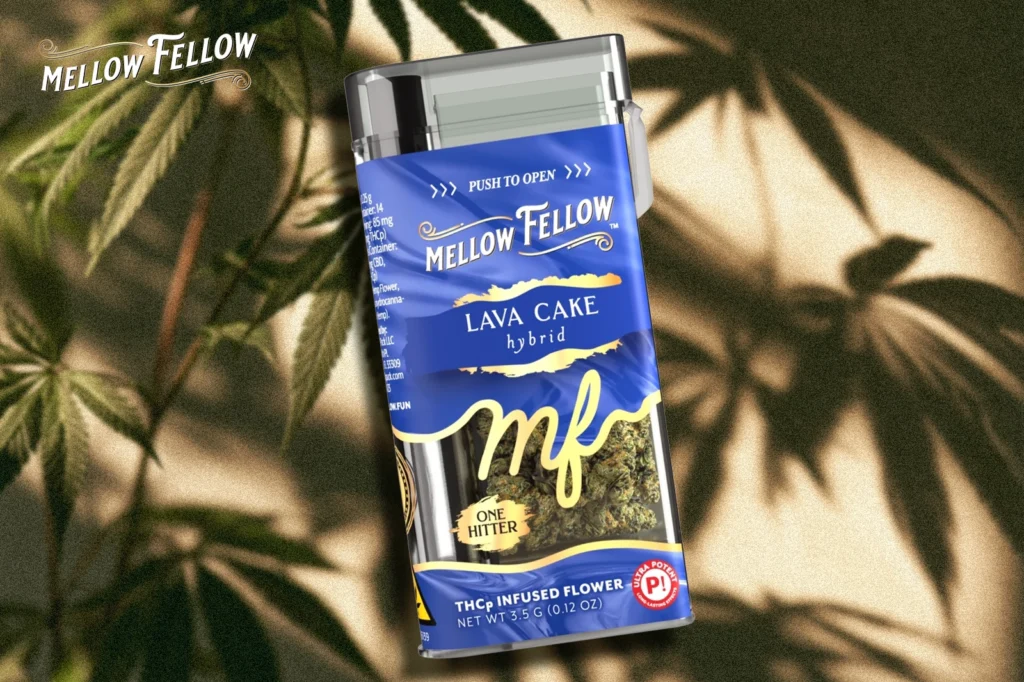
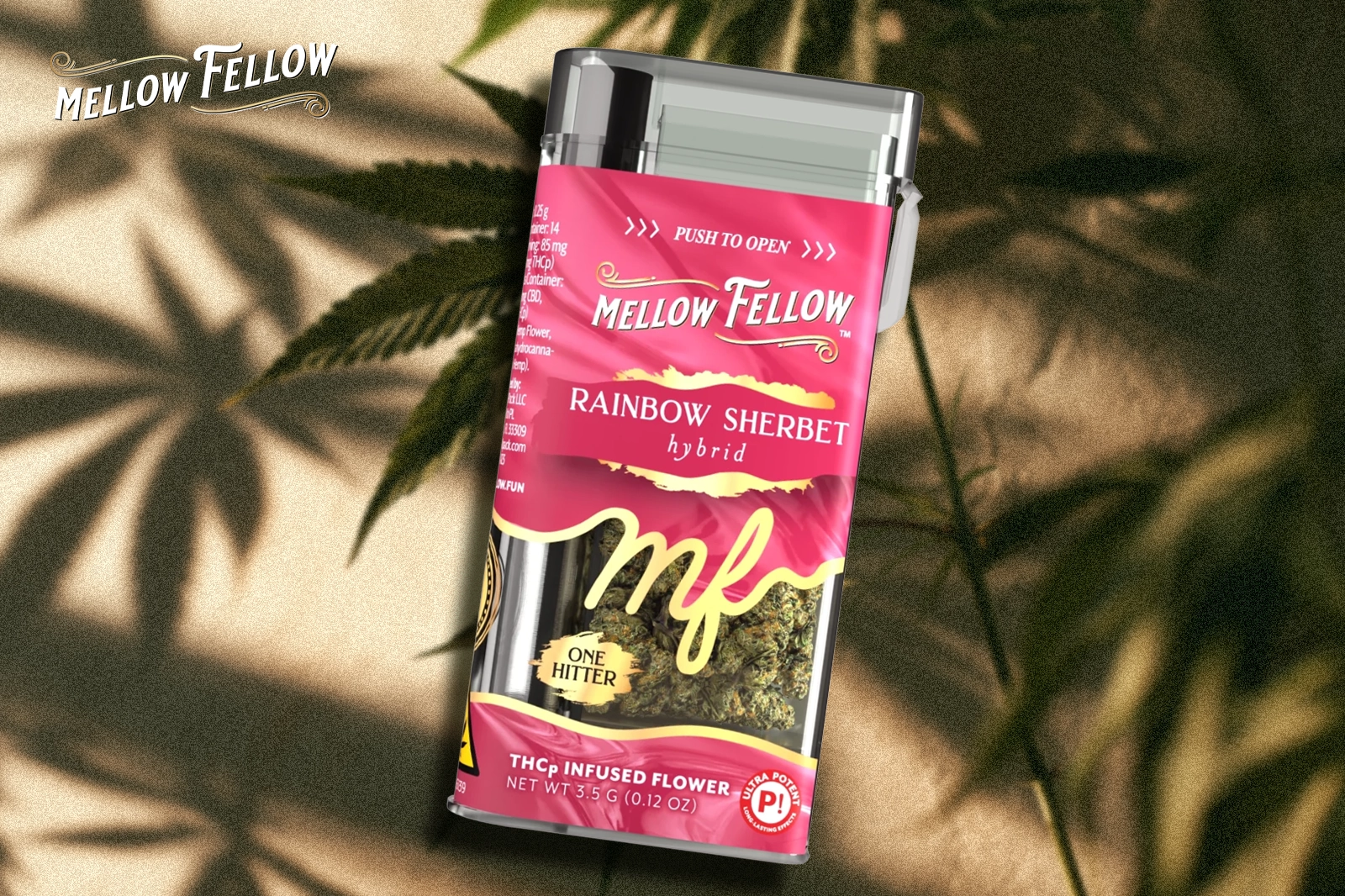
- THCp 3.5g Infused Flower + One Hitter – Fire Haze
- THCp 3.5g Infused Flower + One Hitter – Lava Cake
- THCp 3.5g Infused Flower + One Hitter – Rainbow Sherbet
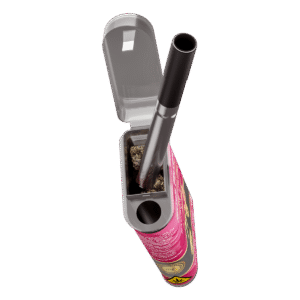
As of August 24, 2026, each live product page lists 3.5g of infused THCp flower, includes a signature one-hitter, and states 1186mg total cannabinoids per container.
Those details illustrate the definition nicely. The base format is flower, but the finished product is identified as infused THCp flower rather than naturally THCp-rich cannabis.
Mellow Fellow also maintains batch entries for Fire Haze, Lava Cake, and Rainbow Sherbet on its Lab Results page. That is more useful for verifying a specific product than relying on a general statement about how potent “infused weed” tends to be.
How to Read an Infused Flower Label and COA
Because infused can describe several very different products, the label and Certificate of Analysis should answer questions the marketing name cannot.
California offers a useful regulated-market example. Its Department of Cannabis Control requires testing for cannabinoids and terpenes as well as contaminants such as residual solvents, pesticides, heavy metals, microbial impurities, mycotoxins, and foreign material. Test results are reported through a Certificate of Analysis.
The exact rules depend on jurisdiction, but the decision framework works anywhere a reliable batch-specific COA is available.
| What to Check | Why It Matters |
| Exact product and batch or lot number | Confirms the COA belongs to the product in your hand |
| Base flower or flower type | Tells you what the underlying plant material is |
| Added cannabinoid | Identifies THCp, Delta 8, Delta 9, CBD, HHC, or other stated cannabinoid additions |
| Infusion ingredient | Distinguishes distillate, kief, hash, rosin, resin, diamonds, terpenes, or another material |
| Cannabinoid panel | Shows what the laboratory actually measured in the finished product |
| Total THC or other potency measurement | Provides batch-specific data rather than a category assumption |
| Terpene information, when provided | Helps distinguish measured terpene content from flavor marketing |
| Residual solvent testing | Particularly relevant where solvent-processed concentrates are involved |
| Heavy metals and pesticide screening | Adds contaminant information beyond potency |
| Microbial testing | Helps evaluate whether the tested batch met applicable microbial standards |
| Laboratory identity and report date | Helps establish that the document is a real test report rather than a generic product graphic |
California’s current labeling rules for infused pre-rolls provide an especially useful example of the distinction this article is making. Those rules allow cannabinoid labeling that separates the dried flower’s THC percentage from the added THC and CBD in milligrams.
That is exactly the type of information a shopper needs: what belonged to the flower, and what was added.
Do Not Assume the Highest Number Tells the Whole Story
Potency is one field on a COA, not the entire report.
An infused product with a large cannabinoid number may still leave important questions unanswered if you cannot determine the infusion ingredient, batch identity, contaminant testing, or whether the test corresponds to the actual package.
NIST’s cannabis laboratory quality-assurance work exists because cannabinoid testing involves real measurement challenges. Its Cannabis Laboratory Quality Assurance Program emphasizes measurement comparability, analytical methods, reference materials, and laboratory competence.
For Mellow Fellow products, start with the current Lab Results page and match the product or lot to the relevant certificate rather than using another strain’s results as a proxy.
Common Infused Flower Terms Explained
Infused cannabis terminology has expanded faster than standardization. That makes several popular words useful as clues, but poor substitutes for an ingredient list.
Moon Rocks
Moon rocks generally describe buds combined with cannabis oil or another sticky concentrate and then coated with kief.
The name tells you the general construction idea, not an exact potency or standardized formula.
Caviar
“Caviar” is another marketing term commonly used for concentrate-enhanced flower.
Some sellers distinguish caviar from moon rocks based on whether kief is used. Others do not. Check the specific product description instead of assuming one universal recipe.
Frosted or Kief-Coated Flower
These terms usually indicate that additional trichome-rich material has been applied to the flower.
Naturally frosty flower is not necessarily infused, however. A natural bud can look crystalline simply because it has abundant intact trichomes.
Sprayed Flower
Sprayed flower is flower that has had a liquid or atomized ingredient applied to its surface.
That ingredient could involve cannabinoids or terpenes. The word “sprayed” describes an application approach, not the actual substance.
For the narrower THCp question, see Is THCp Flower Sprayed?.
Diamond-Infused Weed
Diamond-infused weed generally refers to flower combined with THCa-rich crystalline or diamond-derived concentrate.
The phrase does not tell you how much diamond material was added, how evenly it was distributed, or what else is present.
Infused Pre-Roll
An infused pre-roll combines ground flower with added concentrate, cannabinoid material, kief, hash, or another infusion before or after rolling.
Conclusion: “Infused” Tells You Something Was Added, Not Everything You Need to Know
The cleanest answer to what is infused weed is simple: it is cannabis or hemp flower whose final composition has been changed after harvest by adding cannabinoids, concentrates, terpenes, trichome material, or a combination of ingredients.
What matters next is specificity.
“Infused” does not tell you whether the product contains distillate, kief, hash, rosin, live resin, THCa diamonds, THCp, added terpenes, or several of those materials together. It does not guarantee a specific cannabinoid percentage. It does not tell you whether you are looking at whole bud, ground flower, or an infused pre-roll.
The label and COA fill in those blanks.
If you are comparing Mellow Fellow infused flower, start with the live product description and then match it to the appropriate batch on the Mellow Fellow Lab Results page. For a current example of the category, explore the THCp 3.5g Infused Flower + One Hitter – Rainbow Sherbet, Fire Haze, or Lava Cake product pages and verify the batch before making comparisons.
Frequently Asked Questions
What Does Infused Weed Mean?
Infused weed means cannabis or hemp flower has been enhanced after harvest with another ingredient, such as cannabinoid distillate, kief, hash, live resin, rosin, THCa-rich material, terpenes, or a combination of those ingredients.
The base product is still flower. The difference is that its finished composition no longer comes only from compounds naturally produced by that flower.
What Does Infused Mean in Weed?
In weed, “infused” indicates a post-harvest addition.
The term does not name one specific ingredient. To understand a particular product, check what was added and verify the finished cannabinoid profile on its label or COA.
What Does THC Infused Mean?
THC infused means a THC-containing ingredient was added to the original product.
For flower, that may be a THC-rich distillate, concentrate, crystalline cannabinoid material, or another cannabis-derived ingredient. The phrase can also apply to non-flower products such as foods and beverages.
What Is Infused Flower?
Infused flower is cannabis or hemp flower that has been enhanced after harvest with added cannabinoids, concentrates, terpenes, kief, hash, or similar ingredients.
It can be sold as whole bud, ground flower, or used as the flower component of an infused pre-roll.
What Is Infused Marijuana?
Infused marijuana generally refers to marijuana flower that contains ingredients added after harvest.
Because “marijuana” is also used as a legal classification in the United States, the exact regulatory meaning of the product depends on where it is sold. As a product term, however, the infusion concept remains the same: base flower plus added material.
What Is Infused Cannabis?
Infused cannabis is a broad phrase for cannabis products that contain ingredients intentionally added to the base material.
When discussing infused cannabis flower, the base is dried flower and the addition may be a cannabinoid, concentrate, kief, hash, resin, rosin, diamonds, or terpene material.
What Is Infused Flower Weed?
Infused flower weed is simply another way of describing infused cannabis flower.
It is flower enhanced after harvest rather than a separate cannabis species, strain family, or botanical category.
What Is Infused Bud?
Infused bud usually means intact cannabis or hemp buds that have been coated, sprayed, dusted, dipped, or otherwise combined with another cannabis or cannabinoid ingredient after curing.
Always check the product description because two products called infused bud may use completely different ingredients.
What Does Infused Flower Mean on a Cannabis Label?
It tells you that the finished flower contains more than the flower’s naturally retained compounds.
The label should ideally identify what was added. A batch-specific COA can then show the measured cannabinoid profile and, depending on the laboratory and jurisdiction, other testing such as terpenes and contaminants.
Is Infused Flower the Same as a Pre-Roll?
No.
Infused flower describes concentrate- or cannabinoid-enhanced flower. An infused pre-roll is a ready-rolled product that contains flower plus an added infusion.
You can buy infused flower loose, and you can also buy it already incorporated into a pre-roll.
Is Infused Weed Always Stronger Than Regular Weed?
No.
Many cannabinoid-infused products are more potent than their base flower because additional cannabinoids have been added. But infusion can also involve terpenes or relatively small amounts of concentrate.
Check the tested cannabinoid numbers rather than assuming the word “infused” guarantees a specific strength.
Is Naturally Frosty Weed the Same as Infused Weed?
No.
Cannabis flowers naturally produce trichomes containing cannabinoids and terpenes. A bud can therefore look extremely crystalline without anything being added after harvest.
Infused flower requires a post-harvest addition.
Is THCp Flower a Type of Infused Weed?
Commercial THCp flower commonly fits the definition because hemp flower is enhanced after harvest with THCp-rich material.
THCp itself is a naturally occurring phytocannabinoid, but it occurs naturally at low concentrations. Mellow Fellow’s dedicated THCp flower guide covers that specific category in more detail.
How Can I Tell What an Infused Flower Contains?
Read the product label first, then check its batch-specific Certificate of Analysis.
Look for the named infusion ingredient, individual cannabinoids, total cannabinoid content, batch number, testing laboratory, and available contaminant testing. Do not rely on a nickname such as moon rocks or diamond-infused flower to tell you the complete formula.
Sources
- About Cannabis
- Processing and Extraction Methods of Medicinal Cannabis: A Narrative Review
- A Comprehensive Review on the Techniques for Extraction of Bioactive Compounds From Medicinal Cannabis
- A Novel Phytocannabinoid Isolated From Cannabis sativa L.: Δ9-Tetrahydrocannabiphorol
- NIST’s New Hemp Reference Material Will Help Ensure Accurate Cannabis Measurements
- NIST Tools for Cannabis Laboratory Quality Assurance
- Testing Laboratories
- Labeling Requirements for Manufactured Cannabis Products