
What Is Infused Ground Flower? Meaning, Formats, and What to Check
By Fabian Raemy
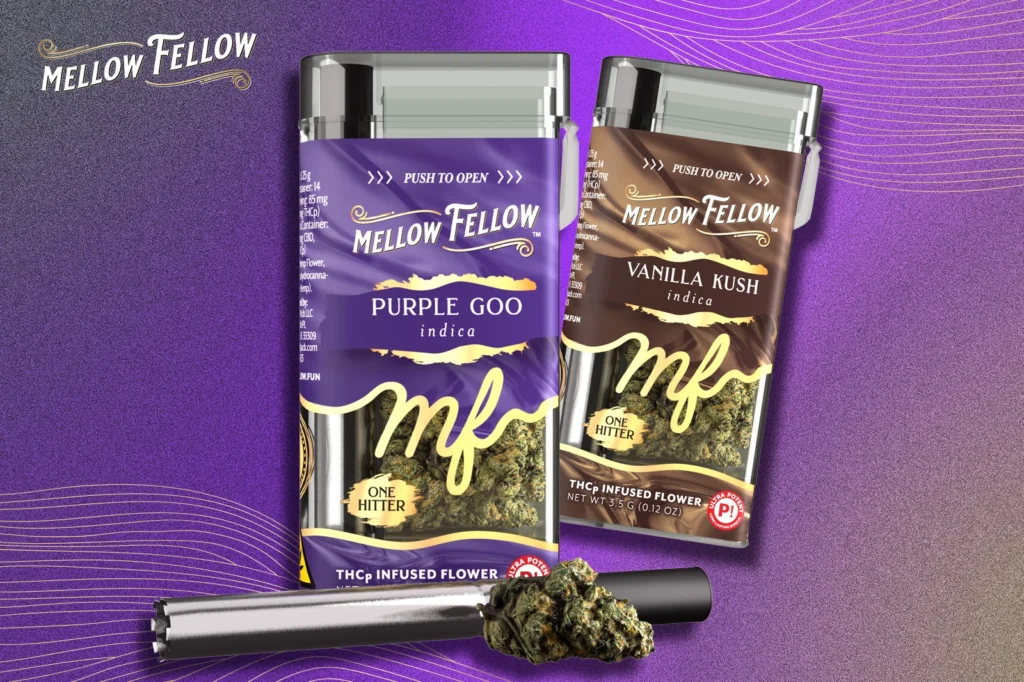
Quick Answer: Infused ground flower is milled cannabis or hemp flower that has been blended or coated with added cannabinoid ingredients before packaging. “Ground” describes its physical format, while “infused” means something was added beyond the compounds naturally present in the base flower.
“Infused ground flower” sounds like one technical product category, but the phrase is really doing two jobs at once. One word tells you what the flower looks like in the package. The other tells you that the finished material contains something beyond what was already present in the plant.
Keeping those two ideas separate makes the label much easier to read. It also prevents a few common shortcuts. Ground flower is not automatically shake. Infused ground flower is not automatically a pre-roll. And “infused” does not, by itself, tell you what was added, how evenly it was distributed, how the infusion was applied, or whether the starting flower was good.
Those are separate questions, and the best answers come from the ingredient information, product description, batch number, and certificate of analysis. If you want the broader category first, our guide to what infused weed means covers infused flower and related formats in more detail.
Key Takeaways
- “Ground” describes the flower’s physical form. “Infused” means the finished flower contains added material beyond what was naturally present in the base plant.
- Infused ground flower and whole infused flower can contain similar added ingredients, but one is loose milled material while the other remains in intact buds.
- Infused ground flower is not the same product format as an infused pre-roll, even when similar ground flower could be used to fill one.
- Pre-ground flower is not automatically shake. Shake generally refers to smaller pieces that separate from larger buds during handling, while pre-ground describes deliberately milled flower.
- A useful label and COA should help you identify the marketed cannabinoids, batch or lot, product weight, and laboratory results corresponding to that batch.
What Is Infused Ground Flower?
Infused ground flower is loose, milled flower with an added cannabinoid-containing ingredient. Depending on the product, that added material could be concentrate, distillate, kief, resin, crystalline material, or another cannabinoid preparation.
“Ground” Describes the Physical Form
The word ground tells you the flower has already been broken down before packaging. Instead of opening a jar of intact buds and grinding them yourself, you are buying loose plant material that is already milled.
That physical form can be convenient, but it does not tell you what grade of flower went into the product. Ground flower could begin as whole buds, smalls, shake, or another documented input. The finished texture alone cannot tell you which one.
“Infused” Describes What Was Added
The word infused tells you the finished flower contains an added ingredient beyond the base plant material.
That ingredient matters. Two jars can both be labeled infused ground flower while containing very different base flower, cannabinoid profiles, added materials, and concentrations.
Regulated product language helps show why those distinctions matter. New York’s product-category crosswalk distinguishes whole flower, ground flower, shake or trim, raw pre-rolls, infused or enhanced flower, and infused or enhanced pre-rolls rather than treating all of them as one category.
What the Phrase Does Not Tell You
Reading “infused ground flower” on a package still leaves several useful questions unanswered:
- What exactly was added?
- What base flower was used?
- How was the added material incorporated?
- Which cannabinoids were measured in the finished batch?
- Does the COA match the lot in your hand?
- Is the potency shown as a percentage, mg/g, or total milligrams per package?
Those details are where meaningful product comparison begins.
What “Ground” and “Infused” Mean on the Label
The simplest way to read the label is to separate format from composition.
| Label Term | What It Tells You | What It Does Not Tell You |
| Ground | The flower was milled before packaging | Starting flower quality, potency, or infusion method |
| Pre-ground | The flower was prepared in a loose ground form before sale | Whether the input was whole bud, smalls, shake, or trim |
| Infused | Material was added beyond the base flower | Exactly what was added or how it was applied |
| THCp infused | A THCp-containing ingredient was added | Exact THCp amount, distribution, or total cannabinoid profile |
Why This Distinction Matters
A label can be technically accurate and still leave plenty of room for ambiguity. “Infused” is useful, but it is not specific enough to replace an ingredient statement or cannabinoid panel. “Ground” is useful, but it is not a quality grade.
That is why the most informative product pages tell you both what the product is and what went into it.
Specialized Infusions Need Specialized Explanations
If a product uses a more specific infusion, look for more specific language. A crystalline THCa ingredient, for example, raises different questions than kief or distillate.
Our guide to diamond-infused weed covers one such format without treating every infused product as though it were made the same way.
What “Infused” Does Not Tell You About the Infusion Method
One of the easiest mistakes is treating “infused” as though it describes the manufacturing process. It does not.
Infused Is a Finished-Product Description
“Infused” tells you the final flower contains an added ingredient. It does not tell you whether that ingredient was:
- blended through loose ground flower,
- applied to the exterior,
- incorporated as fine crystalline material,
- distributed as a concentrate,
- or introduced using another process.
Those are manufacturing details, and they should be described separately when they matter.
Infused and Sprayed Are Not Synonyms
Shoppers often use “infused” and “sprayed” interchangeably, but the terms answer different questions.
Infused describes a finished product that contains added material. Sprayed describes one possible method of applying something to flower. An infused product may use a different process entirely.
If that manufacturing detail matters to your purchase, look for direct language about the method rather than assuming it from the word “infused.” Our guide to whether THCp flower is sprayed handles that narrower question separately.
Infused Ground Flower vs. Whole Infused Flower
The most obvious difference is physical form, but that difference changes what you can inspect before using the product.
Whole Infused Flower Preserves the Bud Structure
Whole infused flower remains in intact buds. You can see the nug, examine its structure, break it apart yourself, and sometimes see how a visible coating or crystalline material sits on the surface.
That extra visual information does not replace a COA, but it does give you more to inspect.
Ground Infused Flower Trades Visual Detail for Convenience
Infused ground flower arrives already milled. You do not need to break down a bud first, and the material is ready to portion in its loose form.
The trade-off is that you can no longer evaluate the original bud structure in the same way. Once flower is milled and combined with an added ingredient, visual inspection tells you less about the starting material.
| Feature | Whole Infused Flower | Infused Ground Flower |
| Physical form | Intact buds | Loose milled material |
| Need to grind before use | Usually yes | No |
| Original bud structure visible | Yes | No |
| Added material may be visible | Sometimes | Sometimes |
| Source-flower disclosure importance | High | Especially high |
| Batch-specific COA importance | High | High |
Similar Ingredients Do Not Make the Formats Identical
Whole infused flower and infused ground flower can use the same cannabinoid or infusion ingredient, but they are still different product forms. Format changes handling, inspection, and how much information you can infer from appearance alone.
Infused Ground Flower vs. Infused Pre-Rolls
Infused ground flower is loose material. An infused pre-roll is a completed rolled product.
Loose Material vs. Finished Construction
With loose infused ground flower, the consumer decides how much to portion and which compatible setup to use.
With an infused pre-roll, the manufacturer also determines the paper or cone, fill density, construction, and placement of the added concentrate or infusion.
The Same Ground Material Can End Up in Different Products
A loose infused flower mixture could potentially be used as pre-roll filling, but that does not make the two formats interchangeable. A finished pre-roll introduces another layer of construction that affects the final product.
If you want that format explained in more detail, see our guide to what infused pre-rolls are.
| Format | Physical Form | Where the Infusion May Be Found | Main Information Need |
| Whole infused flower | Intact buds | Coated, treated, or otherwise incorporated into the bud | Base-flower and infusion quality |
| Infused ground flower | Milled loose flower | Distributed through or over the loose material | Consistency, ingredients, and batch potency |
| Infused pre-roll | Ground flower in a finished roll | Blended through the fill, applied outside, or placed as a concentrate core | Construction, cannabinoid amount, and batch testing |
Is Infused Ground Flower Shake?
Not necessarily. This is one of the most useful distinctions to get right.
Shake and Pre-Ground Describe Different Things
Shake generally refers to smaller pieces of flower that separate from larger buds during handling and storage. Leafly’s cannabis glossary describes shake as small pieces that were once part of larger buds and typically fall off as flower is handled.
Pre-ground flower describes a deliberately prepared physical form. It tells you that the flower was milled before sale, not why the pieces are small.
Ask What the Product Started As
Instead of asking only whether ground flower is shake, ask:
- Was the product milled from whole buds?
- Was it made from smalls?
- Does the manufacturer identify shake or trim as an input?
- Is the base cultivar disclosed?
- Is the source material described anywhere beyond the product name?
Those questions are much more useful than judging the product by particle size alone.
Why Even Distribution Matters in Infused Flower
Infused ground flower is a mixture of plant material and added material. That makes distribution an important quality question.
Grinding Does Not Guarantee Homogeneity
Grinding can make it easier to combine ingredients throughout a loose mixture, but it does not prove that every pinch contains exactly the same ratio of base flower to infusion.
Particle size, moisture, mixing technique, ingredient texture, and handling can all influence how material moves through the package. Fine particles may settle differently from coarse ones, while sticky or crystalline ingredients may distribute differently from plant material.
“Infused” and “Homogeneous” Are Not the Same Claim
Laboratories pay close attention to homogenization for the same reason. A peer-reviewed study on hemp homogenization examined grinding and particle-size reduction as part of preparing representative material for cannabinoid analysis.
NIST’s cannabis laboratory quality-assurance work likewise addresses sample preparation, cannabinoid testing, moisture, and measurement comparability.
New York’s laboratory testing Q&A provides another useful nuance: enhanced flower can fall under cannabis flower product categories, but formal homogeneity testing is not necessarily required simply because a flower product is infused.
The practical takeaway is that an “infused” label should not be treated as proof that every tiny portion is chemically identical.
How to Judge Grind Consistency Without Guessing at Potency
A jar of infused ground flower can tell you useful things by sight, but appearance has limits.
What You Can Inspect Visually
You can reasonably look for:
- very large stems or woody pieces,
- unusually fine powder,
- obvious clumping,
- major variation in particle size,
- visibly separated added material,
- or a texture that looks very different from what the product description promised.
Those are observations about physical consistency, not chemical potency.
What You Cannot Determine by Looking
You cannot reliably determine:
- the exact milligrams of THCp or another cannabinoid,
- whether the blend is chemically uniform,
- whether the visible crystals represent most of the active ingredient,
- or whether the product matches its label claim.
A tidy grind can still require careful testing, and a visibly crystalline product is not automatically stronger than one that looks less dramatic.
Use the COA for Chemistry
The simplest rule is this: use your eyes to judge the physical grind and use the batch COA to judge measured cannabinoid content.
NIST’s cannabinoid analysis work provides useful technical context for why representative grinding and sampling matter when laboratories analyze cannabis plant material.
What to Look for in Infused Ground Flower
A useful product page and lab report should make the product easier to understand, not force you to reverse-engineer it.
1. Cannabinoid Disclosure
Identify which cannabinoids the product is marketed around. Then check whether those same cannabinoids appear in the laboratory result.
A product marketed around THCp should give you more than a strain name and a generic “infused” claim.
2. Batch-Specific Lab Results
The batch or lot number on the package should correspond to the COA you open. A beautifully formatted lab report is not very useful if it belongs to a different production run.
3. Base-Flower Identification
Look for information about the flower itself. Useful disclosures may include the cultivar, whether whole buds or another material were used, and any statement about smalls, shake, or trim.
4. Added-Ingredient Disclosure
“Infused” should be followed by a meaningful explanation of the added ingredient. The product name should not be the only clue.
5. Physical Consistency and Moisture Information
Ground material should look reasonably consistent for the product style. If moisture or water-activity data is provided, it should correspond to the same tested batch.
| Check | Where to Find It | Why It Matters |
| Named cannabinoids | Label and cannabinoid panel | Confirms what the product is marketed as containing |
| Lot or batch identifier | Package and COA header | Helps verify that the report belongs to the product |
| Added ingredients | Ingredient statement or product description | Clarifies what “infused” means for that product |
| Cannabinoid results | Batch COA | Shows measured concentrations rather than marketing language |
| Contaminant panels | COA | Shows which relevant analytes were screened |
| Moisture or water activity, when reported | COA or testing panel | Adds useful quality-control context for flower |
What Good Label Transparency Can Look Like
Labeling requirements vary by jurisdiction, so no single state framework should be treated as a universal federal standard.
Still, New York’s Part 128 labeling guidance provides a useful regulated-market example. Its requirements cover cannabinoid disclosure, net quantity, ingredient information, lot identification, storage information, and access to a downloadable COA.
The bigger principle travels well: a product should give you enough information to connect what the label says with what the laboratory tested.
How to Compare Potency Numbers on Infused Ground Flower Labels
Potency labels become confusing when different brands use different units. Most of the confusion disappears once you compare like with like.
Percentage vs. mg/g
For the same cannabinoid measured on the same basis, percentage and mg/g can be converted directly.
| Reported Concentration | Equivalent Percentage |
| 10mg/g | 1% |
| 50mg/g | 5% |
| 100mg/g | 10% |
| 200mg/g | 20% |
A value of 10mg/g means there are 10 milligrams of that cannabinoid per gram of material, which is equivalent to 1% by weight.
Total Milligrams in the Package
To estimate the total milligrams of a cannabinoid in a package, multiply its mg/g concentration by the package weight in grams.
For example, a 3.5g package measured at 50mg/g of a cannabinoid would contain an estimated 175mg of that cannabinoid across the entire package.
Oregon’s official potency-calculation guidance uses the same basic conversion logic.
Three Potency Comparisons That Commonly Go Wrong
Do not automatically compare:
- Total cannabinoids vs. one specific cannabinoid. These are not the same measurement.
- Percentage vs. total package milligrams. One is concentration; the other is an amount across the whole container.
- Numbers reported on different bases. Moisture correction, dry-weight reporting, and other analytical conventions can change how results are expressed.
Before deciding one product is stronger, check the named cannabinoid, unit, net weight, and reporting basis.
Does Ground Flower Automatically Mean Lower Quality?
No. Ground is a format, not a grade.
The Starting Material Matters More Than the Grind
A producer can intentionally mill good flower because a pre-ground format is convenient. Another product could be assembled from small pieces or lower-grade material. The word “ground” cannot tell you which one happened.
That is why source-flower disclosure matters.
What You Lose When the Flower Is Ground
Ground flower does have one disadvantage from an evaluation standpoint: you lose some of the visual information available from an intact bud.
Once the flower has been milled, you can no longer inspect bud size, structure, exterior condition, or trichome coverage in quite the same way.
That does not make the product worse. It simply means you should rely more heavily on documentation.
Better Quality Questions to Ask
When comparing two infused ground flower products, ask:
- What base flower was used?
- What ingredient was added?
- Is the batch identified?
- Does the COA match that batch?
- Are the marketed cannabinoids measured on the report?
- Does the producer explain the product clearly enough to verify what you are buying?
Those questions reveal much more than whether the flower arrived as whole nugs.
THCp-Infused Ground Flower: What the Phrase Tells You
“THCp infused ground flower” should be read literally.
The physical format is loose milled flower, and the product has been enhanced with a THCp-containing ingredient.
What It Tells You
The phrase tells you two things:
- the flower is ground,
- and THCp-containing material was added.
What It Still Does Not Tell You
It does not automatically reveal:
- the exact THCp concentration,
- what other cannabinoids are present,
- what the base flower was,
- how the THCp ingredient was applied,
- how evenly it was distributed,
- or how the final product compares with another THCp flower.
Those facts should come from product documentation and batch testing.
If the cannabinoid itself is your main question, use our guide to what THCp flower is or our comparison of THCa vs. THCp flower.
Conclusion: Read “Infused Ground Flower” as Two Separate Claims
The easiest way to understand infused ground flower is to split the phrase in half.
Ground tells you the flower has been milled into loose material. Infused tells you something has been added to that base flower.
Those two words do not prove the quality of the starting material, the amount of a particular cannabinoid, the way the infusion was applied, or how evenly the added ingredient is distributed. Those are separate facts, and good product information should provide separate evidence for them.
When you compare infused ground flower, focus on the base flower, added ingredient, batch identifier, cannabinoid results, and the match between the package and its COA. That tells you far more than a flashy potency claim or a close-up photo of crystals.
Find Mellow Fellow Infused Flower
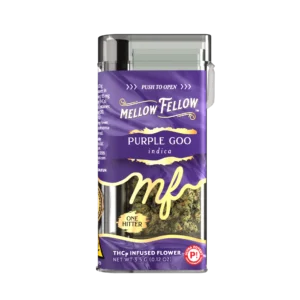
If you are comparing Mellow Fellow’s current 3.5g THCp infused-flower lineup, start with the product information and then match the product to its batch-specific lab result.
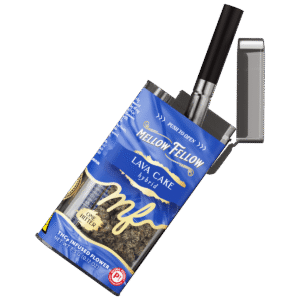
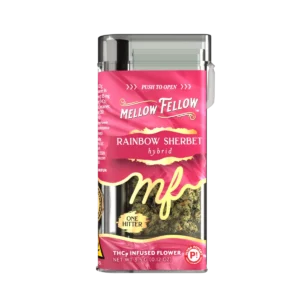
Current infused-flower options include Vanilla Kush, Purple Goo, Rainbow Sherbet, and Lava Cake.
Check the current product page, batch results, availability, and applicable local rules before ordering. Adults 21+ only.
Frequently Asked Questions
What Does Infused Ground Flower Mean?
Infused ground flower means loose milled flower has been combined with an added cannabinoid ingredient or another cannabis- or hemp-derived material. “Ground” describes the physical form, while “infused” describes a change in the composition of the finished product.
What Is Infused Pre-Ground Flower?
Infused pre-ground flower is another way of describing flower that has already been milled before sale and contains an added infusion. The product label should still tell you what was added, while a batch-specific COA should help verify the cannabinoids being marketed.
Is Infused Ground Flower Shake?
Not necessarily. Shake generally refers to small pieces that separate from larger buds during handling. Pre-ground or milled flower describes the physical form in which the product is sold. The term alone does not tell you whether its starting material consisted of whole buds, smalls, shake, trim, or a blend.
Infused Ground Flower vs. Whole Flower: What Changes?
Whole infused flower remains in intact buds, while infused ground flower has already been milled. Either format can contain added cannabinoids or other infusion ingredients. With ground flower, source-material disclosure and batch testing become particularly useful because the original bud structure is no longer visible.
Infused Ground Flower vs. Pre-Roll: What Is the Difference?
Infused ground flower is loose material. An infused pre-roll is a finished rolled product with its own paper or cone, fill, construction, and infusion placement. Similar ground flower could be used inside an infused pre-roll, but the two are different product formats.
Does Ground Flower Automatically Mean Lower Quality?
No. Ground describes physical form, not quality. The quality of the finished product depends on the starting material, processing, storage, added ingredients, and whether reliable product information and batch testing support the claims being made.
What Should a Lab Report for Infused Ground Flower Show?
Look for a product or sample name, lot or batch identifier, test date, cannabinoid results relevant to the marketed ingredients, and the appropriate contaminant or safety panels for the product and jurisdiction. Most importantly, confirm that the package and COA correspond to the same batch.
What Does THCp Infused Ground Flower Mean?
It means milled flower has been enhanced with a THCp-containing ingredient. The phrase alone does not tell you the amount of THCp or the rest of the cannabinoid profile.
Is Infused Ground Flower the Same as Sprayed Flower?
No. “Infused” is a broad description of the finished product and does not identify one specific manufacturing method. The added ingredient can potentially be incorporated in different ways.
Sources
- New York State METRC Product Category Conversions
- Part 128: Packaging & Labeling Guidance
- How to Read the Lab Certificate of Analysis for Your Cannabis Product
- Cannabis Product Sampling and Laboratory Testing Q&A
- NIST Tools for Cannabis Laboratory Quality Assurance
- Cannabis Laboratory Quality Assurance Program: Exercise 3 Moisture Final Report
- A Proposed Method of Sample Preparation and Homogenization of Hemp for the Molecular Analysis of Cannabinoids
- What Is Shake?
- High-Throughput LC-PDA Method for Determination of Delta 9 THC and Related Cannabinoids in Cannabis Sativa
- Guidance for Calculating Potency Values and Rounding
Metadata
Meta Title: What Is Infused Ground Flower? | Mellow Fellow
Meta Description: Understand what infused ground flower is, how it differs from whole flower and pre-rolls, and what its label and lab report should disclose.
Slug: /blogs/learn/what-is-infused-ground-flower