
Mixing Caffeine and THC: Effects, Safety, and How to Do It Right

Quick Answer: Mixing caffeine and THC is common, but the two compounds work through overlapping brain systems in ways that can either sharpen your high or spike anxiety and heart rate. The outcome depends heavily on dose, timing, and which THC product you choose. Starting low with both, picking a daytime-appropriate blend, and spacing your intake correctly makes the biggest difference between a productive session and an uncomfortable one.
Weed and coffee is one of the most popular combinations in the world. Millions of people reach for a cup before a morning session without giving it a second thought. But the caffeine and THC interaction is more nuanced than it looks, and getting the ratio wrong – too much caffeine, poor timing, or the wrong product – is behind most of the jittery, anxious experiences people report.
This guide covers what actually happens when you mix caffeine and THC, the real cardiovascular and anxiety risks, how to dose and time each compound for the best results, and which Mellow Fellow products work best alongside a coffee ritual. For a broader look at how cannabinoids affect daily function, see Mellow Fellow’s guide to functional stoner productivity.
Key Takeaways
- Caffeine blocks adenosine receptors; THC activates CB1 receptors – and these two receptor systems interact directly in the striatum, meaning caffeine genuinely shifts how THC feels.
- A 2025 double-blind, placebo-controlled human trial found that 180 mg caffeine co-administered with 7.5 mg THC altered THC’s subjective effects and performance outcomes in healthy adults.
- Both compounds independently raise heart rate, and research shows their cardiovascular effects are additive – making high doses of each a combination to approach with care.
- Timing matters more than most users realize: front-loading caffeine while waiting on edibles is the most common trigger for an unexpectedly intense or anxious session.
-
Mellow Fellow’s Clarity and Creativity blends are formulated with THCv and CBG, making them among the cleanest daytime pairings with moderate caffeine.
What Happens in the Brain When You Mix Caffeine and THC
Caffeine and THC operate through different but intersecting pathways in the brain, and understanding that overlap explains most of what users feel.
Caffeine is an adenosine receptor antagonist. It blocks adenosine – the chemical that accumulates throughout the day and signals drowsiness – by binding to adenosine A1 and A2A receptors. Blocking those receptors produces the familiar alertness boost, mild increase in blood pressure, and the faster, more alert mental state most coffee drinkers depend on.
THC primarily binds to CB1 receptors throughout the endocannabinoid system, producing euphoria, relaxation, altered time perception, appetite changes, and in some doses, heightened anxiety or tachycardia.
The Critical Overlap: CB1 and adenosine A2A receptors are both densely expressed in the striatum, and research published in the British Journal of Pharmacology shows that these two receptor systems form physical heteromeric complexes – meaning caffeine’s mechanism directly influences how CB1 receptors function.
When caffeine blocks adenosine A2A receptors, it alters the signaling environment in which THC operates, which is why the combination produces a different quality of high rather than simply combining two independent effects.
A Further Layer: Research from the Journal of Neuropharmacology found that chronic caffeine exposure sensitized cannabinoid CB1 receptor transmission in the striatum, suggesting that habitual coffee drinkers may experience THC differently than caffeine-naive users. This gives a mechanistic explanation for why some regular coffee drinkers report that their morning session feels sharper or more mentally engaged.

These aren’t abstract neuroscience findings – they explain the practical patterns cannabis and coffee users report every day. Want to understand more about how cannabinoids interact with your biology? Mellow Fellow’s cannabinoid education hub covers the basics in plain language.
Does Coffee Make THC Stronger or Weaker?
This is one of the most searched questions about the caffeine and THC combination, and the answer depends entirely on dose.
The most important recent data comes from a 2025 double-blind, randomized, placebo-controlled crossover study published in Neuropsychopharmacology – the first direct human laboratory assessment of THC and caffeine co-administration. Researchers at Johns Hopkins University gave 20 healthy adults oral THC (7.5mg cumulative), caffeine (180mg cumulative), and combinations thereof.
Key Finding: Caffeine alone did not dramatically change THC’s subjective “drug high” in this dose range, but the combination was associated with altered performance outcomes and greater impairment than THC alone on psychomotor tasks.
Earlier preclinical data from a 2012 study in the British Journal of Pharmacology showed that caffeine potentiated THC’s memory-impairing effects in rats – a subthreshold THC dose that produced no memory deficit alone produced significant working memory impairment when combined with caffeine. The mechanism appears to involve adenosine A1 receptor blockade in the hippocampus.
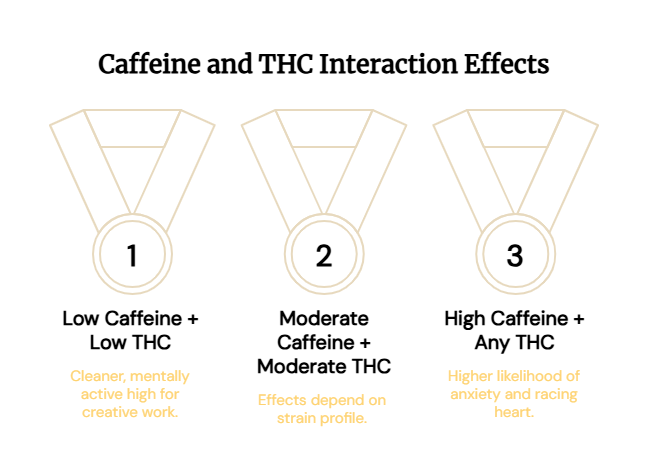
Animal research on self-administration patterns, cited in a review from Neuropsychopharmacology, found that low doses of an adenosine-blocking compound (similar in mechanism to caffeine) enhanced the reward value of THC, while high doses had the opposite effect – leading animals to seek more THC rather than less. This dose-response curve maps closely to what users report anecdotally:
- Low Caffeine + Low THC: Cleaner, more mentally active high – good for creative or focus-oriented work.
- Moderate Caffeine + Moderate THC: Most common pairing; effects depend heavily on strain profile.
- High Caffeine + Any THC: Higher likelihood of anxiety, racing heart, and a less pleasant headspace.
- Low Caffeine + High THC: THC dominates; coffee adds mild background alertness without competing.
For a closer look at how experienced users manage THC intensity, see the Mellow Fellow guide on how to repair cannabinoid receptors and why weed doesn’t get you high anymore – both relevant for understanding tolerance in the context of the caffeine interaction.
Caffeine and THC Anxiety and Heart Rate Risks
The most significant practical concern with mixing caffeine and THC is cardiovascular and psychological: both compounds raise heart rate, and their effects in this area are additive.
A comprehensive systematic review of 14 experimental studies on cannabis and cardiovascular function, published in PMC / American Journal of Cardiology, confirmed that acute cannabis use is consistently associated with tachycardia across all study designs and dosing methods.
A controlled study on acute effects of oral THC on autonomic cardiac activity found that THC dose-dependently increased heart rate and decreased heart rate variability, with higher doses also increasing anxiety ratings in a linear relationship.
Caffeine’s cardiovascular effects have been well-characterized by a 2014 review Annals of Behavioral Medicine: caffeine produces acute rises in blood pressure and activates the sympathetic nervous system through catecholamine release. A study published in Circulation found that even a triple espresso meaningfully increased blood pressure in non-habitual coffee drinkers within 30-60 minutes of consumption.
When both compounds are stacked at higher doses, the combined cardiovascular load is the primary risk factor. Research on stimulant combinations – including a study on THC and stimulant co-administration – found that THC and stimulant drugs show additive effects on heart rate and rate-pressure product, with peaks well above what either compound produces alone.
Risk Factors That Increase Discomfort When Mixing Caffeine and THC
- Starting with a high-caffeine drink (energy drinks with 150-300 mg, double or triple espresso) alongside moderate-to-high THC
- No prior THC tolerance – first-time or infrequent users are most vulnerable to anxiety at any dose
- Dosing on an empty stomach, which accelerates absorption and peaks for both
- Already being in an elevated stress or anxious baseline state
- Choosing a Sativa-dominant or high-THCV blend, which already trends toward more stimulating effects at higher doses
- History of panic attacks, cardiovascular conditions, or anxiety disorder
For guidance on managing this if it happens, see the Mellow Fellow guide on how to feel euphoric without the anxiety.
Caffeine and THC Effects at Different Dose Levels
|
Caffeine (mg) |
THC Dose |
Likely Combined Effect |
|
Low (50-80 mg / small coffee) |
Low (2.5-5 mg) |
Clear, focused, mild euphoria – most beginner-friendly combo |
|
Moderate (100-150 mg / 1 standard cup) |
Low-moderate (5-10 mg) |
Uplifting, creative, moderate stimulation |
|
Moderate (100-150 mg) |
High (15-25 mg+) |
Elevated heart rate likely; anxiety risk increases |
|
High (200-400 mg / energy drinks) |
Any dose |
High anxiety and heart rate risk regardless of THC amount |
|
Low (50-80 mg) |
Moderate (10-15 mg) |
Balanced, relaxed alertness – popular midday option |
This table reflects general patterns. Individual response varies by body weight, tolerance, metabolism, product format, and whether food was consumed.
Best Timing for Caffeine and THC Together
Timing the two compounds correctly eliminates most of the risk and sharpens the positive effects. This is where most users go wrong before they develop a sense of how the combination works for them.
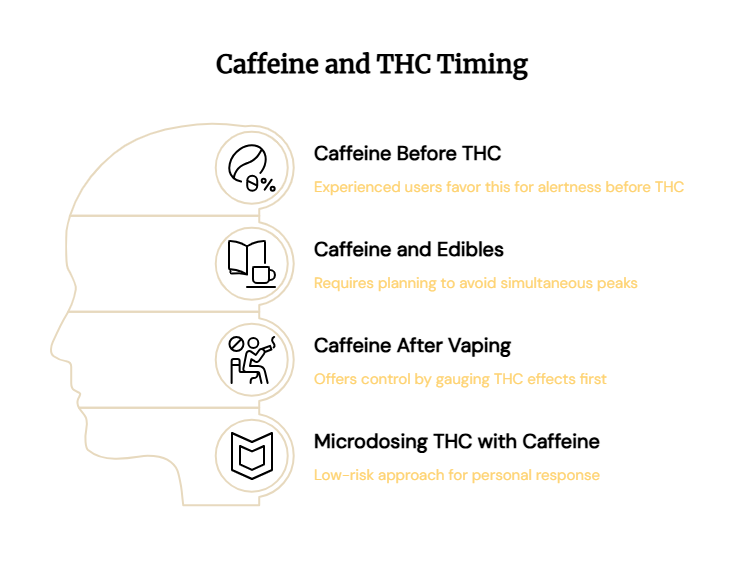
Caffeine Before THC
Caffeine Before THC is the approach most experienced users favor. Taking caffeine 30-45 minutes before a session means stimulant effects are near peak before THC enters the picture. You establish a baseline of alertness, then add THC without hitting the stimulant peak and THC peak simultaneously.
Caffeine and Edibles
Caffeine and Edibles require the most planning. Edibles typically take 45-90 minutes to reach peak effect. Drinking coffee while waiting for edibles to kick in is a very common and easily avoided mistake – both compounds then peak at the same time, producing a more intense combined effect than either user expected. For a full breakdown of edibles timing, see the Mellow Fellow guides on the best time to take edibles at night and edibles on an empty stomach.
Caffeine after Vaping
Caffeine after Vaping gives more control. THC from vaping or disposables is felt within minutes, so you can gauge your level before deciding whether to add caffeine. This is particularly useful for productivity-focused daytime sessions where you want to calibrate both compounds.
Microdosing THC with Caffeine
Microdosing THC with Caffeine is the lowest-risk approach for learning your personal response. Starting at 2.5-5 mg THC alongside a half-cup of coffee gives you real data on how the combination affects you without the risk of a difficult experience. For the full microdosing methodology, see Mellow Fellow’s microdosing guide.
THC and Caffeine for Focus, Creativity, and Productivity
The pairing is genuinely functional for creative and productive work when dosed carefully. Caffeine’s adenosine blockade supports sustained attention and working memory. Low-to-moderate THC – particularly blends with CBG and THCv – can support divergent thinking and reduce mental friction without pulling focus entirely away from the task.
Research on cannabinoids and focus shows that the key variable is THC dose: at low doses, many users report reduced mental friction and more creative thinking; at higher doses, working memory and recall are impaired regardless of caffeine.
The Johns Hopkins 2025 study noted above found that even moderate THC produced measurable psychomotor impairment, which worsened with the CBD co-administration condition – a reminder that full cannabinoid profile matters for the caffeine combination, not just THC in isolation.
For creativity work specifically, Mellow Fellow’s Creativity blends combine Delta 8, HHC, Delta 10, and CBG – an uplifting, imagination-forward stack without heavy sedation. Paired with a single cup of coffee, this is one of the most popular daytime sessions among Mellow Fellow users who write, design, or do creative work.
See the dedicated piece on cannabinoids for creatives for a deeper breakdown. For energy and motivation specifically, the guide on best edibles for energy and focus covers formats worth considering.
Mellow Fellow Products That Pair Well with Caffeine
Choosing the right THC product is half the equation. These are the formats and blends that work best alongside moderate caffeine intake.
For Morning Coffee Sessions
- Clarity Blend – Lemon Skunk 4ml Live Resin Disposable: Same Clarity formulation in a larger 4ml format for those who prefer to stock up – bright citrus profile, THCV-forward blend.
- Clarity Blend – Jack Herer 2ml Live Resin Vape Cartridge: Jack Herer’s cerebral, piney profile in a cart format. THCV + HHC + Delta-8 + CBD + CBG – structured for clear-headed daytime use alongside caffeine.
- Creativity Blend – Blue Dream 2ml Live Resin Disposable: Delta-8, HHC, Delta-10, CBD, and CBG. Blue Dream’s mild euphoria and creative lift makes it one of the most reliable coffee-session blends for writers and designers.
- Creativity Blend – Golden Goat 2ml Live Resin Disposable: Tropical, citrus-forward sativa profile with the same Creativity formulation – a solid morning variation when you want more energy character with your coffee.
All products are third-party batch-tested. Review COAs on the Mellow Fellow testing page.
For Productive Afternoon Caffeine + THC Sessions
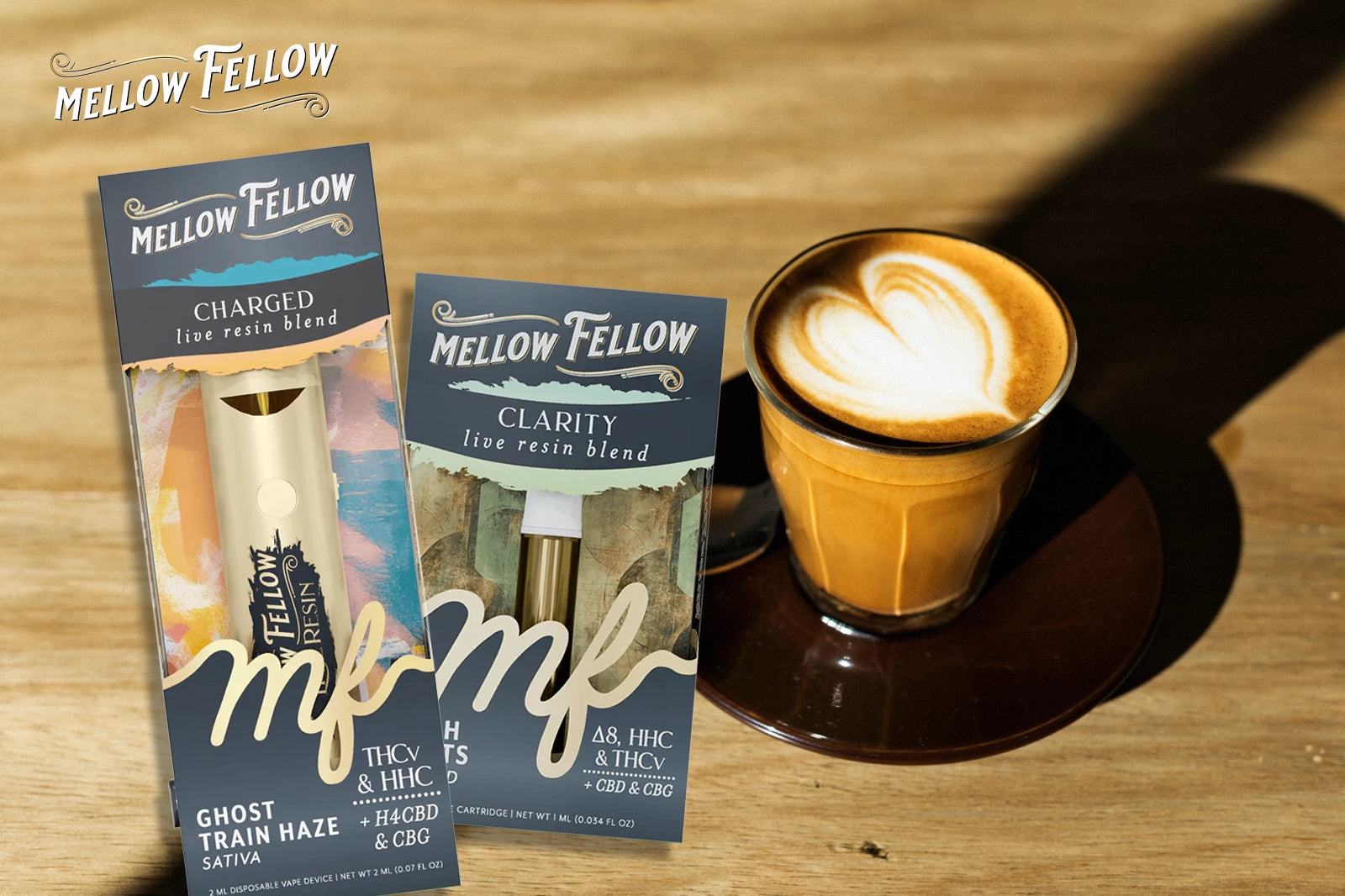
- Charged Blend – Ghost Train Haze 2ml Live Resin Disposable: THCV, HHC, H4CBD, and CBG. A more energetic blend – keep coffee to one moderate cup with this one; it leans stimulating already.
- Motivation Blend – Alaskan Thunderf*ck 4ml Live Resin Disposable: HHC, H4CBD, and CBG in a larger format. One afternoon cup and a short pull from this is a reliable midday productivity session.
- Motivation Blend – Granny Mac 2ml Live Resin Disposable: Hybrid profile built for output. Pairs well with a moderate afternoon coffee when the morning session has worn off.
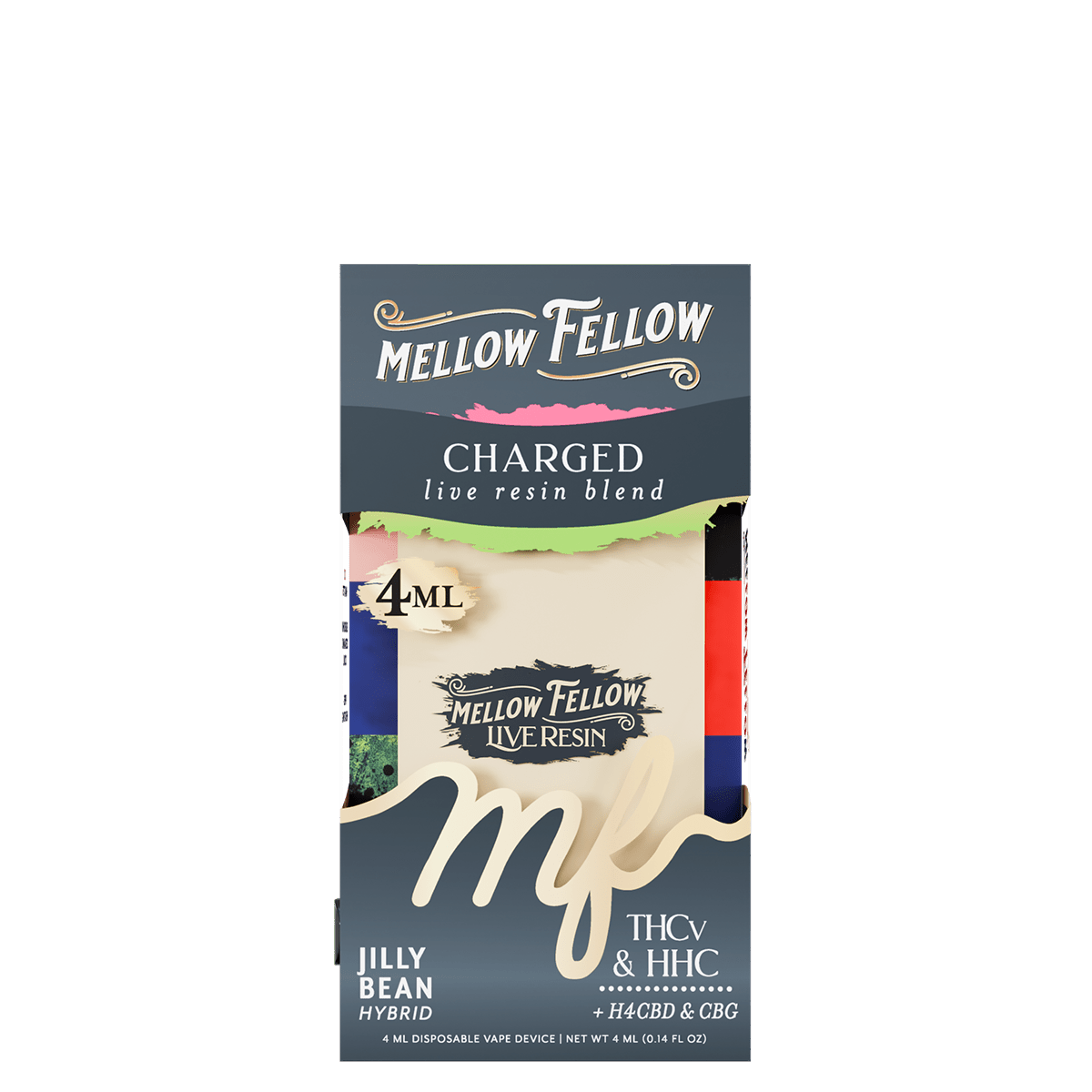
- Charged Blend – Jilly Bean 4ml Live Resin Disposable: The 4ml version of a fan-favorite daytime blend, with Jilly Bean’s famously sweet, orange-candy profile and an energy-forward cannabinoid stack.
Caffeine and THC for Workouts
Some people use THC and caffeine together before workouts. THC may influence pain perception and focus, while caffeine supports energy and stamina. Low doses tend to work best. Cannabis can raise heart rate during exercise and reduce maximum exercise duration.
Adding caffeine increases cardiovascular demand, which matters during intense training, especially for those without tolerance to both compounds.
Many users tolerate about 2.5-5 mg THC with a standard cup of caffeine for moderate workouts. Choose clear-headed cannabis blends rather than sedating profiles. Inhaled forms allow more predictable timing than edibles, which can peak unpredictably before or during exercise.
See the Mellow Fellow piece on working out high for a detailed breakdown of cannabis and exercise.
Products Suited for Workout + Caffeine Sessions
- Clarity Blend – Kush Mints 1ml Vape Cartridge: Short, precise pulls before a session. THCV and CBG keep the profile clear rather than sedating, and the 1ml cart gives more dose control than a larger disposable.
- Motivation Blend – Tangie HHC/H4CBD/CBG 2ml Disposable: Tangie’s citrus-forward sativa character with HHC and H4CBD for a motivated, engaged feel without the heavy sedation that would compete with physical output.
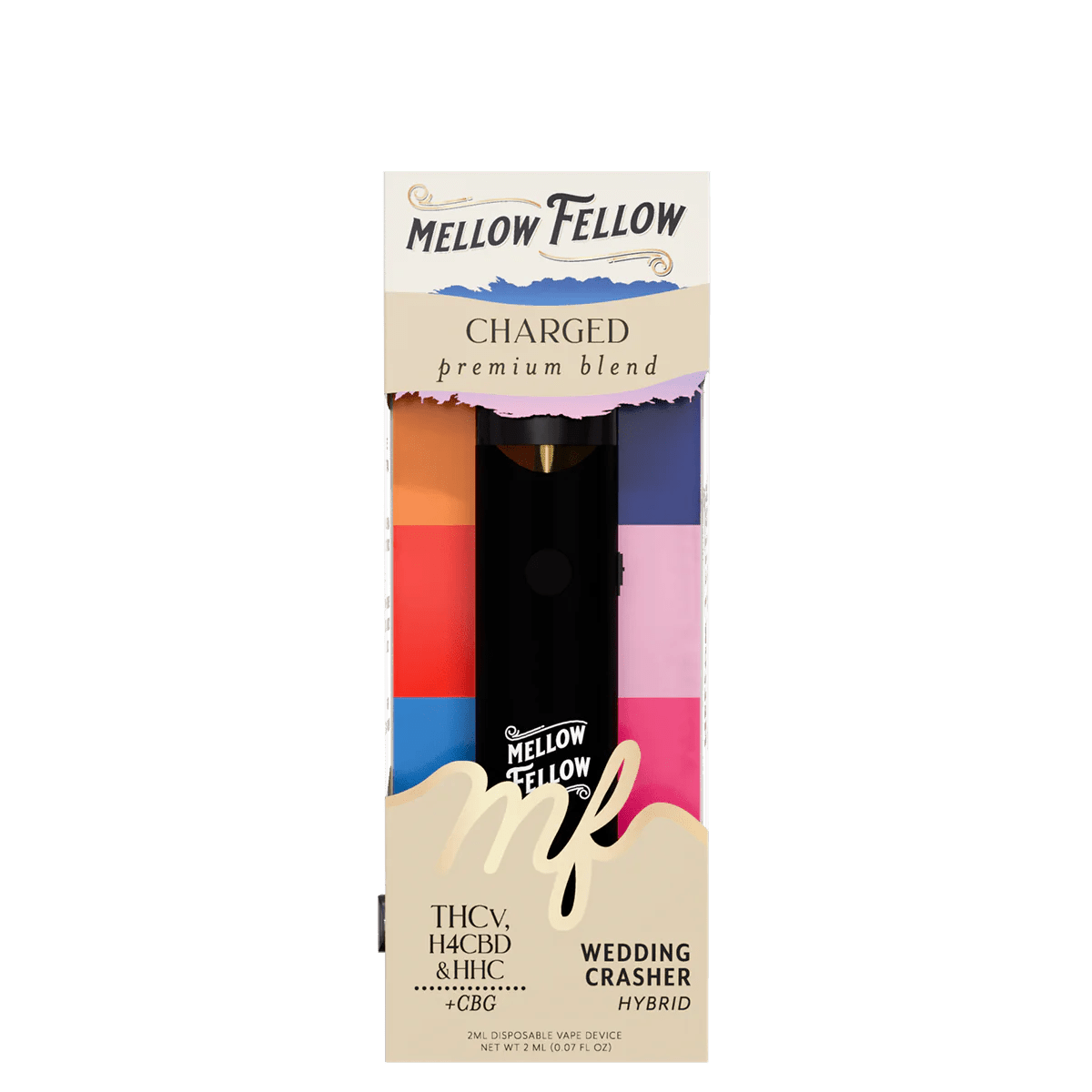
- Charged Blend – Wedding Crasher 2ml Disposable: One of the more stimulating formulations in the Mellow Fellow lineup – start with a very short pull if pairing with workout caffeine.
Is It Safe to Mix Caffeine and THC
For most healthy adults without cardiovascular conditions or anxiety disorders, low-to-moderate doses of both are not acutely dangerous. The combination is not associated with serious acute harm at typical consumer doses in the published literature.
The National Academies of Sciences, Engineering, and Medicine comprehensive review of cannabis health effects found that cannabis use does not appear to increase the likelihood of developing anxiety disorders in the general population at typical use patterns, though frequency of use and individual baseline anxiety levels remain relevant moderating factors.
The NIDA research overview on cannabis and current public health guidance frame most cannabis health concerns around heavy long-term use rather than the acute physiological risk of a single low-to-moderate session. That framing holds for the caffeine combination as well: individual sessions at controlled doses carry manageable risk for most healthy users.
- The situations that call for skipping the combination or speaking with a doctor:
- Diagnosed heart arrhythmia, hypertension, or other cardiovascular conditions
- Active anxiety disorder, panic disorder, or a history of cannabis-triggered panic attacks
- Pregnancy
- Concurrent use of medications that affect heart rate, blood pressure, or are metabolized via CYP450 pathways
- No prior THC experience – build individual tolerance with THC alone before adding caffeine to the equation
Check Mellow Fellow’s shipping and product availability by state, and if you’re looking to find products in person, use the store locator.
Final Thoughts on Mixing THC and Caffeine
Mixing caffeine and THC can be a productive pairing when approached thoughtfully. The key variables are dose, timing, and product selection. Low THC amounts with moderate caffeine tend to produce the most balanced results, while stacking high doses of both is where anxiety and cardiovascular stress become more likely.
Start low, pay attention to how your body responds, and choose clear-headed daytime blends if you want focus rather than sedation. With the right approach, the combination can support creativity, productivity, or a relaxed coffee ritual without pushing the experience into uncomfortable territory.
Shop Mellow Fellow’s best-selling products or use the shop by experience tool to find the right blend for your next session.
Sources
- Cannabis (Marijuana) | National Institute on Drug Abuse (NIDA)
- THC, CBD, and Anxiety: A review of recent findings on the anxiolytic and anxiogenic effects of cannabis’ primary cannabinoids – PMC
-
Mental Health – The Health Effects of Cannabis and Cannabinoids – NCBI Bookshelf
Coffee Acutely Increases Sympathetic Nerve Activity and Blood Pressure Independently of Caffeine Content | Circulation - Cardiovascular system effects of marijuana – PubMed
- The effects of caffeine on blood pressure and heart rate: A review – PubMed
- Acute effects of oral delta-9-tetrahydrocannabinol (THC) on autonomic cardiac activity and their relation to subjective and anxiogenic effects – PubMed
- Acute Cardiovascular Effects of Marijuana Use – PMC
- Regulation of Hippocampal Cannabinoid CB1 Receptor Actions by Adenosine A1 Receptors and Chronic Caffeine Administration: Implications for the Effects of Δ9-Tetrahydrocannabinol on Spatial Memory | Neuropsychopharmacology
- Combined effects of THC and caffeine on working memory in rats – PubMed
- Caffeine drinking potentiates cannabinoid transmission in the striatum: interaction with stress effects – PubMed
- Adenosine–cannabinoid receptor interactions. Implications for striatal function – PMC
- Effect of caffeine and cannabidiol (CBD) co-administration on Δ9-tetrahydrocannabinol (Δ9-THC) subjective effects, performance impairment, and pharmacokinetics – PubMed