
How to Spring Forward and Adjust to Daylight Saving Time With Cannabis
Quick Answer: Springing forward means losing one hour of sleep, which throws off your circadian rhythm for days. Pairing intentional cannabinoid use – energizing blends in the morning, relaxing blends at night – with a few basic sleep habits is one of the most practical ways to adjust to Daylight Saving Time without dragging through the week.
Every spring, the clocks move forward and most people shrug it off as just one lost hour. In practice, that single hour can knock your energy, mood, and sleep schedule sideways for the better part of a week. This guide breaks down what’s actually happening to your body when you spring forward, how cannabinoids map onto the problem, and how Mellow Fellow’s Day/Night bundles give you a ready-made tool for both sides of the adjustment.
Key Takeaways
- Losing one hour during Daylight Saving Time disrupts your circadian rhythm and can affect sleep quality for three to seven days after the clock change.
- Research shows the spring transition is associated with increased sleep fragmentation, daytime sleepiness, and a short-term rise in cardiovascular risk.
- The endocannabinoid system plays a documented role in regulating the circadian sleep-wake cycle, making cannabinoid timing relevant to how quickly you re-sync.
- Mellow Fellow’s Day/Night bundles pair a daytime blend with a nighttime blend in one package, covering both sides of the adjustment without guesswork.
- Starting the shift two to three days early, combining it with morning light exposure, and anchoring your blend use to consistent times all speed up adjustment.
Why Springing Forward Disrupts Your Sleep Cycle
When clocks move forward one hour in spring, your body doesn’t follow automatically. Your circadian rhythm – the internal 24-hour clock regulated by light, temperature, and hormones – stays anchored to the old schedule for days.
A position statement from the American Academy of Sleep Medicine confirms that Daylight Saving Time is less well-aligned with intrinsic human circadian physiology, and that it disrupts the natural seasonal adjustment of the human clock by shifting morning darkness and evening light in the wrong direction. The result is increased morning darkness and more evening light – both of which push the body clock later, making it harder to feel awake in the morning and harder to fall asleep at the new bedtime.
A large-scale study published in Current Biology analyzed sleep timing in over 55,000 people and found that the human circadian system does not fully adjust to the spring DST transition, particularly in people who are evening chronotypes. The spring transition disrupts seasonal adaptation in a way the autumn transition does not.
A 2025 review in Sleep Medicine Reviews found that the spring DST transition reduces sleep duration and increases sleep fragmentation and daytime sleepiness, particularly in evening chronotypes, and that the misalignment may increase short-term risks for road accidents and reduced daily functioning.
During the adjustment window, common experiences include:
- Morning grogginess that doesn’t lift until mid-morning
- Afternoon energy crashes arriving earlier than usual
- Difficulty falling asleep at the new clock time because the body still reads it as earlier
- Mood dips, irritability, and reduced mental clarity
How Cannabinoids Can Help You Adjust to Daylight Saving Time
Cannabinoids interact with the endocannabinoid system, which plays a documented role in regulating the circadian sleep-wake cycle. A 2020 review in Frontiers in Molecular Neuroscience found that the endocannabinoid system exhibits circadian fluctuations in healthy humans, with anandamide levels peaking upon waking and dropping to their lowest just before sleep onset – a pattern that is disrupted by sleep deprivation.
Separate research published in PLOS ONE demonstrated that modulating the endocannabinoid system can influence NREM sleep stability, pointing to a mechanistic link between cannabinoid use and the quality and timing of sleep.
The practical application is straightforward. Different cannabinoid blends push in different directions: some support alertness and focus, others encourage relaxation and sleep onset. Matching the right blend to the right part of the day – especially during the adjustment window – helps your body learn the new schedule faster.
This is exactly what Mellow Fellow’s formulation approach is built around. Rather than offering one catch-all product, the lineup is organized by intended effect, which maps cleanly onto the Daylight Saving Time challenge. For a deeper look at how the blends work, see our guide to all Mellow Fellow blends.
Day/Night Bundles: The Easiest Way to Spring Forward With Intention
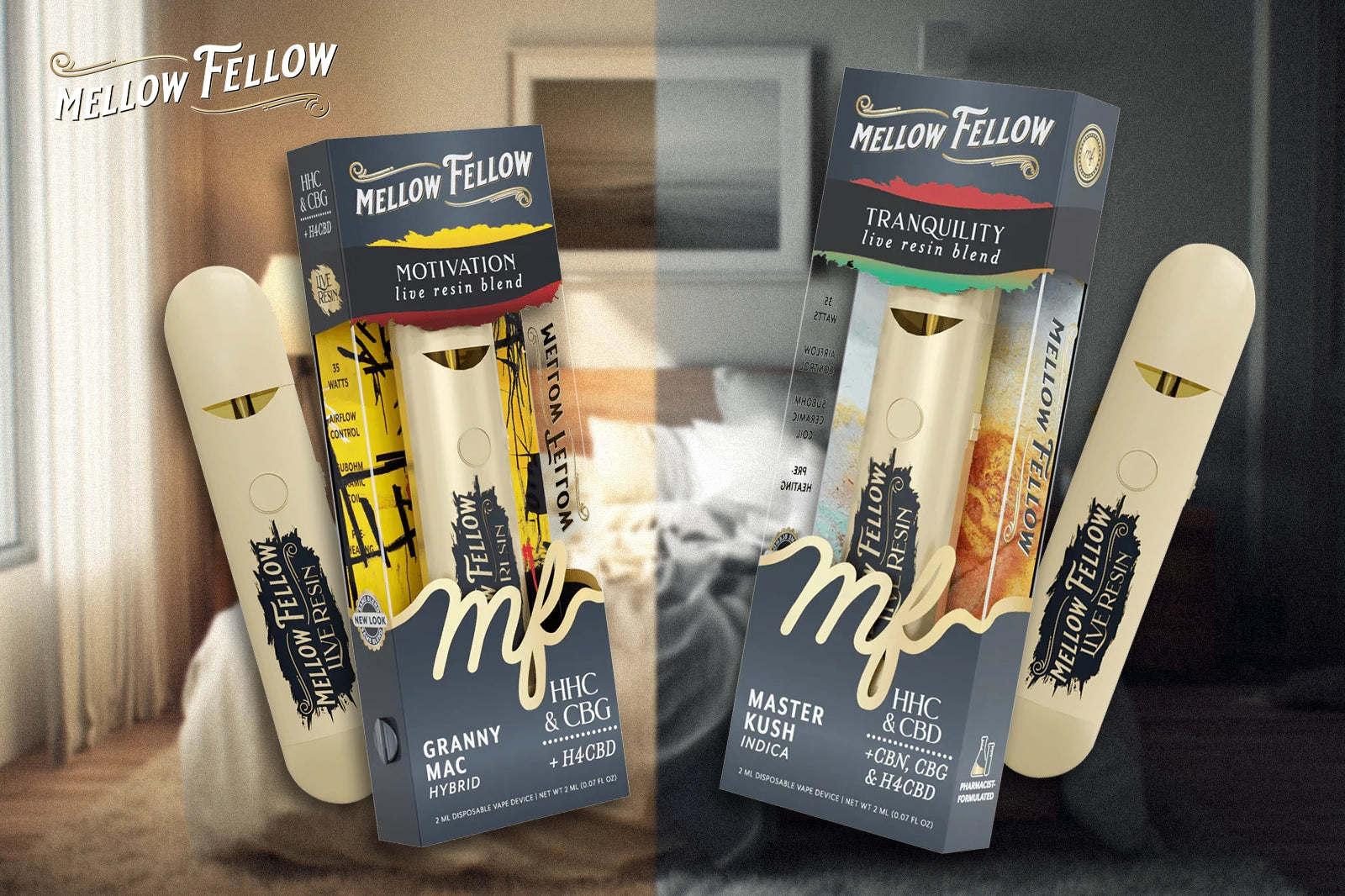
Mellow Fellow’s Day/Night bundles are designed for exactly this kind of transition – two complementary blends in one package, one for the day and one for the night. During the week you’re adjusting to Daylight Saving Time, having both sides covered removes the guesswork.
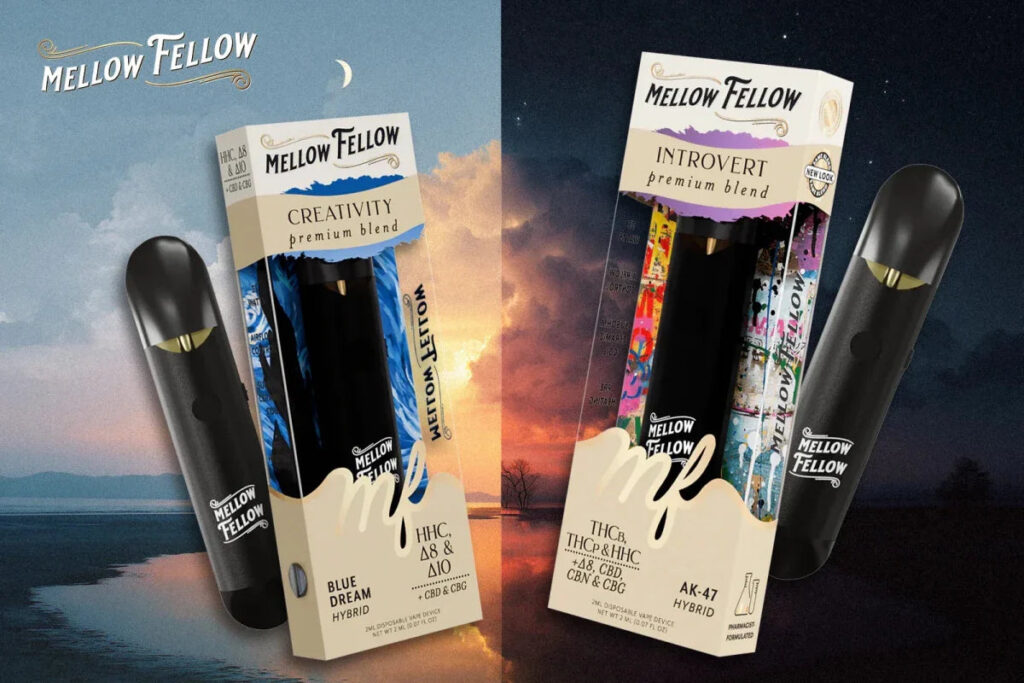
Each bundle pairs a stimulating or focusing daytime blend with a calming or sleep-support nighttime blend. Below are the current options:
|
Bundle |
Day Blend |
Night Blend |
Format |
|
Ghost Train Haze (Charged) |
MK Ultra (Dream) |
2ml Live Resin Disposable |
|
|
Forbidden Fruit (Clarity) |
Juicy Fruit (Recover) |
2ml Live Resin Disposable |
|
|
Blue Dream (Creativity) |
AK-47 (Introvert) |
2ml Disposable |
|
|
Wedding Crasher (Charged) |
MK Ultra (Dream) |
2ml Disposable |
|
|
Granny Mac (Motivation) |
Master Kush (Tranquility) |
2ml Live Resin Disposable |
|
|
Golden Goat (Creativity) |
King Louis (Introvert) |
2ml Live Resin Disposable |
Browse the full Day/Night bundles collection to compare formats and flavor profiles side by side.
Daytime Blends: Replacing Lost Morning Energy After Springing Forward
The first few mornings after Daylight Saving Time, your alarm goes off when your body still reads it as an hour earlier. This is where a well-matched daytime blend pays off.
Mellow Fellow’s daytime-oriented formulas – Charged, Creativity, Clarity, and Motivation – are designed to support focus, energy, and a lifted mood. These blends typically combine cannabinoids like Delta 8, THCv, HHC, H4CBD, and CBG, which are associated with more alert, functional effects rather than sedation.
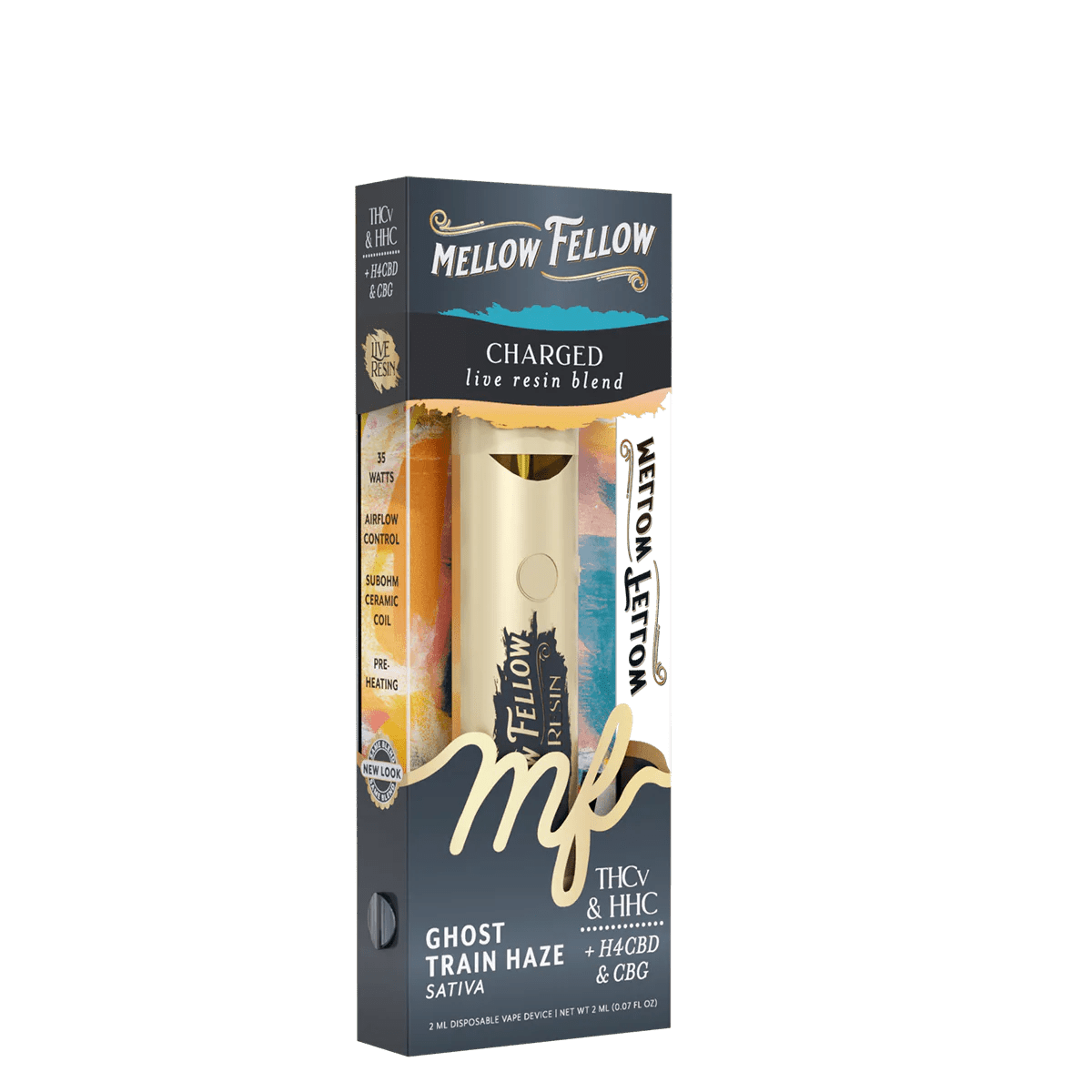
The Charged blend in Ghost Train Haze – available as the day side of the Charged & Dream bundle – is well-suited to morning use during the adjustment window. Ghost Train Haze is a sativa-dominant strain known for a sharp, clear-headed terpene profile.
Use daytime blends in the first half of your day only. Taking a stimulating blend past 2-3 PM can push alertness into the evening and work against the sleep side of your adjustment. For more on how cannabinoids support mental clarity and focus, our post on cannabinoids for focus covers the relevant compounds in detail.
Nighttime Blends: Falling Asleep Earlier When Springing Forward
The bigger challenge for most people isn’t the morning – it’s the evening. When clocks spring forward, your target bedtime becomes one hour earlier on your body’s internal clock. Trying to fall asleep at 11 PM when your body thinks it’s 10 PM is frustrating, especially in the first few nights.
This is where the nighttime half of the Day/Night bundle does its work. Mellow Fellow’s Dream, Introvert, Recover, and Tranquility blends are built around cannabinoid profiles that encourage relaxation and sleep onset. Common active compounds in these blends include Delta 8, THCp, HHC, CBN, and CBD.
CBN has drawn increasing attention in sleep research. A randomized, double-blind, placebo-controlled trial published in Sleep found that 20mg of CBN significantly reduced the number of nighttime awakenings and overall sleep disturbance compared to placebo, without impacting daytime fatigue – a clean result for a compound frequently found in Mellow Fellow’s nighttime blends.

The Dream blend in MK Ultra – the nighttime side of both Charged/Dream bundles – pairs well with a consistent pre-sleep routine. Use it 20-40 minutes before your target new bedtime to help your body anchor to the correct schedule. Our post on the best indica vape strain for sleep walks through how strain selection and cannabinoid profiles interact when the goal is faster sleep onset.
If you want to understand edible timing alongside vapes, our piece on the best time to take an edible at night covers onset windows in detail.
A Simple 5-Day Plan to Adjust to Daylight Saving Time
Behavioral consistency matters as much as what you consume. Combine the Day/Night bundle approach with these practical steps:

- Days 1-2 (Before the Clock Change) Begin shifting your bedtime 15-20 minutes earlier two nights before Daylight Saving Time. Use your nighttime blend at the new target time, not the old one. This pre-loads the adjustment so the official clock change feels smaller.
- Day 3 (The Day Clocks Change) Use morning light as your anchor – spend at least 15-20 minutes outside or near a bright window within an hour of waking. Research from the CDC / NIOSH confirms that bright morning light causes a phase advance, shifting sleepiness earlier in the evening and making it easier to wake at the new time. Use your daytime blend in the morning and your nighttime blend at your new target bedtime.
- Days 4-5 (Lock In the Schedule) Keep wake time and bedtime consistent regardless of how you feel. Sleeping in to catch up on weekends delays adjustment. Continue using daytime and nighttime blends at consistent times. Most people are substantially re-synced by day five.
Browse all current Day/Night bundles to find the pairing that fits your schedule.
Cannabinoid Timing and Dosing During the Adjustment Window
Timing matters more than quantity during a circadian shift. Here are clear guidelines:
|
Time of Day |
Recommended Blend Type |
What to Avoid |
|
Morning (within 1-2 hrs of waking) |
Daytime blend (Charged, Clarity, Creativity, Motivation) |
Heavy indica or CBN-dominant products |
|
Afternoon (before 2 PM) |
Low-dose daytime or no cannabinoids |
High-THCp doses that may overshoot |
|
Early evening (4-7 PM) |
Light use or none |
Stimulating sativa blends |
|
30-45 min before new bedtime |
Nighttime blend (Dream, Introvert, Tranquility, Recover) |
Daytime blends or high-THCV products |
For new users or those sensitive to cannabinoids, start with two to three short pulls from a disposable and wait 20-30 minutes before assessing. Live resin formats – like those in the Day/Night bundles – preserve a broader terpene profile that many users find delivers a more predictable, nuanced effect compared to distillate-only products.
Supporting Habits That Speed Up Daylight Saving Time Adjustment
Cannabinoids work better when the surrounding habits support them. A few evidence-backed practices that pair well with the Day/Night bundle approach:
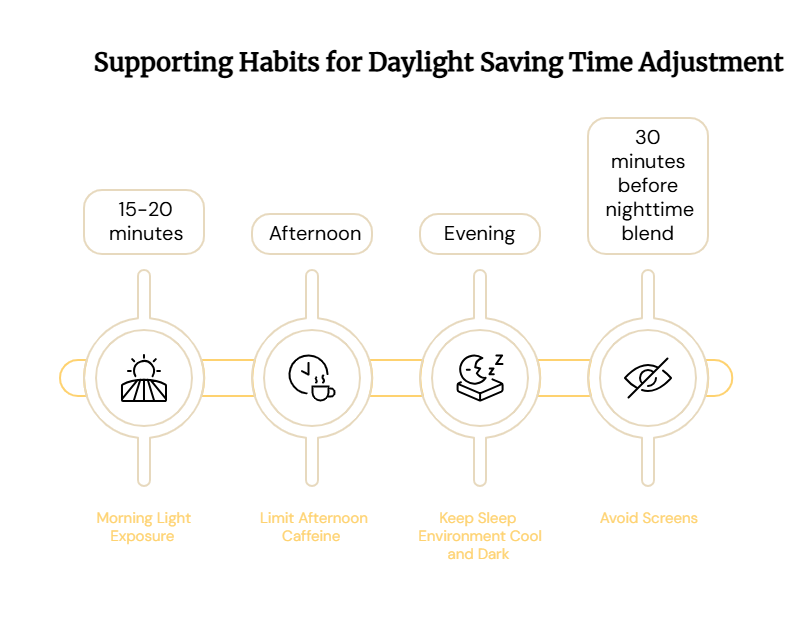
- Morning Light Exposure: 15-20 minutes of bright natural light after waking is the strongest external signal for resetting your circadian clock, as confirmed by the NIGMS Circadian Rhythms fact sheet. Pair this with your daytime blend for a compounded effect.
- Limit Afternoon Caffeine: According to StatPearls via NIH, the mean half-life of caffeine in healthy adults is approximately five hours. Combined with a stimulating daytime blend, afternoon coffee can push alertness deep into the evening and make your new bedtime harder to hit.
- Keep Your Sleep Environment Cool and Dark: Core body temperature drops as part of normal sleep onset. A cool room supports that drop and makes nighttime blends more effective.
- Avoid Screens 30 Minutes Before Your Nighttime Blend: Blue light suppresses melatonin even after a cannabinoid dose. Removing that counterforce lets the blend work more cleanly.
Our post on how to repair cannabinoid receptors is useful if you’ve noticed blends feeling less effective – receptor sensitivity plays a role during high-use periods like a week-long adjustment.
Adjusting to DST with Cannabis
Springing forward may only change the clock by one hour, but your body often needs several days to catch up. Understanding how circadian rhythm disruption works makes it easier to approach the transition with intention instead of just powering through fatigue and poor sleep.
By combining consistent sleep habits, morning light exposure, and properly timed cannabinoid use, you can help your body adjust faster and feel normal again sooner. Mellow Fellow’s Day/Night bundles simplify that process by covering both sides of the reset, supporting energy during sluggish mornings while helping you settle into the earlier bedtime your schedule now demands.
With a little planning and the right routine, Daylight Saving Time does not have to derail your week. It can simply become another shift your body adapts to smoothly.
Try the Day/Night bundles and use both sides at consistent times to anchor your new schedule.
Sources
- Caffeine – StatPearls – NCBI Bookshelf
- Circadian Rhythms | National Institute of General Medical Sciences
- Module 2. Effects of Light on Circadian Rhythms | NIOSH | CDC
- A double-blind, randomized, placebo-controlled study of the safety and effects of CBN with and without CBD on sleep quality – PubMed
- Frontiers | Cannabinoids, Endocannabinoids and Sleep
- Endocannabinoid Signaling Regulates Sleep Stability – PubMed
- The effects of daylight saving time and clock time transitions on sleep and sleepiness: a systematic review – ScienceDirect
- The human circadian clock’s seasonal adjustment is disrupted by daylight saving time – PubMed
- Daylight saving time: an American Academy of Sleep Medicine position statement – PMC