
Can You Take Edibles on a Plane? TSA Rules, Real Risks, and Smarter Options
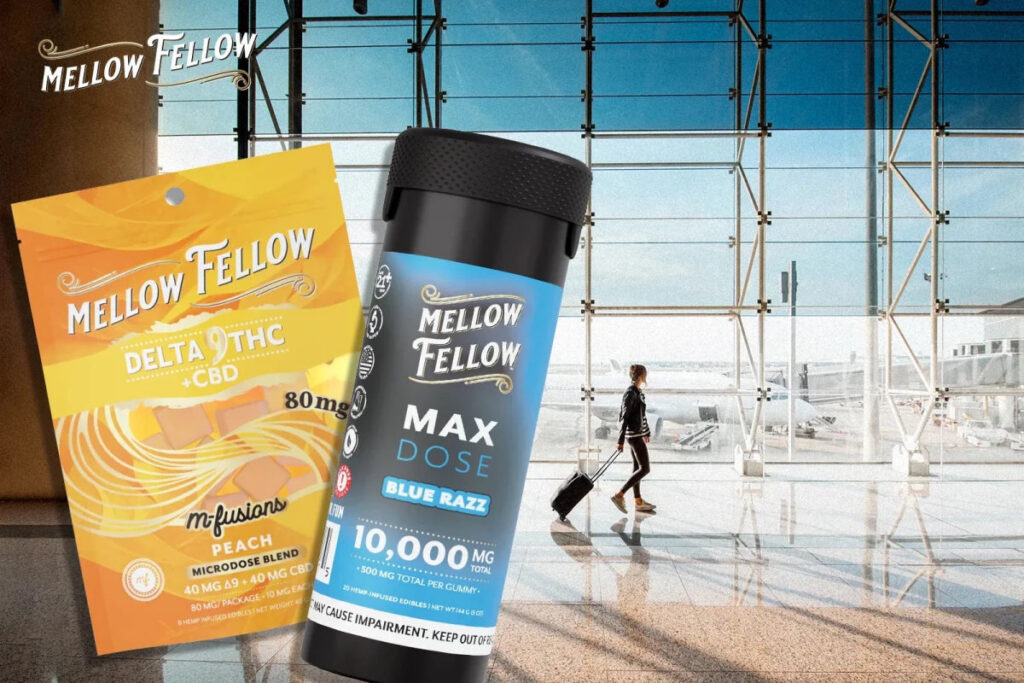
Quick Answer: Federally, taking THC edibles on a plane is illegal regardless of state law, because aviation is governed by federal rules. TSA agents are not actively hunting for cannabis, but if they find it, they are required to contact law enforcement. Hemp-derived CBD gummies with under 0.3% Delta 9 THC are a different story and are generally permitted.
Flying with edibles sits in one of the most misunderstood legal gray areas in cannabis travel. State legalization has made THC gummies feel normal and accessible, but airports and airplanes still operate under federal law, which changes the rules entirely.
This guide breaks down what TSA policy actually says, how airport screening works in practice, the real risks travelers face when carrying THC products, and why hemp-derived alternatives create a very different legal situation.
Key Takeaways
- Flying with THC edibles violates federal law and TSA policy, even on domestic flights between legal states.
- TSA scanners look for security threats, not drugs, but agents must report cannabis if found.
- Penalties range from confiscation and a missed flight to federal charges, depending on the airport and officer.
- Hemp-derived CBD and Delta 9 gummies that meet the Farm Bill threshold occupy a grayer legal space.
- Smart travelers either leave THC products at home or purchase at their destination.
TSA Rules for Edibles: What the Policy Says
The TSA’s official Medical Marijuana policy page states that marijuana and certain cannabis-infused products remain illegal under federal law. TSA officers are required to report any apparent violation of that law to local law enforcement if discovered during screening.
The nuance: TSA screening focuses on explosives and threats, not narcotics. Officers are not running drug sweeps. Still, the agency’s own guidance makes clear they are not permitted to look the other way.
Under the Controlled Substances Act, cannabis remains a Schedule I substance at the federal level. Airports and aircraft operate under federal jurisdiction, which overrides state cannabis laws entirely. Flying with edibles between two legal states does not change this calculus.
What this means in practice:
- Carry-on bags go through X-ray screening; dense packaging and foil wrappers can flag for a secondary search.
- Checked luggage also goes through TSA screening.
- If an agent identifies what appears to be a cannabis product, they notify airport law enforcement.
- The outcome depends heavily on the airport, the jurisdiction, and the officer.
Can TSA Detect Edibles? What Scanners See
Airport scanners are not designed to identify THC. X-ray machines detect density and material composition; they flag unusual shapes, dense items, and potential weapons. A bag of gummies looks nearly identical to regular candy on a scanner.
That said, there are scenarios where secondary screening becomes more likely:
- Childproof dispensary packaging with visible labels
- Unmarked bags or unusual wrapping that prompts a physical search
- Drug-detection dogs, which are deployed at some airports but primarily target explosives, not cannabis
According to TSA’s own screening guidance, dogs in airports are trained for security purposes, not drug interdiction. However, some airports use separate law enforcement K-9 units that do detect cannabis.
The bottom line: detection is unlikely but not impossible, and the consequences of being found with THC products in a federal zone are real.
What Happens If TSA Finds Edibles
Outcomes vary significantly by airport location and quantity found:
|
Scenario |
Likely Outcome |
|
Small personal amount, legal-state airport |
Confiscation, warning, or disposal option |
|
Larger quantity, any airport |
Law enforcement referral, potential charges |
|
International departure |
Serious criminal exposure, customs involvement |
|
CBD/hemp product, Farm Bill compliant |
Usually cleared through without issue |
Airports in cannabis-legal states like Denver International and LAX have published policies allowing passengers to discard cannabis before entering security, but once you are in the screening zone, agents are bound by federal protocol.
For more on how edibles work in the body, see our guide to how edibles work and proper consumption and our breakdown of live resin edibles vs. regular edibles.
Flying With CBD Gummies and Hemp-Derived Products
This is where the rules genuinely diverge. The 2018 Farm Bill legalized hemp-derived cannabinoids containing less than 0.3% Delta 9 THC by dry weight at the federal level. That includes many CBD gummies and certain hemp-derived Delta 9 products dosed to stay within that threshold.
TSA’s guidance acknowledges that FDA-approved CBD medications (like Epidiolex) and products meeting the Farm Bill definition are not prohibited. In practice, most travelers with clearly labeled, compliant hemp products pass through without issue.
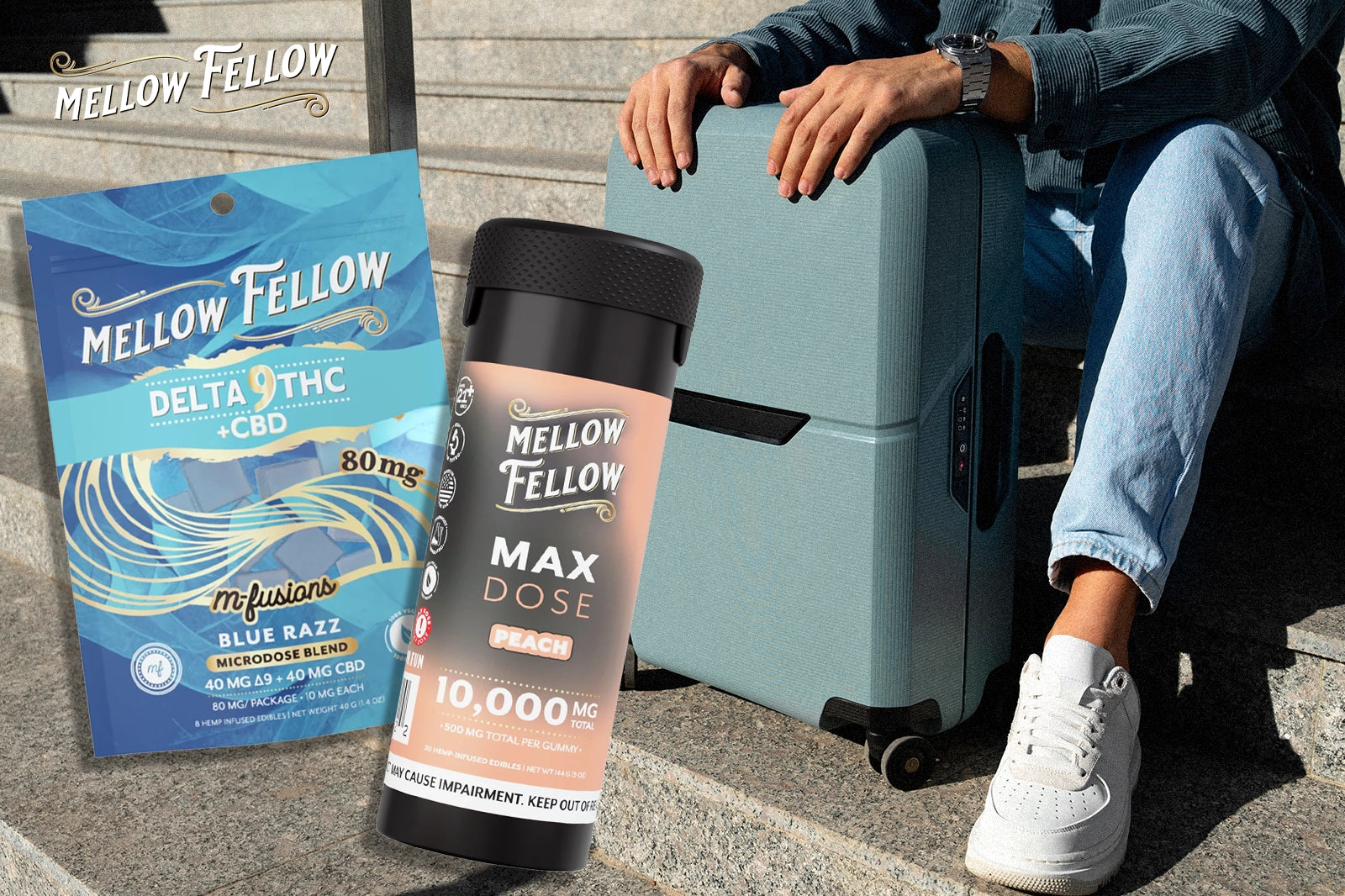
Key distinctions for travelers:
- CBD gummies from a licensed hemp brand with a COA showing under 0.3% Delta 9 THC: generally permissible.
- Delta 8 or Delta 9 gummies with higher THC concentration: federally illegal on aircraft regardless of source.
- Dispensary-purchased edibles: clearly cannabis under federal law, regardless of state legality.
If you do carry hemp-derived products, bring the product’s certificate of analysis as documentation of compliance. It won’t guarantee anything, but it demonstrates legitimacy.
Carry-On vs. Checked Bag: Does It Matter for Edibles?
Both are screened. Both fall under TSA jurisdiction. There is no meaningful legal distinction between placing cannabis edibles in your carry-on versus your checked luggage.
|
Location |
Screened By |
Risk Level |
|
Carry-On |
TSA X-ray + physical search |
Moderate (direct agent contact) |
|
Checked Luggage |
TSA automated and manual screening |
Still present; agents can and do inspect |
|
Personal Item |
Same X-ray screening as carry-on |
No practical difference |
Some travelers assume checked bags are safer because they are out of sight. This assumption is incorrect. TSA screens all checked bags, and any cannabis found triggers the same reporting obligation.
Flying Internationally With THC Gummies: Far Higher Stakes
Domestic travel carries meaningful risk. International travel carries severe risk.
U.S. Customs and Border Protection (CBP) operates under federal authority with broader search powers than TSA. When you leave the country, you are also subject to the laws of wherever you land. Many destination countries maintain strict drug laws regardless of what is legal in the US, and some carry mandatory prison sentences for cannabis possession.
Even heading to countries where cannabis is recreationally legal does not make it legal to carry it across an international border. The act of transporting cannabis across a US border is a federal offense on the US side, and enforcement action can happen at departure, not just arrival.
The short answer: never attempt international travel with THC products. The legal exposure is severe and the outcome varies wildly by country.
Smarter Alternatives for Traveling With Edibles
If you want to use cannabinoid products while traveling, the practical options are:
-
Purchase at your destination. If you are traveling to a legal state or country, dispensaries and online hemp retailers may be accessible there.
-
Ship ahead. Hemp-derived, Farm Bill-compliant products can often be shipped legally to many states. Check shipping restrictions before ordering.
-
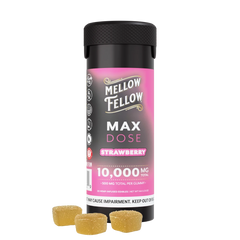
Use compliant hemp products. Mellow Fellow’s Delta 9 edibles are formulated within federal hemp thresholds, making them a more defensible option for travelers than dispensary-purchased THC products.
For more guidance on edible timing and dosing, see when to take edibles at night, edibles on an empty stomach, and how to store edibles for potency.
The Smartest Move Is Still the Simplest One
The reality is straightforward: flying with THC edibles carries legal risk no matter how common cannabis has become at the state level. TSA is focused on security threats, not hunting for gummies, but federal law still applies inside airports and on airplanes. That means a small mistake can still turn into a stressful and expensive situation.
For most travelers, the safer approach is to leave dispensary THC products at home and either purchase legally at the destination or stick to clearly labeled hemp-derived products that meet federal compliance standards. A little caution before your trip is a lot easier than dealing with airport law enforcement after security screening.
Sources
- Drug Scheduling
- Medical Marijuana | Transportation Security Administration
- The 2018 Farm Bill’s Hemp Definition and Legal Challenges to State Laws Restricting Certain THC Products | Congress.gov | Library of Congress
- Hemp Production and the 2018 Farm Bill – 07/25/2019 | FDA
- Prohibited and Restricted Items | U.S. Customs and Border Protection
- Marijuana Can’t Fly | Federal Aviation Administration
Leave a Reply