
How to Store Edible Gummies for Longevity and Potency
Quick Answer: Store cannabinoid gummies in their original airtight container in a cool, dark place between 60°F and 70°F, away from direct light and humidity, to preserve potency and texture for up to a year. Heat, light, and air exposure are the three biggest causes of cannabinoid breakdown and gummy spoilage.
A jar of gummies left on a sunny windowsill will not taste or work the same way six months later. Cannabinoids like THC, CBD, and CBN are sensitive compounds. Once exposed to heat, light, or oxygen for long enough, they start converting into weaker or different compounds altogether.
At the same time, the sugar and gelatin base of a gummy reacts to its environment too, turning sticky in humid air or tough and dry in a cold, dry cabinet. Getting storage right protects two separate things: the cannabinoid content that determines the effects, and the texture and flavor that make the gummy enjoyable to eat.
This guide breaks down what actually happens to cannabinoid gummies over time, the ideal storage conditions for THC, CBD, CBN, and CBG edibles, and how Mellow Fellow’s Happy CBG Gummies, Relief CBD Gummies, Sleep CBN Gummies, and other formulations hold up when stored the right way.
Key Takeaways
- Heat above 77°F speeds up cannabinoid breakdown and converts THC into CBN
- Light exposure degrades cannabinoids faster than temperature alone in many studies
- A sealed, opaque container in a cool cabinet beats refrigeration for most gummies
- One tracked study found cannabinoid material lost measurable potency within the first 30 days of poor storage
- Mellow Fellow packages its gummies for stability, but home storage habits still decide how long that potency lasts
Why Cannabinoid Gummies Lose Potency Over Time
Every cannabinoid gummy starts with a fixed amount of THC, CBD, CBN, or CBG baked into the recipe. That amount does not stay fixed forever.
The THC-to-CBN Conversion Problem
Heat and time convert THC into cannabinol (CBN), a related but different compound with milder, more sedating effects. A 24-month packaging study published in the Journal of Cannabis Research tracked cannabinoid material stored at room temperature and found CBN levels climbed dramatically over two years, while total THC content dropped by roughly a fifth. Storage at a warmer 86°F caused the same shift in a fraction of the time.
What Happens When the Clock Starts Ticking
This does not mean a properly stored gummy turns into a different product overnight. It means the degradation clock starts the moment a package is opened and exposed to normal room conditions.
Researchers at Frontiers in Chemistry studying thermal degradation of cannabinoids found that CBD exposed to heat broke down into THC and CBN as byproducts, with roughly 80% of the original CBD degraded after 60 minutes at high heat. Gummies rarely see temperatures that extreme, but the underlying chemistry, heat pushes cannabinoids toward CBN, holds true at the lower temperatures found in a hot car or a sunny counter.
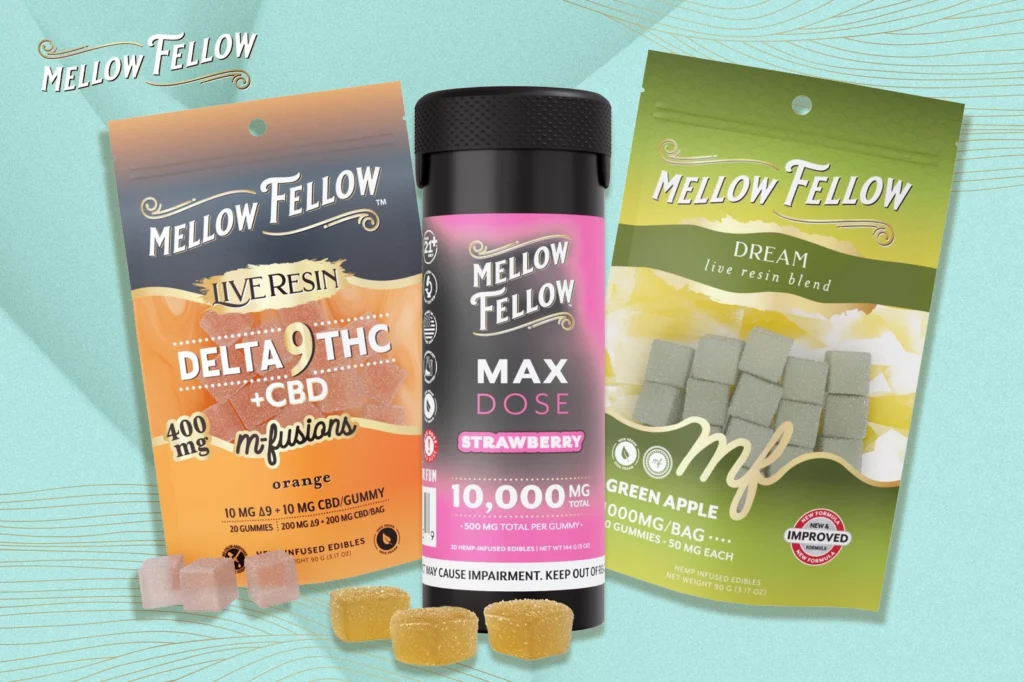
If you’re deciding between formats, Mellow Fellow’s Delta 9 Live Resin Edibles 400mg in Orange and the Blue Raspberry version pair 10mg of Delta 9 THC with 10mg of CBD per gummy, a balance that benefits from the same cool, dark storage principles covered below.
Best Temperature Range for Storing THC and CBD Gummies
Room temperature, in the range of 60°F to 70°F, is the sweet spot for most cannabinoid edibles. This range is cool enough to slow cannabinoid conversion without introducing the moisture problems that come with refrigeration.
Why the First 30 Days Matter Most
An Anresco Laboratories study on storage conditions and cannabinoid potency compared samples held at roughly 39°F, 68°F, and 86°F over a full year. Samples kept cold stayed measurably more stable through 210 days, while samples at the highest temperature lost potency fastest, with the steepest declines occurring in the first 30 days regardless of temperature.
The takeaway for a home gummy stash is straightforward: the first month after opening matters more than any other stretch of time, so it pays to get storage conditions right from day one.
Storage Location Quick Reference
Here is a quick reference for how common storage spots stack up.
| Storage Location | Typical Temperature | Effect on Potency |
| Kitchen counter near a window | 75°F to 90°F+ | Fast degradation, especially with light exposure |
| Pantry or closet shelf | 60°F to 70°F | Ideal balance of stability and consistency |
| Refrigerator | 35°F to 40°F | Slows degradation but can introduce condensation |
| Freezer | 0°F to 32°F | Best long-term stability, best for stockpiling |
| Car glovebox or dashboard | 90°F+ in warm weather | Rapid cannabinoid breakdown, avoid entirely |
Light, Air, and Humidity: The Silent Potency Killers
Temperature gets most of the attention, but light and air exposure often do more damage over the same stretch of time.
Why Light Exposure Matters as Much as Heat
The Anresco study found that samples stored in amber, light-blocking jars retained noticeably more total THC than identical samples stored in clear glass, even when temperature was held constant. Light alone accelerates the same THC-to-CBN conversion that heat causes.
The Oxygen Factor
Air exposure adds a second layer of risk. Oxygen reacts with cannabinoids the same way it browns a cut apple, slowly and steadily, degrading potency every time a lid is left off or a bag is left unsealed. This is why the original packaging on a jar of gummies is designed to do more than look nice on a shelf. A tightly sealed, opaque container blocks both threats at once.
How Humidity Changes Gummy Texture
Humidity affects the gummy itself rather than the cannabinoid content. Gummy candy relies on a delicate moisture balance to hold its chew. Food science research on water activity in confections explains that a gummy with too little moisture turns tough, while one that absorbs too much moisture from humid air turns sticky or weepy.
Ingredients like corn syrup and glycerin, common in gelatin-based candy, are hygroscopic, meaning they pull moisture from the surrounding air in a humid kitchen or bathroom cabinet. That is one more reason to keep gummies away from spots with fluctuating humidity, like near a stove, dishwasher, or shower.
Habits That Protect Both Potency and Texture
A few habits go a long way toward avoiding both problems:
- Reseal the container fully after every use, pressing out excess air when possible
- Store gummies away from stovetops, dishwashers, and bathrooms where humidity spikes
- Keep the original jar or pouch rather than transferring gummies to an uncovered dish
- Avoid glove compartments, windowsills, and any spot that gets direct sun for part of the day
Refrigerator or Freezer? Choosing the Right Storage Method
For gummies eaten within a few months, a cool pantry shelf usually works better than the refrigerator.
Why Refrigeration Can Backfire
Refrigeration can introduce condensation when a cold jar is opened in a warm, humid kitchen, and that trapped moisture speeds up the stickiness problem described above.
When Freezing Makes Sense
Freezing is a different story for long-term storage. If a bulk supply, like the Max Dose Gummies 20 ct 10,000mg in Strawberry or the Blue Razz version, will not be finished for many months, portioning a batch into a freezer-safe, airtight bag slows cannabinoid degradation dramatically, since cold, dark, low-oxygen conditions hit all three degradation triggers at once. Let frozen gummies come to room temperature before eating, since the texture firms up considerably in the freezer and softens back to normal once thawed.
A simple decision guide:
| Timeline to Finish the Jar | Recommended Storage |
| Within 1 to 2 months | Pantry or cabinet, 60°F to 70°F |
| 2 to 6 months | Same cabinet, verify the seal stays airtight |
| 6+ months or bulk buying | Portion and freeze in an airtight bag |
Child-Safe Storage for Cannabinoid Edibles
Storage decisions are not only about potency. Cannabinoid gummies are, by design, made to taste good, and that overlaps uncomfortably with what makes candy appealing to a child.
The Scale of the Problem
A retrospective study published in Pediatrics and reported by NPR found that accidental cannabis edible ingestions among children under six rose 1,375% between 2017 and 2021, with close to a quarter of those cases requiring hospitalization. Nearly all of the exposures happened at home.
What Child-Resistant Packaging Actually Requires
The U.S. Consumer Product Safety Commission oversees child-resistant packaging standards under the Poison Prevention Packaging Act, which is why reputable edibles brands ship products in resealable, child-resistant containers in the first place.
Keeping gummies in that original packaging, stored on a high shelf or in a locked cabinet rather than a kitchen drawer or countertop candy dish, closes most of the gap between a well-made product and a household risk. It is also worth keeping gummies separate from any candy or snacks kids might reach for, since the resemblance is exactly what makes accidental ingestion so common.
How Mellow Fellow Formulates Gummies Built to Last
Every Mellow Fellow edible starts with lab-tested cannabinoid distillate and a recipe designed for consistent potency from the first gummy to the last. Storage habits still matter, but a well-formulated gummy gives a longer runway before conditions start to show.
Wellness Gummies for Everyday Use
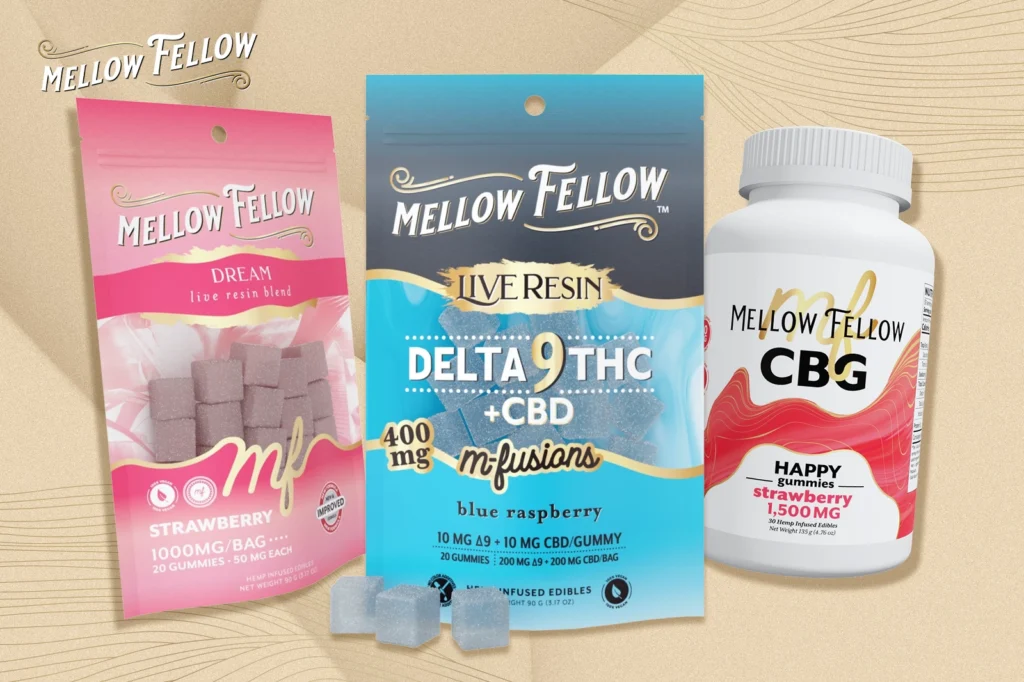
The Happy CBG Gummies 1500mg in Strawberry deliver 50mg of CBG per gummy across 30 gummies per jar, formulated for daytime mood support. The Relief CBD Gummies 1500mg in Peach use the same 50mg-per-gummy, 30-count structure with CBD instead, aimed at everyday balance and recovery. First-time users weighing whether wellness gummies fit their routine can start with our CBD gummies for beginners guide, which covers onset timing and dosing alongside storage basics.
Nighttime and Sleep-Focused Formulations
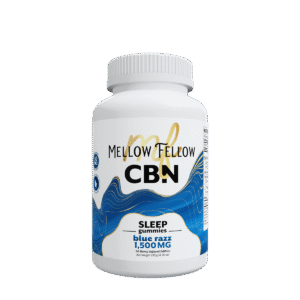
For nighttime routines, the Sleep CBN Gummies 1500mg in Blue Razz pack 50mg of CBN per gummy, a cannabinoid that is naturally more prone to increasing with age and heat exposure, which makes correct storage especially relevant for this formulation. Readers weighing CBN for rest can compare formats in our best CBN products for sleep roundup.
Live Resin Blends for a Terpene-Forward Experience
For live resin fans, the Dream Blend Live Resin M-Fusions Edibles in Strawberry 1000mg and Green Apple 1000mg combine Delta 8 THC, CBN, CBD, and Delta 9 THC in a 50mg-per-gummy blend meant for calming, terpene-forward evenings. Since live resin edibles carry a broader terpene and cannabinoid profile than single-noid gummies, they benefit even more from being kept sealed and out of direct light, since terpenes are just as heat-sensitive as cannabinoids.
Readers who lean on edibles for a calmer state of mind may also want our guide to edibles for anxiety, which covers cannabinoid ratios worth considering alongside storage habits.
Where to Find the Full Lineup
Anyone looking for a stronger single dose can browse the full Edibles Archives for the complete current lineup, including nano-infused and live resin options at a range of potencies.
For a closer look at how nano-emulsified gummies compare to traditional ones, our nano edibles duration and dosage guide covers onset speed and storage tips specific to that format. Anyone shopping for maximum strength can also check our strongest gummies for pain breakdown, which includes storage guidance for high-potency formulations that are especially sensitive to heat.
Shelf Life Guidelines by Cannabinoid Type
Not every cannabinoid degrades at the same pace.
THC-Forward Gummies Are the Most Sensitive
THC-forward gummies are the most sensitive to heat and light, since the same conversion pathway that turns THC into CBN accelerates under poor storage.
CBD and CBG Are More Stable, But Not Immune
CBD and CBG are comparatively more stable at room temperature, though both will still lose potency over long stretches of heat exposure, as shown in the Frontiers thermal degradation research.
Why CBN Gummies Need Extra Care
CBN gummies deserve particular care, since CBN is already a degradation product of THC, meaning a poorly stored CBN gummy can shift its own cannabinoid ratio further over time rather than simply losing strength.
A General Shelf Life Estimate
As a general guide, most sealed cannabinoid gummies stored properly maintain the bulk of their labeled potency for 9 to 12 months. That estimate assumes a cool, dark, sealed environment consistent with the ranges above. An opened jar left in a warm kitchen for the same period will likely show more noticeable shifts in both potency and texture.
Anyone comparing cannabinoid gummies to other extract-based edibles might also find our live resin gummies breakdown useful, since live resin formulations carry a different cannabinoid and terpene load than distillate-based gummies and respond a little differently to storage over time. For anyone new to dosing edibles in general, our guide on how edibles work and proper consumption covers onset timing and how storage-related potency shifts can affect the felt experience of a dose.
Conclusion
Cannabinoid gummies are a living product. The THC, CBD, CBN, or CBG inside keeps changing chemically for as long as the gummy sits on a shelf, and heat, light, air, and humidity all push that change along faster. Keeping gummies sealed in their original container, in a cool and dark spot between 60°F and 70°F, away from kids and pets, protects both the potency you paid for and the chewy texture that makes them enjoyable in the first place.
If it has been sitting in a hot car or a sunny window for months, treat the labeled dose as a rough estimate rather than a guarantee. Ready to restock with a batch built for reliable dosing from the first gummy to the last? Browse Mellow Fellow’s full Edibles Archives for CBD, CBG, CBN, and Delta 9 THC formulations designed with lab-verified consistency in mind.
Frequently Asked Questions
Do THC Gummies Lose Potency If Stored Too Long?
Yes. THC gummies gradually convert THC into CBN as they age, especially when exposed to heat and light. A gummy stored in a hot, bright spot for several months will likely test weaker in THC and higher in CBN than the same gummy stored in a cool, dark cabinet.
Can You Freeze CBD Gummies Without Ruining Them?
Freezing CBD gummies is safe and actually extends shelf life for long-term storage. The texture will firm up in the freezer, but it returns to normal within a few minutes of sitting at room temperature. Portion gummies into airtight bags before freezing to limit moisture exposure.
What Happens If Gummies Get Too Hot?
Heat above roughly 77°F speeds up cannabinoid degradation and can cause a gummy’s sugar coating or texture to soften and become sticky. Extended heat exposure, like a hot car on a summer day, accelerates the conversion of THC into CBN and can noticeably shorten a gummy’s effective shelf life.
Should CBN Gummies Be Stored Differently Than CBD Gummies?
CBN gummies benefit from slightly stricter storage since CBN itself forms from THC degradation, meaning poor storage conditions can shift the cannabinoid profile further rather than simply reducing potency. Keeping CBN gummies sealed, cool, and out of light helps preserve the intended dose and effect.
How Long Do Sealed Cannabinoid Gummies Last Unopened?
Most sealed cannabinoid gummies maintain the bulk of their labeled potency for 9 to 12 months when stored in a cool, dark place. Once opened, exposure to air and light on a regular basis can shorten that window, so resealing the container tightly after each use matters.
Is It Safe to Store Gummies in the Refrigerator?
Refrigeration is safe but not always necessary for gummies eaten within a couple of months, and it can introduce condensation that makes the gummies sticky when the jar is opened in a warm room. For most households, a cool pantry shelf strikes a better balance than the refrigerator.
Why Do Gummies Get Sticky or Hard Over Time?
Stickiness usually comes from humidity, since gummies absorb moisture from humid air through hygroscopic ingredients like corn syrup and glycerin. Hardness usually comes from the opposite problem, moisture loss in a dry environment. Keeping gummies sealed in their original container helps maintain the moisture balance that keeps the texture consistent.
Sources
- THC Degradation Does Not Impair the Accuracy of THC Doses Aerosolized by the Metered-Dose SyqeAir Inhaler: A 24-Month Stability Trial
- Effect of Temperature in the Degradation of Cannabinoids: From a Brief Residence in the Gas Chromatography Inlet Port to a Longer Period in Thermal Treatments
- Effect of Storage Conditions on the Potency of Cannabinoids in Cannabis Trimmings Water Activity and Moisture Content in Candy: Why It Matters
- Child Resistant (CR) Packaging 3,000+ Young Children Accidentally Ate Weed Edibles in 2021, Study Finds
Meta Title: How to Store Edible Gummies for Potency and Freshness
Meta Description: Learn the best temperature, light, and humidity conditions to keep THC, CBD, CBN, and CBG gummies fresh and potent for months.
Suggested URL Slug: how-to-store-edible-gummies-for-longevity-and-potency
Leave a Reply