
What Is Live Rosin?
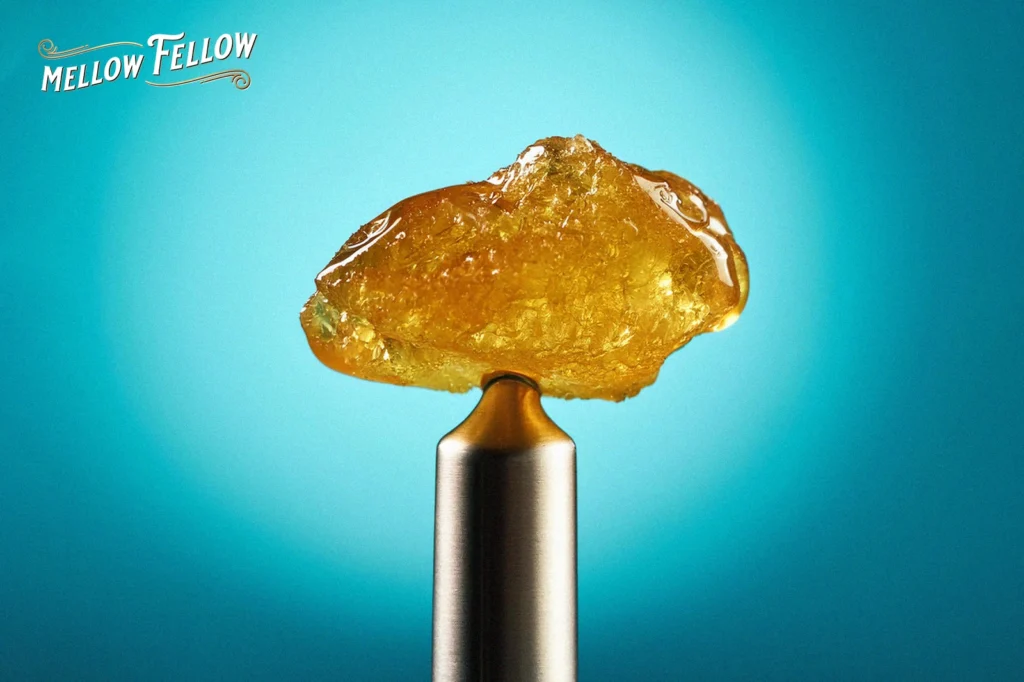
Quick Answer: Live rosin is a solventless cannabis concentrate made from fresh-frozen cannabis. In the premium process used most commonly today, freshly harvested cannabis is frozen, washed in ice water to separate its trichomes into hash, dried, and then pressed with controlled heat and pressure to release rosin. “Live” refers to the fresh-frozen starting material. “Rosin” refers to the mechanical pressing method. Unlike live resin, live rosin is not extracted with hydrocarbons such as butane or propane.
Rosin and resin are separated by one vowel and a completely different extraction process.
That is the source of a lot of confusion.
Both live rosin and live resin usually start with cannabis that has been frozen soon after harvest instead of being conventionally dried and cured. From there, they split. Live resin is produced using an extraction solvent, commonly a hydrocarbon such as butane or propane. Live rosin belongs to the category the cannabis industry calls solventless: trichomes are mechanically separated and the resulting material is pressed rather than dissolved in a hydrocarbon solvent.
There is another wrinkle worth knowing. The live rosin sold as a premium concentrate is usually made from hash produced from fresh-frozen cannabis, not by simply throwing wet flower into a rosin press.
Once that distinction clicks, terms like live hash rosin, fresh press, cold cure, and hash holes become much easier to understand.
Key Takeaways
- Live rosin is a concentrated cannabis extract made from fresh-frozen starting material without hydrocarbon extraction solvents.
- Premium live rosin is commonly made by washing fresh-frozen cannabis into ice-water hash, drying the hash, and pressing it with heat and pressure.
- The word “live” describes the fresh-frozen starting material, while “rosin” describes the mechanical extraction method.
- Live rosin and live resin are different products even though both commonly start with fresh-frozen cannabis.
- Most premium live rosin is technically live hash rosin because hash is produced before the pressing step.
- Solventless does not mean risk-free, healthier, or automatically higher quality.
- Potency varies by cultivar, process, and finished batch, so a current certificate of analysis is more useful than a generic THC range.
- Live rosin can appear in dabbable concentrates, vapes, and infused pre-rolls such as hash holes.
What Is Live Rosin Concentrate?
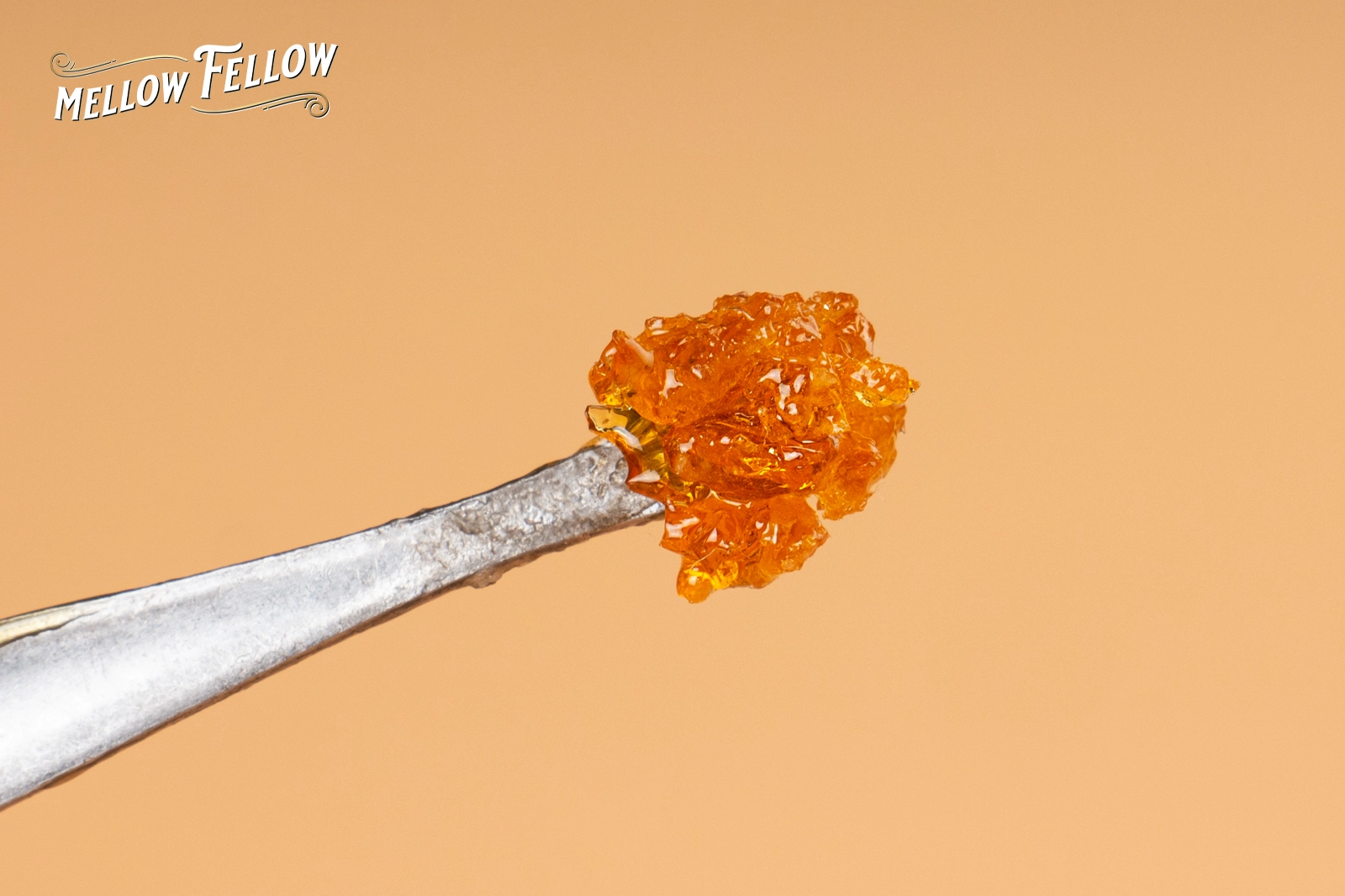
At its simplest, live rosin is a mechanically produced concentrate made from cannabis that was preserved fresh rather than dried and cured first.
Two words tell you almost everything you need to know.
What Does “Live” Mean in Live Rosin?
“Live” does not mean the concentrate is alive. It describes what happened to the plant after harvest. Instead of hanging harvested cannabis to dry and cure, producers freeze the plant material while it is fresh. That matters because cannabis contains volatile aromatic compounds, including terpenes, that can change or disappear during postharvest handling.
A 2021 study of a cold, solventless fresh-cannabis separation technique found that drying and curing can result in substantial losses of lower-molecular-weight monoterpenoids. The exact study process was not commercial live rosin production, so it should not be read as proof that every jar of live rosin perfectly duplicates fresh flower. It does provide a scientific reason for why producers go to the trouble of keeping fresh cannabis cold. Research on preserving cannabinoids and terpenoids from fresh cannabis
What Makes Live Rosin Solventless?
“Rosin” refers to extracting resinous material using pressure and controlled heat rather than dissolving the desired compounds in a hydrocarbon extraction solvent.
A peer-reviewed review of cannabis concentrates describes the industry’s solventless process as agitating plant material, sometimes in ice-cold water, filtering out trichome-rich material, and pressing that material between heated plates. Review of cannabis concentrate production and solventless extraction
There is a chemistry footnote here that cannabis marketing often skips: water is technically a solvent. “Solventless” is the established industry term because the process does not use the organic or hydrocarbon extraction solvents associated with products such as BHO.
That makes “made without hydrocarbon extraction solvents” more precise than simply saying “made without chemicals.” Water is a chemical. Cannabis is chemistry. The useful distinction is the extraction method.
How Is Live Rosin Made?
Commercial techniques vary by producer, cultivar, equipment, and desired finished texture. There is no single scientifically standardized live rosin recipe.
A 2026 review of cannabis extraction methods emphasizes that variables including temperature, pressure, time, and starting material can change the resulting chemical profile, and that no extraction technique is universally best for every target. 2026 review of cannabis extraction variables
The premium live-ro sin workflow generally follows five stages.
1. Cannabis Is Harvested and Frozen Fresh
The plant is frozen soon after harvest instead of going through a conventional dry and cure. The goal is preservation. Freezing also prepares the trichomes, the small resin-producing structures that carry much of the plant’s cannabinoid and terpene content, for mechanical separation.
2. The Fresh-Frozen Material Is Washed Into Hash
The frozen cannabis is agitated in very cold water. Trichome heads separate from the rest of the plant and can be collected through progressively finer filtration. The resulting material is commonly called bubble hash or ice-water hash. This is the step that makes the phrase “live hash rosin” especially useful: the hash came from live, fresh-frozen starting material.
3. The Hash Is Dried
Water must be removed from the collected hash before pressing and storage. Commercial solventless producers commonly use controlled drying or freeze-drying. The exact process matters because excessive heat, oxygen exposure, or poor handling can alter volatile compounds and the finished material.
A broader scientific review of cannabis processing notes that drying and extraction conditions can meaningfully affect cannabinoids and terpenes and that more research is still needed on several solventless processing methods. Review of cannabis drying and extraction methods
4. The Hash Is Pressed
The dried hash is placed under pressure between heated plates. Heat makes the resinous material mobile enough to separate from much of the remaining plant material. Pressure forces that resin outward, where it is collected as rosin.
The objective is not simply “more heat equals more extract.” Higher temperatures can alter cannabinoids and contribute to terpene losses, which is one reason experienced processors treat temperature and pressure as controlled variables rather than maxing out the machine.
5. The Rosin Is Collected and Finished
Rosin taken directly from the press may be sold or handled as fresh press, or it may undergo controlled post-press curing that changes its consistency. That is how you can end up with live rosin that looks glassy and translucent, creamy and badder-like, or somewhat saucy even when it began with the same basic extraction family.
Live Rosin vs Live Resin vs Rosin vs Hash Rosin
Cannabis concentrate names become much easier once you separate starting material from extraction method.
| Concentrate | Typical Starting Material | Main Extraction Method | Hydrocarbon Extraction Solvent? | Key Distinction |
| Live Rosin | Fresh-frozen cannabis, usually converted to hash first | Mechanical separation followed by heat and pressure | No | “Live” starting material + rosin pressing |
| Live Hash Rosin | Hash made from fresh-frozen cannabis | Hash is pressed with heat and pressure | No | The more precise name for much premium live rosin |
| Rosin | Dried/cured flower or hash | Heat and pressure | No | Solventless, but starting material does not have to be fresh-frozen |
| Hash Rosin | Hash | Heat and pressure | No | Describes the material being pressed; hash may be live or cured |
| Live Resin | Fresh-frozen cannabis | Solvent extraction, commonly hydrocarbons | Usually yes | Shares “live” starting material but not the rosin process |
If the rosin-versus-resin distinction is what brought you here, our dedicated guide goes deeper into live resin vs live rosin. For another extraction-method comparison, see live resin vs solventless concentrates.
What Is Live Hash Rosin?
Live hash rosin is rosin pressed from hash that was made using fresh-frozen cannabis.
That is also what many shoppers are buying when a dispensary menu simply says “live rosin.”
This matters because the intermediate hash-making step allows producers to isolate trichome-rich material before it reaches the press. Pressing pre-separated hash is different from pressing whole dried flower and generally produces a more refined concentrate with less plant material carried into the finished product.
So the relationship looks like this:
- Rosin is the broad family.
- Hash rosin is rosin pressed from hash.
- Live hash rosin is hash rosin whose hash was made from fresh-frozen cannabis.
- Live rosin is the shorter market term commonly used for that final category.
What Does Live Rosin Look, Smell, and Taste Like?
There is no single correct color or consistency.
Depending on cultivar, trichome maturity, filtration, pressing conditions, post-press handling, age, and storage, live rosin can range from pale cream or gold to deeper amber. Its texture can be glossy, glassy, tacky, whipped, buttery, or sauce-like.
That variation is why “lighter is always better” is too simplistic. A dark jar could reflect age or processing conditions, but genetics and starting material can influence color too.
Aroma and flavor are similarly cultivar-dependent. Fresh-frozen handling is intended to retain more of the volatile profile that can change during drying, but the finished product still reflects the plant that went in and the way it was processed. Good rosin cannot manufacture great starting material out of mediocre cannabis.
Fresh Press vs Cold Cure Live Rosin
Fresh press live rosin refers to rosin in its relatively unaltered state shortly after it leaves the press. Depending on composition, it may look translucent, glossy, or sap-like before its texture changes.
Cold cure live rosin has been allowed to rest under controlled conditions after pressing. During this period, cannabinoids and terpenes can redistribute and the consistency may become more opaque, creamy, or badder-like.
“Fresh press” and “cold cure” therefore describe post-press handling and texture, not a different core extraction method.
Neither term tells you by itself which product is stronger or better.
How Potent Is Live Rosin?
Live rosin is a cannabis concentrate, so it can contain substantially more cannabinoids by weight than ordinary flower. But there is no defensible universal percentage that applies to every live rosin product. Cultivar, trichome composition, micron selection, starting material, pressing conditions, cannabinoid type, and final formulation all change the numbers.
Research covering cannabis concentrates more broadly has documented products at very high THC concentrations while also stressing that controlled research on concentrate-related risks remains limited. That research covers the concentrate category as a whole, not live rosin alone. Peer-reviewed review of cannabis concentrates and behavioral health
The better shopping habit is simple:
Read the batch COA instead of assuming a potency from the words “live rosin.”
A useful lab report should help you verify the cannabinoids detected in the tested batch and, depending on the testing panel, may provide information about contaminants and other quality-control measures.
A clinical framework published in Cannabis and Cannabinoid Research similarly recommends evaluating cannabis products based on source, labeling, cannabinoid information, manufacturing details, and independent quality controls instead of relying on product-category marketing alone. Clinical framework for evaluating cannabis product quality and safety
For format-specific serving considerations, use our separate live rosin dosage guide.
How Do You Use Live Rosin?
Live rosin is not limited to the little concentrate jars that dominate social-media photos.
Depending on how a product has been formulated, rosin can appear in several formats:
- Dabs: A small amount of concentrate is vaporized using a dab rig or compatible electronic device.
- Vape Products: Properly formulated live rosin can be used in cartridges or all-in-one vaping hardware.
- Infused Pre-Rolls: Rosin can be placed through the center of flower to create the concentrate core of a hash hole.
- Edibles: Rosin can be formulated into ingestible products, although the product still needs appropriate preparation and accurate serving information.
The route matters. Inhaling a concentrate and eating a cannabinoid product do not produce the same onset or duration, so do not transfer dosing assumptions from one format to another.
What Is a Live Rosin Hash Hole?
A hash hole is a pre-roll built around a line or “rope” of hash or rosin running through the center of the flower.
As the joint burns, the concentrate core and surrounding flower create the distinctive ring-shaped or “donut” appearance that gave the format its nickname.
If you want the full format explainer, read what a hash hole is or compare a hash hole vs a regular joint.
Mellow Fellow Hash Holes Use a Live Rosin Core
This is where live rosin moves from terminology into a current Mellow Fellow product.
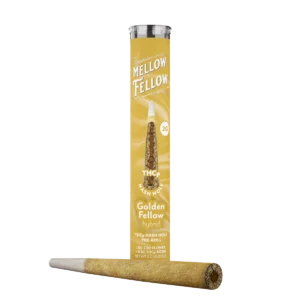
The current Mellow Fellow 2g Hash Hole collection states that each pre-rolled joint in the line contains a live rosin core.
For the current THCp versions, the individual product pages list 1.5g of CBD flower plus 0.5g of THCp rosin inside each 2g pre-roll.
| Current THCp Hash Hole | Profile | Format | Rosin Detail |
| Golden Fellow | Hybrid | 2g Hash Hole | PDP lists 0.5g THCp rosin with 1.5g CBD flower |
| Eclipse Kush | Indica | 2g Hash Hole | PDP lists 0.5g THCp rosin with 1.5g CBD flower |
| Diamond Daze | Sativa | 2g Hash Hole | PDP lists 0.5g THCp rosin with 1.5g CBD flower |
These are not beginner products. The current THCp product pages themselves warn that the format is extremely potent and intended for experienced consumers.
For people interested in the construction rather than a ready-made version, our separate guide explains how to roll a hash hole.
Live Rosin vs Live Resin: Is One Better?
No extraction category is universally “better.” Live rosin makes sense for someone who specifically values a mechanically produced concentrate that avoids hydrocarbon extraction solvents.
Live resin can make sense for someone who wants the fresh-frozen character associated with a live extract in a format that is easier to manufacture at larger scale and commonly available in vapes and other products.
Both can be well made. Both can be badly made. And solventless does not automatically mean safer.
Licensed solvent-based extraction is designed around solvent recovery, purging, quality controls, and finished-product testing. Live rosin avoids the hydrocarbon extraction step entirely, but the finished concentrate can still be highly potent, and inhaling or smoking cannabis still carries health risks.
The CDC notes that cannabis is not harmless and that product potency and method of use can affect risk. CDC cannabis health and safety information
If you want the full side-by-side rather than the short answer, see our live resin vs live rosin comparison.
Mellow Fellow also currently offers products such as the Clarity Lamb’s Bread Live Resin Disposable. That is a live resin product, not live rosin, and the distinction matters. Similar-sounding labels should never be treated as interchangeable extraction claims.
Why Is Live Rosin Expensive?
Live rosin often costs more because there are several resource-intensive steps between harvest and finished concentrate.
The plant has to be kept frozen rather than simply dried for ordinary flower production. The trichomes are separated into hash. That hash has to be dried carefully. It is then pressed, collected, handled, and sometimes cured under controlled conditions.
Not every cultivar is equally suited to solventless production, either. A plant can produce impressive flower without releasing enough desirable trichome material to make rosin production economically attractive.
This creates a very different yield and labor equation from high-throughput extraction methods.
That said, price is not proof of quality. A premium sticker does not tell you whether the material was fresh, whether it was stored correctly, what the cannabinoid profile is, or whether the batch passed relevant tests.
How to Tell If Live Rosin Is Good
Color and texture can give you clues, but the label and testing record tell you more.
Before buying live rosin or a rosin-infused product, check:
- The product clearly identifies itself as live rosin, live hash rosin, rosin, or another extract rather than using those words interchangeably.
- The producer identifies the cannabinoid content and serving information where applicable.
- A batch or lot number connects the product to a current certificate of analysis.
- The COA comes from an identifiable laboratory and matches the product or batch in your hand.
- The package gives appropriate storage instructions.
- There is clear manufacturer information and a traceable product source.
- The package is intact and has not obviously been exposed to excessive heat or leakage.
Mellow Fellow maintains a searchable lab-results library where Hash Hole and other current product COAs can be checked by product and lot.
That is much more useful than deciding that a jar must be excellent because it is pale yellow and expensive.
How Should You Store Live Rosin?
Heat, light, oxygen, and time can change cannabis compounds.
A year-long study of postharvest cannabis found measurable changes in cannabinoids and terpenoids under different storage temperatures and concluded that storage conditions materially influence chemical stability. The study examined cannabis inflorescences and prepared extracts rather than commercial live rosin jars, so it should not be used to invent a specific “live rosin lasts X months” rule. Study of cannabis postharvest storage conditions
For consumers, the practical rules are conservative:
Keep live rosin sealed, protected from light, and away from unnecessary heat. Follow the manufacturer’s storage directions for the exact product.
Cold storage is common for terpene-rich rosin, especially when it will not be used quickly. If a product has been refrigerated or frozen, avoid repeatedly opening it while it is still very cold because condensation can introduce moisture.
There is no scientifically established universal shelf-life number for every live rosin formulation.
Conclusion: What Is Live Rosin and Is It Worth Trying?
Live rosin is best understood as a fresh-frozen, solventless concentrate category.
The “live” part tells you the cannabis was preserved fresh instead of being conventionally dried and cured. The “rosin” part tells you the concentrate was produced mechanically rather than extracted with hydrocarbons.
Most premium live rosin takes an extra step in between: fresh-frozen cannabis is washed into hash, the hash is dried, and that hash is pressed. That is why live hash rosin is often the most technically accurate description of what appears on the shelf simply as live rosin.
Whether that process is worth paying more for comes down to what you value. If fresh-material processing, solventless extraction, and concentrate character matter to you, live rosin occupies a distinctive corner of the market. If your priority is simply maximum cannabinoid percentage or the lowest price, another extract may make more sense.
The label tells you what process the producer is claiming. The COA tells you what was measured in the batch. Use both.
Want to see how rosin works outside a concentrate jar? Browse the current Mellow Fellow 2g Hash Hole collection, where the rosin core runs through the center of the flower, then check the matching batch-specific lab results before choosing a product.
Frequently Asked Questions
Is Live Rosin Solventless?
Yes, in standard cannabis-industry terminology, live rosin is considered solventless. It is produced through mechanical separation and heat-and-pressure pressing rather than hydrocarbon extraction with substances such as butane or propane. Technically, water is itself a solvent, so “solventless” is an industry convention rather than a literal chemistry statement.
What Is the Difference Between Live Rosin and Rosin?
Live rosin starts with fresh-frozen cannabis. Regular rosin can be made from dried and cured flower or hash. Both are produced without hydrocarbon extraction solvents, but their starting material and postharvest handling differ.
What Is the Difference Between Live Rosin and Live Resin?
Both commonly begin with fresh-frozen cannabis. Live rosin relies on mechanical separation followed by heat and pressure, while live resin is normally produced with an extraction solvent such as butane or propane.
What Is Live Hash Rosin?
Live hash rosin is rosin pressed from hash that was produced from fresh-frozen cannabis. Much of the premium concentrate marketed simply as “live rosin” is technically live hash rosin.
Is Live Rosin the Same as Hash Rosin?
Not always. Hash rosin means that hash was pressed to make the rosin. If that hash came from dried or cured cannabis, it is hash rosin but not necessarily live hash rosin. The word “live” specifically points to fresh-frozen starting material.
What Is Cold Cure Live Rosin?
Cold cure live rosin is rosin that has undergone controlled post-press curing rather than being sold immediately as fresh press. That handling can change its consistency into a more opaque, creamy, or badder-like texture. Cold cure is a post-processing description, not a separate extraction family.
Is Fresh Press Better Than Cold Cure Live Rosin?
Neither is universally better. Fresh press preserves the concentrate closer to its immediate post-press state, while cold curing changes texture and handling characteristics. Preference depends on the product, storage, aroma, consistency, and how you plan to use it.
Does Live Rosin Get You Higher Than Flower?
Live rosin is a concentrate and can contain much more cannabinoid material by weight than ordinary flower, but the intensity of an experience depends on the tested potency, amount consumed, method of use, tolerance, and individual response. Do not rely on the category name alone to predict strength.
Is Live Rosin Better Than Live Resin?
Not categorically. Live rosin avoids hydrocarbon extraction solvents and appeals to people who value solventless processing. Live resin can also preserve a fresh-frozen profile and may be available in more formats or at different price points. Quality depends on the actual product and production standards, not just the category.
Is Live Rosin Safer Than Live Resin?
There is not enough evidence to say that live rosin is categorically safer simply because it is solventless. Avoiding hydrocarbon extraction eliminates one part of the production process, but live rosin remains a concentrated cannabis product. Product potency, contaminants, route of use, frequency, and individual health factors all matter.
Can You Put Live Rosin in a Joint?
Yes. A line of rosin can be placed inside flower to create the concentrate core of an infused joint commonly called a hash hole. Mellow Fellow’s current Hash Hole collection uses a live rosin core.
Do Mellow Fellow Hash Holes Have Rosin in Them?
Yes. Mellow Fellow’s current 2g Hash Hole collection describes the line as using a live rosin core. Current THCp Golden Fellow, Eclipse Kush, and Diamond Daze product pages each list 0.5g of THCp rosin with 1.5g of CBD flower.
Does Live Rosin Need to Be Refrigerated?
Cold storage is common for live rosin because heat can accelerate changes in volatile compounds and cannabinoids, but storage instructions should come from the specific producer. Evidence supports the broader principle that cannabis chemistry changes with storage temperature and time, but it does not establish one universal refrigeration rule or shelf life for every commercial live rosin product.
Does Live Rosin Expire?
Live rosin changes with time rather than switching from “good” to “expired” on one universal date. Terpenes can be lost, cannabinoids can degrade or transform, and texture may change. Follow the product’s date and storage instructions and avoid products with damaged packaging, contamination, or unexplained changes.
What Is the Difference Between Live Rosin and Distillate?
Live rosin is mechanically produced from fresh-frozen material and generally retains a broader mixture of compounds from its source material. Distillate undergoes substantial refinement and distillation to concentrate selected cannabinoids.
Is Live Rosin Legal?
Legality depends on the cannabis source, cannabinoid composition, product type, and jurisdiction. Federal and state rules can differ and change over time. Do not assume a product is legal simply because it is labeled live rosin or hemp-derived. Check current rules and the seller’s shipping restrictions for your location before ordering.
Sources
- Advancing the Science on Cannabis Concentrates and Behavioural Health
- Novel Solventless Extraction Technique to Preserve Cannabinoid and Terpenoid Profiles of Fresh Cannabis Inflorescence
- From Plant to Extract: Different Factors in the Extraction of Cannabis sativa L. Inflorescences
- Processing and Extraction Methods of Medicinal Cannabis: A Narrative Review
- A Clinical Framework for Evaluating Cannabis Product Quality and Safety
- Cannabis Frequently Asked Questions
- Metabolic Profiling of Cannabis Secondary Metabolites for Evaluation of Optimal Postharvest Storage Conditions