
Why Don’t Edibles Work for Me? Metabolism, Dosing, and Timing Explained
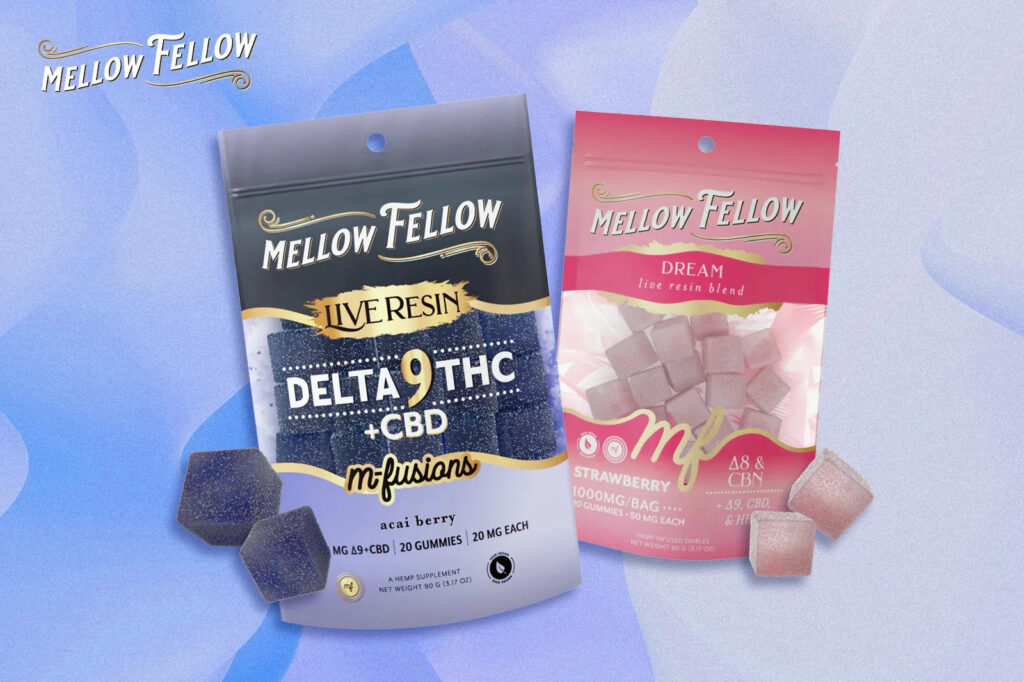
Quick Answer: Edibles may not work for you because of metabolism, genetics, liver enzyme variations, product formulation, or tolerance. Factors like CYP2C9 activity, fat intake, dosing, and digestive conditions all influence how well your body converts THC into active 11-hydroxy-THC.
Cannabis edibles promise a long-lasting, body-focused experience without the need to smoke or vape. Yet for many people, the promise falls flat.
You follow the dosing guide, wait patiently, and feel nothing while friends report strong effects from the same product. This isn’t imagination or bad luck – it’s biology, and understanding why edibles don’t work for you starts with how your body processes THC.
This guide explains the metabolic pathways that control edible effects, identifies the most common reasons for poor response, and offers practical strategies to improve results.
Key Takeaways
- Edible effectiveness varies widely due to metabolism, liver enzyme activity, stomach contents, product formulation, and tolerance differences among individuals.
- Research shows edible THC has low bioavailability (4-12%), and genetics affecting CYP2C9 can dramatically influence how well edibles work.
- Eating edibles with fats increases absorption by up to three times, but also slows onset by 30-60 minutes.
- See Mellow Fellow’s nano-emulsified drinks, live resin edibles, and full-spectrum products for more reliable, fast-acting, and effective experiences.
How Your Body Processes Edible THC
When you eat a THC edible, the cannabinoid must survive a complex journey before reaching your brain.
Unlike inhaled THC that enters your bloodstream through lung tissue in seconds, edible THC travels through your digestive tract, gets absorbed in your small intestine, and passes directly to your liver via the hepatic portal vein.
This route is called first-pass metabolism, and it dramatically changes both the timeline and the intensity of effects.
The Role of Liver Enzymes in THC Conversion
In your liver, enzymes – primarily from the cytochrome P450 family, especially CYP2C9 and CYP3A4 – metabolize Delta 9 THC into 11-hydroxy-THC.
This metabolite crosses the blood-brain barrier more efficiently than standard THC and produces stronger psychoactive effects. However, this conversion process is where many people lose effectiveness.
Studies on oral THC bioavailability show that it ranges from 4% to 12% in most individuals, compared to 10-35% for inhaled THC.
The wide variation reflects individual differences in liver enzyme activity, gastric emptying rates, and gut microbiome composition. If your liver enzymes process THC too quickly or too slowly, you may experience weak effects or unpredictable onset timing.
How THC Binds to Fats During Digestion
Additional factors complicate absorption. THC is lipophilic, meaning it binds to fats rather than dissolving in water. This trait affects how your body absorbs the compound from food, how quickly it moves through your digestive system, and how long effects take to appear. For guidance on typical timing, see our breakdown of the best time to take edibles.
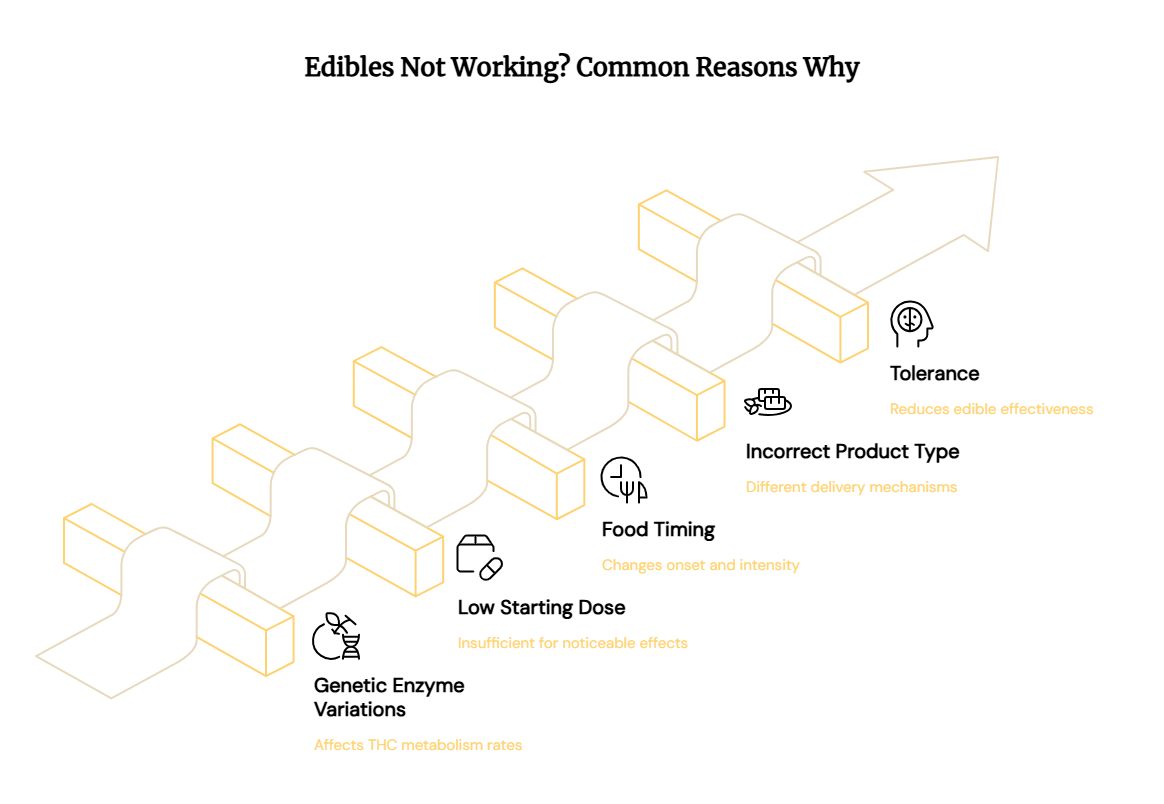
Common Reasons Edibles Don’t Work
Here are some of the most common reasons why edibles might not work for you, or at least not as well as you’d like.
Genetic Enzyme Variations
Your genes play a direct role in how well edibles work. Research on CYP2C9 genetic polymorphisms shows that variations in the CYP2C9 gene significantly affect THC metabolism rates.
People with certain CYP2C9 variants metabolize THC much faster or slower than average, leading to reduced effects or unpredictable timing.
Approximately 10-15% of the population carries genetic variants that produce low or non-functional CYP2C9 enzymes.
For these individuals, the liver struggles to convert Delta 9 THC into 11-hydroxy-THC efficiently, resulting in weaker psychoactive effects even at higher doses.
Low Starting Dose
Many first-time users start with 2.5-5mg doses as recommended by dispensaries, but this conservative approach may fall below the threshold needed to produce noticeable effects in some people. Body weight, metabolism speed, and tolerance all influence effective dosing.
Experienced users often require 10-25mg to achieve desired effects, while true beginners may respond well to 5-10mg. If you’ve tried edibles once at 5mg and felt nothing, the issue may simply be insufficient dosing rather than metabolic incompatibility.
Food Timing and Stomach Contents
Taking edibles on an empty stomach versus after a meal changes both onset time and peak intensity. Contrary to intuition, fasted-state consumption doesn’t always mean faster or stronger effects. When your stomach is empty, gastric emptying slows and THC absorption becomes less predictable.
Effects of Fatty Foods on THC Absorption
Research on food effects and THC pharmacokinetics found that consuming THC edibles with a high-fat meal increased peak blood concentrations by approximately 3-fold compared to fasted conditions. Fats facilitate cannabinoid absorption in the small intestine and improve bioavailability. However, this approach also delays onset by 30-60 minutes as your body digests the meal.
For detailed timing strategies around food intake, check our guide on taking edibles on an empty stomach.
Incorrect Product Type or Formulation
Not all edibles deliver THC with equal efficiency. Gummies, baked goods, tinctures, and nano-emulsified beverages use different delivery mechanisms that affect absorption rates and bioavailability.
Traditional Edibles vs Nano-Emulsified Products
Traditional edibles rely on standard digestion, while nano-emulsified products use microscopic THC particles suspended in water-compatible carriers. These nano-formulations can increase bioavailability and speed onset to 15-30 minutes instead of 45-90 minutes. If standard edibles consistently fail, trying a different formulation type may help.
Live resin edibles preserve more terpenes and minor cannabinoids than distillate-based products, potentially enhancing effects through the entourage effect. Mellow Fellow’s live resin edibles use full-spectrum extract for richer cannabinoid profiles that some users find more effective than single-cannabinoid formulations.
Tolerance and Cross-Tolerance
Regular cannabis users build tolerance to THC over time, requiring higher doses to achieve the same effects. This tolerance applies across all consumption methods due to cannabinoid receptor downregulation in the brain.
How Daily Cannabis Use Affects Edible Response
Cross-tolerance means that daily vaping or smoking reduces edible effectiveness even if you rarely eat cannabis products. CB1 receptors become less sensitive to THC regardless of delivery method.
If you consume cannabis regularly through other methods, your baseline tolerance may be masking edible effects at standard doses. For insights on managing tolerance, read about why weed doesn’t get you high anymore.
How to Make Edibles Work Better
Let’s find out how to make those edibles work better for you!
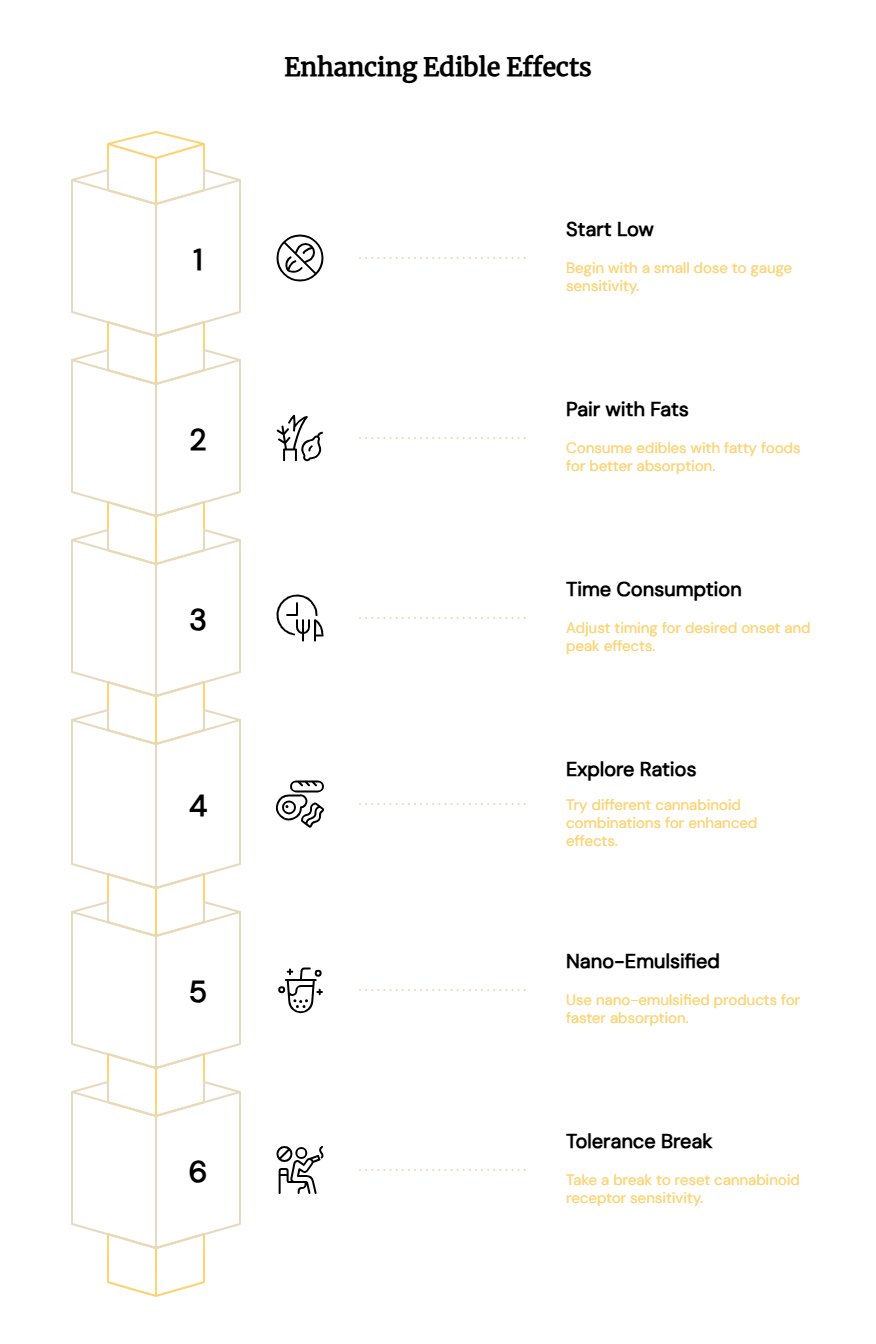
Start Low, Then Titrate Up Gradually
If your first edible experience produced no effects, increase the dose by 2.5-5mg increments on subsequent attempts. Wait at least 2-3 hours between doses on the same day to avoid stacking effects that hit later than expected.
For beginners with no tolerance, 5-10mg is a safe starting range. For regular cannabis users, 15-25mg may be necessary to break through baseline tolerance. Always track your doses and timing in a simple log to identify your personal threshold.
Pair Edibles with Fatty Foods
Consuming edibles alongside or shortly after a meal containing healthy fats improves THC absorption significantly. Avocado, nuts, olive oil, or full-fat dairy products help dissolve and transport cannabinoids through the intestinal wall.
Consider Your Timing Strategy
Decide whether you want faster onset or higher peak effects, then time your consumption accordingly:
For Faster Onset (45-60 Minutes)
Take edibles on an empty stomach, wait 15-20 minutes, then eat a small snack with fats. This approach balances absorption speed with bioavailability enhancement.
For Stronger Peak Effects (90-120 Minutes)
Consume edibles during or immediately after a moderate meal containing fats. Accept the longer wait in exchange for more intense effects.
Refer to our best time to take an edible at night guide for timing strategies around sleep schedules.
Try Different Cannabinoid Ratios
If straight THC edibles consistently underperform, products with different cannabinoid ratios may work better. Some people respond more effectively to THC combined with CBD, CBG, or minor cannabinoids that modulate the overall experience.
CBD can enhance bioavailability and extend duration by inhibiting certain liver enzymes that break down THC too quickly. CBG may increase effects through different receptor interactions. Products labeled as “full-spectrum” or “live resin” contain these supporting cannabinoids naturally.
Switch to Nano-Emulsified or Sublingual Products
If traditional edibles fail after multiple attempts with proper dosing and timing, the issue may be fundamental absorption efficiency. Nano-emulsified drinks and sublingual tinctures bypass much of the first-pass metabolism that degrades THC in the liver.
THC drinks use water-compatible cannabinoid particles that absorb faster and more completely than standard edibles. Onset drops to 15-30 minutes, and bioavailability increases significantly. For people who struggle with edible effectiveness, this format often provides the first reliable results.
Take a Tolerance Break
If you use cannabis daily through any method, a 5-10 day tolerance break can reset your cannabinoid receptor sensitivity and restore responsiveness to lower doses. CB1 receptor density begins recovering within 48 hours of abstinence and approaches baseline levels after 2-3 weeks.
Upgrade your experience with Mellow Fellow vapes for immediate, predictable results.
Medical and Genetic Factors That Affect Edible Response
Certain medical conditions and medications interfere with THC metabolism and absorption. Conditions affecting liver function – including fatty liver disease, hepatitis, or cirrhosis – alter enzyme activity and reduce the liver’s ability to convert Delta 9 THC into 11-hydroxy-THC effectively.
Medications That Alter THC Metabolism
Medications that inhibit or induce CYP enzymes change how your body processes edibles. Common examples include:
CYP Inhibitors (Slow THC Metabolism, Potentially Increasing Effects)
Grapefruit, certain antifungals, some antibiotics, HIV antivirals
CYP Inducers (Speed THC Metabolism, Potentially Decreasing Effects)
St. John’s Wort, certain anticonvulsants, rifampin
Digestive Conditions and Absorption Issues
Digestive conditions like Crohn’s disease, celiac disease, or gastroparesis affect absorption rates and may reduce bioavailability. People with these conditions often report inconsistent or weak responses to oral cannabis products.
If you suspect medical factors are interfering with edible effectiveness, consult a healthcare provider familiar with cannabis therapeutics before significantly increasing doses.
Comparing Edibles to Other Consumption Methods
Understanding how edibles differ from vaping, smoking, and sublingual products helps set realistic expectations and choose the right method for your needs.
|
Method |
Onset Time |
Peak Effects |
Duration |
Bioavailability |
Best For |
|
45-120 min |
2-3 hours |
4-8 hours |
4-20% |
Long-lasting body effects, discrete use |
|
|
5-10 min |
15-30 min |
2-4 hours |
10-35% |
Fast relief, dose control, flavor |
|
|
5-10 min |
15-30 min |
2-4 hours |
10-35% |
Immediate effects, ritual preference |
|
|
15-30 min |
45-90 min |
3-5 hours |
12-35% |
Moderate onset, better bioavailability |
|
|
15-45 min |
1-2 hours |
3-5 hours |
15-30% |
Social settings, faster than edibles |
If edibles consistently fail after trying the strategies above, switching to vaping or THC drinks may be more effective. Inhalation methods bypass first-pass metabolism entirely, delivering THC directly to the bloodstream through lung tissue. For people with poor oral bioavailability, this route often provides the first reliable effects.
Mellow Fellow’s disposable vapes offer controlled dosing with fast onset for users who need immediate feedback. For insights on comparing formats, check out our guide on edibles vs vapes vs flower.
Product Recommendations for Better Edible Results
If you’re ready to try edibles again with better formulations and dosing strategies, these products represent reliable starting points with clear cannabinoid content and quality testing.
For Full-Spectrum Effects with Enhanced Bioavailability
Euphoria Blend Live Resin M-Fusions Edibles – Peach (1000mg) combines live resin extract with precise per-piece dosing for a terpene-rich experience that goes beyond basic distillate gummies.
Each piece delivers a measured amount of THC plus supporting cannabinoids and terpenes that may improve absorption and effects through the entourage effect.
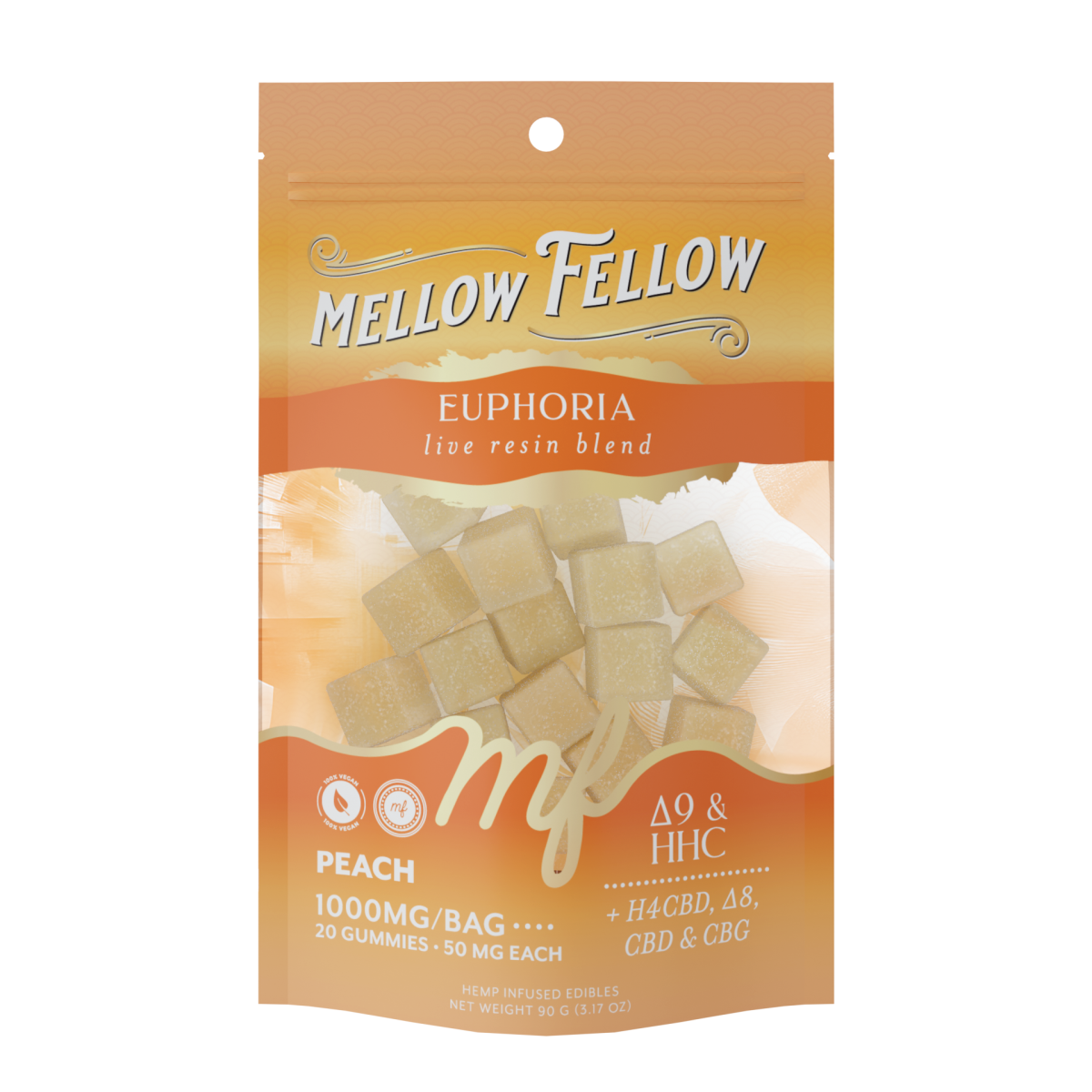
The peach flavor is bright and natural, masking any hemp taste while the live resin profile brings notes of citrus and tropical fruit that complement the candy base. Perfect for users who want the fuller, more nuanced high that only whole-plant extracts can deliver.
For Controlled, Lower-Dose Exploration
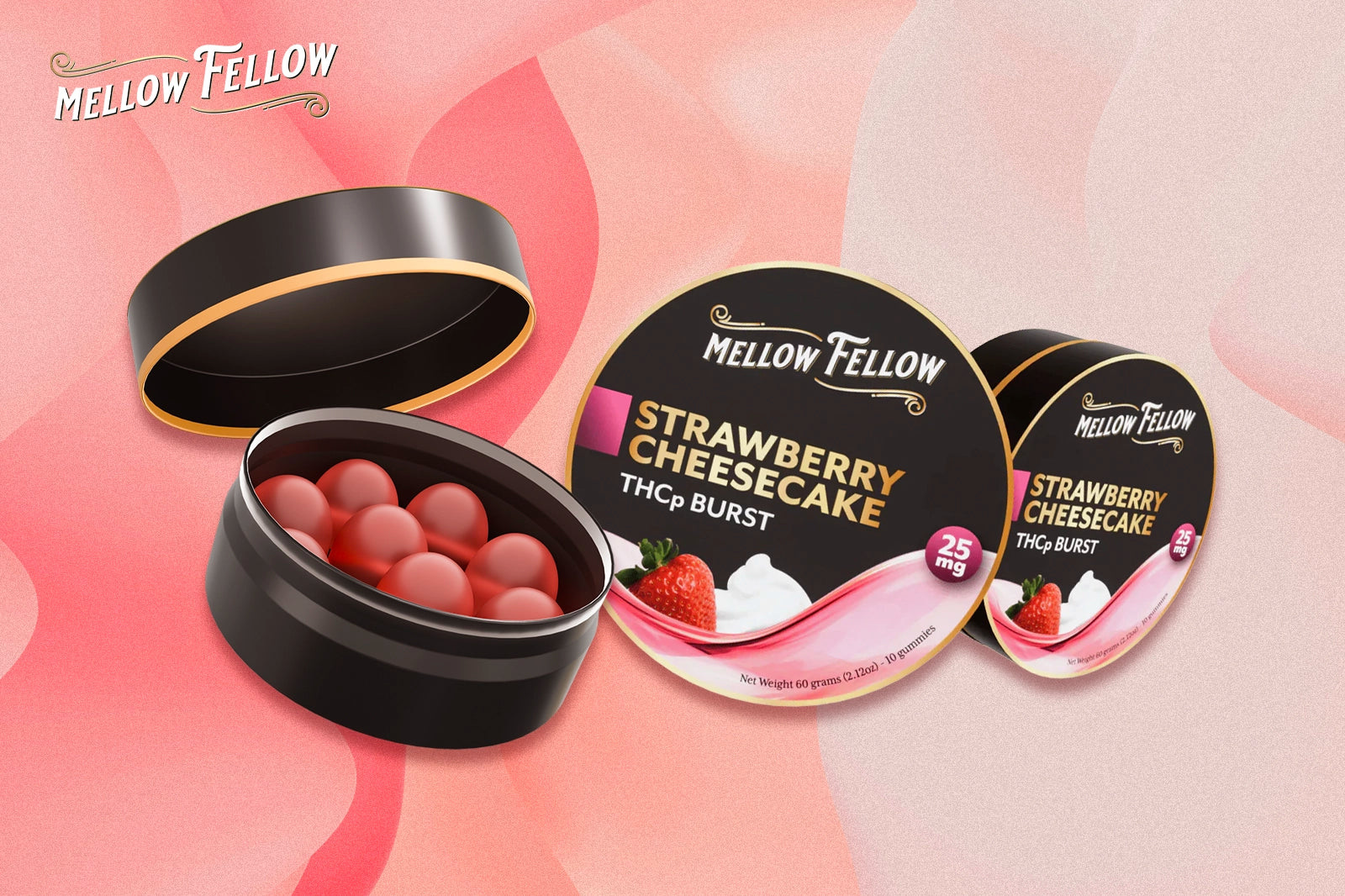
THCp Bursts Edibles – Cookies & Cream (25mg) provides smaller, manageable servings ideal for dose titration with a twist – THCp’s higher receptor affinity means lower doses may produce noticeable effects for people who don’t respond well to standard THC.
Each burst packs rich cookies and cream flavor with a satisfying crunch, making it easy to nibble your way to the perfect dose.

THCp is known for potent, long-lasting effects, so these are perfect for experienced users looking to break through plateaus or newcomers who want precision control without committing to large servings.
For Balanced, Predictable Experiences
Delta 9 Live Resin Edibles (400mg, Acai) uses live resin for fuller cannabinoid profiles and clear per-piece dosing that takes the guesswork out of finding your sweet spot. Each unit is lab-tested for consistency, so you get the same reliable experience every time.

The acai flavor is deep and berry-forward with subtle tartness that balances the natural earthiness of cannabis. Live resin brings a smoother, more rounded high compared to isolate-based gummies, with terpenes intact to support the entourage effect. Ideal for users who value predictability and want to dial in their perfect dose with confidence.
For Unique Flavors and Premium CBD-Enhanced Formulations
Delta 9 THC + CBD Baklava Sticks (4 Pack) pairs THC with CBD for balanced effects that may enhance bioavailability and reduce anxiety for sensitive users. The CBD content helps modulate THC metabolism for longer, smoother effects without the edge that pure THC can bring.
Each baklava stick features layers of flaky phyllo, honey, and nuts in an authentic Mediterranean-inspired treat that feels more like dessert than medicine.

The blend of cinnamon, pistachios, and honey creates a luxurious flavor experience while the 1:1 THC:CBD ratio delivers mellow, manageable effects perfect for social settings or winding down after a long day.
For Fast-Acting Alternatives to Traditional Edibles
Delta 9 THC + CBD Seltzer Beverage (20mg, Pineapple Orange, 4 Pack) delivers nano-emulsified THC that absorbs faster and more completely than standard edibles, solving the “when will it hit?” problem that frustrates so many users.
Onset drops to 15-30 minutes, making it easier to gauge effectiveness and adjust dosing in real time. The pineapple orange flavor is crisp, refreshing, and lightly carbonated – perfect for sipping at a party, poolside, or anywhere you’d normally crack open a cold drink.

Each can contains a balanced 20mg dose with CBD to smooth the ride, and the nano-infusion technology means you’ll feel it coming on gradually rather than getting slammed unexpectedly. Great for users who want edible-style duration with vape-style predictability.
For Those Who Prefer Inhalation Over Digestion
THCp 2g Infused Blunt – Ice Cream Mintz (Indica) bypasses digestion entirely, delivering THCp through combustion for immediate effects that hit within minutes instead of hours. If edibles consistently fail due to metabolic factors, this format provides reliable, fast-acting results with no waiting game.

The Ice Cream Mintz strain brings creamy, dessert-like flavors with hints of mint and sweet vanilla, wrapped in a premium tobacco-free wrap for smooth, even burning. Each 2g blunt is infused with concentrated THCp for extra potency, making it ideal for evening relaxation or deep couch-lock sessions.
Perfect for users who want the ritual of smoking combined with cannabinoid firepower that standard flower can’t match.
For more product options, browse our full Delta 9 edibles collection or see THC drinks for faster-onset alternatives.
When to Try Alternative Formats
If you’ve tried multiple edible types, adjusted dosing, paired them with fatty meals, taken tolerance breaks, and still experience minimal effects, your body may simply process oral THC inefficiently. This isn’t a failure – it’s biology, and it means other consumption methods will serve you better.
Vaporizers for Immediate Feedback
Bypass first-pass metabolism completely. THC enters your bloodstream through lung tissue in 5-10 minutes with higher bioavailability than edibles. See our guide on Delta-8 gummies vs vape for a detailed comparison.
Sublingual Tinctures for Moderate Onset
Absorb under the tongue, avoiding much of the liver metabolism that reduces edible effectiveness. Onset is faster (15-30 minutes) with better bioavailability.
THC Drinks for Better Absorption
Use nano-emulsification to improve absorption and speed onset. This format works better than traditional edibles for many people who struggle with oral THC.
Smokeable Products for Guaranteed Results
Deliver immediate effects through inhalation. Mellow Fellow’s THCp infused blunts combine flower with concentrated THCp for potent, fast-acting results.
Some people simply aren’t good candidates for traditional edibles due to genetic enzyme variations, digestive conditions, or medication interactions. Choosing a different format isn’t giving up – it’s finding the method that matches your biology.
Why Edibles Aren’t Working for You
Edibles fall short for many people because THC must move through digestion and first-pass metabolism before producing effects. Genetic enzyme differences, low doses, poor absorption, product formulation, and tolerance all influence how strongly edibles work. Food timing, fat intake, and delivery method also shape onset and intensity.
Trying full-spectrum edibles, nano-emulsified drinks, or cannabinoid blends may help increase bioavailability and improve your overall experience. For some individuals, inhalation or sublingual products offer more reliable results due to faster onset and higher absorption.
Mellow Fellow provides multiple formats designed to support predictable, repeatable results.
Frequently Asked Questions
Why Don’t Edibles Work for Me Even at High Doses?
Genetic variations in liver enzymes (particularly CYP2C9) can prevent efficient conversion of Delta 9 THC into 11-hydroxy-THC, the compound responsible for edible effects. Studies show 10-15% of people are poor metabolizers of oral THC due to enzyme deficiencies. Additionally, certain medications and digestive conditions reduce absorption. If high doses consistently produce minimal effects, switching to inhalation or sublingual methods may work better.
How Long Should I Wait Before Taking More Edibles?
Wait at least 2-3 hours before considering a second dose. Peak effects occur 2-3 hours after consumption, and taking more before this window increases the risk of uncomfortable over-intoxication. For first attempts, wait the full 3 hours even if you feel nothing. Effects can build slowly and hit unexpectedly late.
Do Edibles Work Better on a Full or Empty Stomach?
Research shows edibles produce stronger peak effects when consumed with fatty foods. A study found that high-fat meals increased THC blood concentrations by 3-fold compared to fasted conditions. However, food delays onset by 30-60 minutes. For faster effects, take edibles on an empty stomach then eat a small fatty snack 15-20 minutes later.
Can I Build Tolerance to Edibles Specifically?
Yes, regular edible use causes tolerance, but it’s not format-specific. Tolerance develops at the CB1 receptor level, meaning daily use through any method – smoking, vaping, or edibles – reduces sensitivity to THC across all formats. Cross-tolerance is common. If you vape daily, your edible effectiveness will decrease even if you rarely eat cannabis products.
What’s the Difference Between Live Resin and Distillate Edibles?
Live resin edibles use full-spectrum extract that preserves terpenes and minor cannabinoids from fresh cannabis. Distillate edibles contain isolated THC with no other plant compounds. Live resin products may produce stronger or more well-rounded effects through the entourage effect, where multiple cannabinoids work synergistically. Some users report better effectiveness from live resin formulations.
Why Do Some People Never Feel Edibles?
Approximately 10-15% of the population carries genetic variants that produce low or non-functional CYP2C9 enzymes needed to metabolize THC into its psychoactive form. For these individuals, even very high oral doses produce minimal effects. Other factors include digestive disorders that impair absorption, medications that alter liver enzyme activity, and extremely fast metabolism rates that clear THC before it produces noticeable effects.
Are THC Drinks More Effective Than Gummies?
For many people, yes. Nano-emulsified THC drinks bypass much of the first-pass metabolism that reduces edible effectiveness. Bioavailability increases to 15-30% compared to 4-20% for traditional edibles, and onset drops to 15-30 minutes instead of 45-120 minutes. If standard edibles consistently fail, drinks often provide the first reliable results.
How Much THC Do I Actually Need to Feel Effects?
Individual responses vary widely based on tolerance, body weight, and metabolism. Studies suggest 5-10 mg produces noticeable effects in cannabis-naive users, while regular users may need 15-25 mg or more. Start at 5 mg if you’re new to cannabis, 10-15 mg if you’re an occasional user, and 20-25 mg if you use cannabis daily through other methods.
Can Liver Health Affect How Well Edibles Work?
Yes, significantly. Your liver converts Delta 9 THC into 11-hydroxy-THC, the compound responsible for edible psychoactivity. Conditions that impair liver function – including fatty liver disease, hepatitis, cirrhosis, or medication-induced liver stress – reduce enzyme activity and edible effectiveness. If you have known liver conditions, consult a healthcare provider before using high-dose edibles.
Should I Try a Different Cannabinoid if THC Edibles Don’t Work?
Potentially. Some people respond better to THCp, which shows higher CB1 receptor affinity than Delta 9 THC, or to products that combine THC with CBD, CBG, and other minor cannabinoids. The entourage effect may enhance absorption or change how your body processes cannabinoids. If straight Delta 9 edibles consistently fail, trying full-spectrum products or alternative cannabinoids is worth testing.
How Does Edible Metabolism Compare to Smoking or Vaping?
Smoking and vaping deliver THC directly to the bloodstream through lung tissue, bypassing first-pass liver metabolism. Bioavailability ranges from 10-35% versus 4-20% for edibles. Onset is 5-10 minutes instead of 45-120 minutes. The trade-off is duration: inhaled THC lasts 2-4 hours while edibles last 4-8 hours. For people who don’t metabolize oral THC well, inhalation provides much more reliable effects.
Can I Improve My Edible Response Over Time?
Possibly, through strategic timing, formulation changes, and dose adjustments. Taking regular tolerance breaks, consuming edibles with fatty foods, trying nano-emulsified products, and switching to full-spectrum formulations can all improve results. However, if genetic enzyme deficiencies or medical conditions cause poor response, these strategies may not overcome fundamental metabolic barriers. In those cases, alternative consumption methods work better.
Sources
- Cannabis use and the development of tolerance: a systematic review of human evidence – PubMed
- Preparation of a nanoemulsion containing active ingredients of cannabis extract and its application for glioblastoma: in vitro and in vivo studies – PMC
- Human Pharmacokinetic Parameters of Orally Administered Δ9-Tetrahydrocannabinol Capsules Are Altered by Fed Versus Fasted Conditions and Sex Differences – PMC
- Impact of Genetic Polymorphisms in CYP2C9 and CYP2C19 on the Pharmacokinetics of Clinically Used Drugs | Request PDF
- Pharmacokinetics of cannabinoids – PubMed
- Mechanisms of Action and Pharmacokinetics of Cannabis – PMC
- Clinical Evaluation of the Cannabis-Using Patient: A Moving Target | The Permanente Journal