
What Are CBD Softgels?
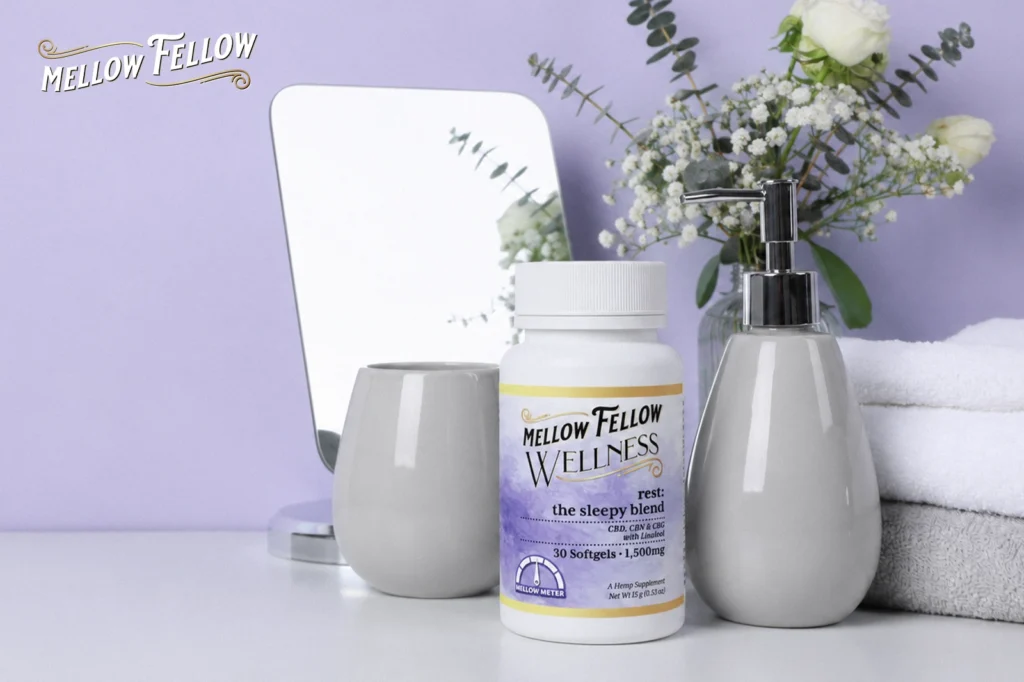
Quick Answer: A CBD softgel is a swallowable capsule with a gelatin or plant-based shell that encloses CBD oil, usually blended with a carrier oil like MCT oil. It has no flavor to work around, digests through the stomach like any other oral supplement, and typically produces effects within 45 to 90 minutes that last four to eight hours.
CBD has moved well past niche status. A Gallup poll found that 14% of American adults reported personally using CBD products, most commonly for pain, anxiety, and sleep support, and interest has only grown as more formats have entered the market, including everyday use cases like supporting a steady mood throughout the day. Among those formats, softgels have become one of the most popular ways to take CBD without dealing with droppers, flavors, or guesswork.
This guide covers exactly what a CBD softgel is, how it is made, how it moves through the body, what the research says about how well it absorbs, and what to check before buying one. If you are weighing a faster-acting sublingual option instead, our guide on what cannabis tinctures actually are covers that absorption pathway in more depth.
Key Takeaways
- A CBD softgel is a swallowable capsule with a gelatin or plant-based shell that encloses CBD oil, usually blended with a carrier oil.
- Softgels digest through the stomach, so onset typically takes 45 to 90 minutes, with effects lasting four to eight hours.
- A self-emulsifying softgel formulation studied in Molecules produced a 4.4-fold higher peak blood concentration than a standard oil-filled capsule of the same dose.
- Softgels carry minimal added ingredients compared to other edible formats, since they rely on a carrier oil rather than sugar or flavoring.
- Independent lab testing has found meaningful accuracy gaps across hemp cannabinoid products broadly, making a batch-specific Certificate of Analysis essential when buying any softgel.
- A Gallup survey found 14% of American adults use CBD products, most often for pain, anxiety, and sleep support.
What Is a CBD Softgel Capsule, Exactly?
A CBD softgel is a small, oval capsule made from a gelatin or plant-based shell that fully encloses a liquid dose of CBD oil. Unlike a hard-shell capsule that holds a dry powder, a softgel holds a liquid or semi-liquid fill, which is why the shell has a slightly flexible, chewable-if-you-tried-it texture.
The CBD inside is almost always suspended in a carrier oil, most commonly MCT (medium-chain triglyceride) oil, since CBD is fat-soluble and needs a lipid base to stay evenly distributed. Some softgels combine CBD with other cannabinoids like CBG or CBN, depending on the formulation’s intended use.
Because the shell is sealed and flavorless, softgels do not require any masking agents, sweeteners, or texture adjustments the way a chewable edible does. You swallow it whole with water, and there is nothing to taste.
How Are CBD Softgels Made?
Softgel manufacturing is a precise, mechanized process, and understanding it explains why softgels tend to offer consistent dosing from one capsule to the next.
- Formulating the Fill: CBD extract is measured and blended into a carrier oil at a specific concentration, so each batch of fill liquid has a known, verifiable amount of CBD per milliliter.
- Encapsulation: The fill liquid is pumped between two continuous ribbons of gelatin or plant-based film, which are pressed together and cut into individual capsules using a rotary die process. This method fills and seals each softgel in a single mechanized step.
- Drying and Inspection: Freshly formed softgels pass through a drying process to set the shell, followed by inspection for leaks, seam defects, or fill inconsistencies before packaging.
- Batch Testing: A representative sample from the batch is sent to a lab to confirm the actual CBD content matches the intended dose, along with screening for contaminants like heavy metals, pesticides, and residual solvents.
Because the fill liquid is mixed in bulk before encapsulation, softgels benefit from more uniform dosing across a batch compared to formats where each piece is hand-portioned or cut from a larger sheet, such as some gummy production methods.
How Do CBD Softgels Work in the Body?
Once swallowed, a CBD softgel travels to the stomach, where digestive acids and enzymes break down the shell and release the CBD-oil fill. From there, the CBD is absorbed through the intestinal lining along with the fats in the carrier oil, then processed by the liver before entering general circulation.
This route is known as first-pass metabolism, and it is the reason oral CBD, whether in a softgel, capsule, or edible, takes longer to produce effects than a tincture held under the tongue or an inhaled product. A 2026 review in AAPS PharmSciTech notes that oral cannabinoid absorption is limited by poor water solubility and extensive liver metabolism, which explains both the delayed onset and the wide variation in how different people respond to the same dose.
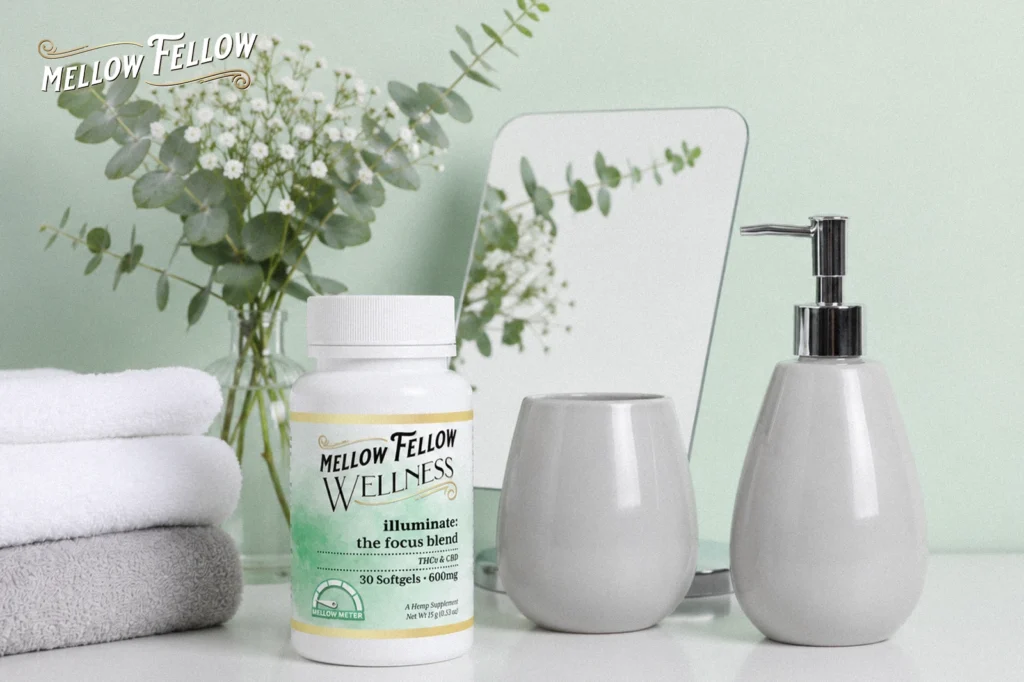
CBD Softgels: Onset, Duration and Dosing
Because softgels are digested rather than absorbed sublingually, their timing profile looks similar to other swallowed formats, but distinct from tinctures or vapes.
| Factor | Typical Range |
| Onset time | 45 to 90 minutes |
| Duration of effects | 4 to 8 hours |
| Common starting dose | 10 to 25mg per softgel |
| Flavor | None, shell masks the taste |
| Best taken with | A meal containing some fat, to support absorption |
Taking a softgel alongside a meal with some dietary fat can improve how much CBD is actually absorbed, since the cannabinoid relies on the same digestive pathway the body uses to process fats.
What the Research Says About CBD Softgel Bioavailability
CBD’s oral bioavailability, meaning the percentage of a dose that actually reaches the bloodstream, is a known limitation across all swallowed formats, and softgel formulation technology is where meaningful improvements have been demonstrated.
- Formulation Technology Improves Absorption: A 2019 study in Molecules found that a self-emulsifying softgel formulation produced a 4.4-fold higher peak concentration and a 2.85-fold higher total absorption compared to a standard oil-filled capsule using the same 25mg dose, showing that how a softgel is engineered can matter more than the dose printed on the label.
- Oral Delivery Faces a Consistent Bottleneck: Regardless of format, oral CBD faces degradation in the gastrointestinal tract and extensive first-pass liver metabolism, according to the same 2026 pharmaceutical review, which is why dosing guidance for oral products tends to run higher than for sublingual or inhaled formats.
Consumer Interest Continues to Rise: A Gallup survey found that 14% of American adults use CBD products, citing pain relief, anxiety, and sleep support as the top reasons for use, a trend that has supported continued investment in better oral formulations like self-emulsifying softgels.
Benefits of Choosing CBD Softgels
Softgels have a specific set of advantages that make them a practical everyday choice for many people:
- Flavorless and Discreet: There is no hemp taste to mask and nothing distinctive about how a softgel looks, which makes it easy to take anywhere.
- Minimal Added Ingredients: Unlike a gummy, a softgel typically contains just the CBD extract and a carrier oil, without added sugar, gelatin sweeteners, or artificial coloring.
- Consistent, Pre-Measured Dosing: Since the fill liquid is mixed and measured before encapsulation, each softgel from the same batch should deliver a comparable dose.
- Simple to Incorporate Into a Routine: Taking a softgel with a meal fits naturally into an existing daily habit, similar to a multivitamin, and works well alongside other wellness goals like everyday recovery support.
- Longer-Lasting Effects: Because digestion releases the CBD gradually, softgels tend to provide effects that last longer than faster-acting sublingual or inhaled formats, even though they take longer to begin.
How to Choose a High-Quality CBD Softgel
Not all softgels are formulated or tested to the same standard. A 2024 study in Frontiers in Pharmacology tested 202 commercial hemp cannabinoid products and found that 74% deviated from their labeled potency by at least 10% in either direction, underscoring why label accuracy needs to be verified rather than assumed.
The FDA has raised similar quality concerns about hemp-derived cannabinoid products broadly, noting that some products it evaluated did not contain the levels of CBD advertised on the label.
| What to Check | Why It Matters |
| Batch-specific Certificate of Analysis (COA) | Confirms the milligrams per softgel match the label |
| Third-party lab, not in-house testing | Reduces conflict of interest in potency claims |
| Carrier oil listed on the label | MCT oil and similar carriers can affect absorption |
| Contaminant screening (heavy metals, solvents, pesticides) | Confirms the product is free of harmful residues |
| Total CBD per softgel and per container | Helps you calculate your actual daily dose |
Regulatory context is also shifting. Under P.L. 119-37, signed into law in November 2025, the federal definition of hemp is set to tighten starting in November 2026, which will affect how some hemp-derived cannabinoid products can legally be sold and labeled going forward.
Bringing CBD Softgels Into Your Routine
A CBD softgel is one of the simplest ways to take CBD consistently: a flavorless, pre-measured capsule that digests like any other supplement and fits easily into a daily routine. The timing takes some patience, since effects typically build over 45 to 90 minutes, but that same digestive process is what gives softgels their longer-lasting effects compared to faster formats.
The one thing worth carrying forward from the research above is that formulation and lab testing matter more than the format itself. Look for a batch-specific Certificate of Analysis before you buy, regardless of which brand you choose.
If you want to compare softgels against other formats, our guides on CBD gummies for beginners and starting a CBD dosage routine cover the same milligram math from a different angle. Browse the full Mellow Fellow shop to see current CBD options, or visit the Mellow Fellow homepage to see the complete lineup of hemp-derived wellness products.
Frequently Asked Questions
What Are CBD Softgels Made Of?
A CBD softgel shell is typically made from gelatin or a plant-based alternative, filled with CBD extract suspended in a carrier oil such as MCT oil. Some formulations include additional cannabinoids like CBG or CBN alongside the CBD.
How Long Do CBD Softgels Take to Work?
CBD softgels typically take 45 to 90 minutes to produce effects, since the capsule must dissolve and the CBD must be digested before it enters the bloodstream. Taking a softgel with a fat-containing meal may help speed up absorption slightly.
How Many CBD Softgels Should I Take?
Most people start with 10 to 25mg of CBD, which is often one softgel depending on the product’s strength, and adjust gradually based on how their body responds. Check the label for the exact milligram content per softgel before dosing.
Are CBD Softgels Better Than Gummies?
Neither format is universally better. Softgels offer a flavorless, minimal-ingredient dose, while gummies add taste and a habit-friendly ritual but tend to contain added sugar. Both digest at a similar rate, so the choice often comes down to personal preference and label accuracy.
Can You Take CBD Softgels Every Day?
Many people take CBD softgels daily as part of a consistent wellness routine. Start with a lower dose, track how you respond over a week or two, and consult a healthcare provider if you take other medications.
Do CBD Softgels Expire?
Yes, CBD softgels have a shelf life, typically noted on the packaging, and should be stored in a cool, dry place away from direct light to preserve potency. Using a product past its expiration date may result in reduced effectiveness.
Sources Used for This Article
- A Novel Self-Emulsifying Drug Delivery System (SEDDS) Based on VESIsorb Formulation Technology Improving the Oral Bioavailability of Cannabidiol in Healthy Subjects (2019)
- Cannabinoid Oral Mucosal Delivery: Approaches to Formulation, Fabrication, and Permeation Enhancement (2026)
- Product Labeling Accuracy and Contamination Analysis of Commercially Available Cannabidiol Product Samples (2024)
- What You Need to Know (And What We’re Working to Find Out) About Products Containing Cannabis or Cannabis-derived Compounds, Including CBD (2020)
- Change to Federal Definition of Hemp and Implications for Federal Enforcement (2025)
- 14% of Americans Say They Use CBD Products (2019)