
CBD Softgels vs Gummies for Everyday Wellness
Quick Answer: CBD softgels and gummies both digest through the stomach, so onset for either format typically runs 45 to 90 minutes, with effects that last four to eight hours. Softgels offer a flavorless, minimal-ingredient dose, while gummies add taste and a treat-like ritual but have shown a higher risk of falling short of their labeled potency in independent lab testing. The better everyday pick depends on whether you want a no-fuss capsule or a tastier habit you look forward to each day.
CBD has moved from a niche curiosity to a mainstream wellness habit. A Gallup poll found that 14% of American adults reported personally using CBD products, most commonly for pain, anxiety, and sleep, and usage has only grown since. Once you decide CBD fits your routine, the next decision is format, and softgels versus gummies is one of the most common comparisons people face.
This guide breaks down CBD softgels vs gummies for everyday use: how each digests, what typically goes into the ingredient list, how label accuracy differs between the two, and which format tends to fit specific wellness goals. If you want to see how a faster-acting sublingual option compares, our guide on what cannabis tinctures actually are covers that absorption pathway in more depth.
Key Takeaways
- CBD softgels and gummies both digest through the stomach, with onset typically 45 to 90 minutes for either format.
- A self-emulsifying softgel formulation studied in Molecules produced a 4.4-fold higher peak blood concentration than a standard oil-filled capsule, showing formulation matters as much as format.
- Independent lab testing found gummy products were significantly more likely to fall below their labeled cannabinoid content compared to tinctures.
- Softgels typically contain fewer added ingredients; gummies bring sugar, pectin or gelatin, and flavoring into the mix.
- A Gallup survey found 14% of American adults use CBD products, most often for pain, anxiety, and sleep support.
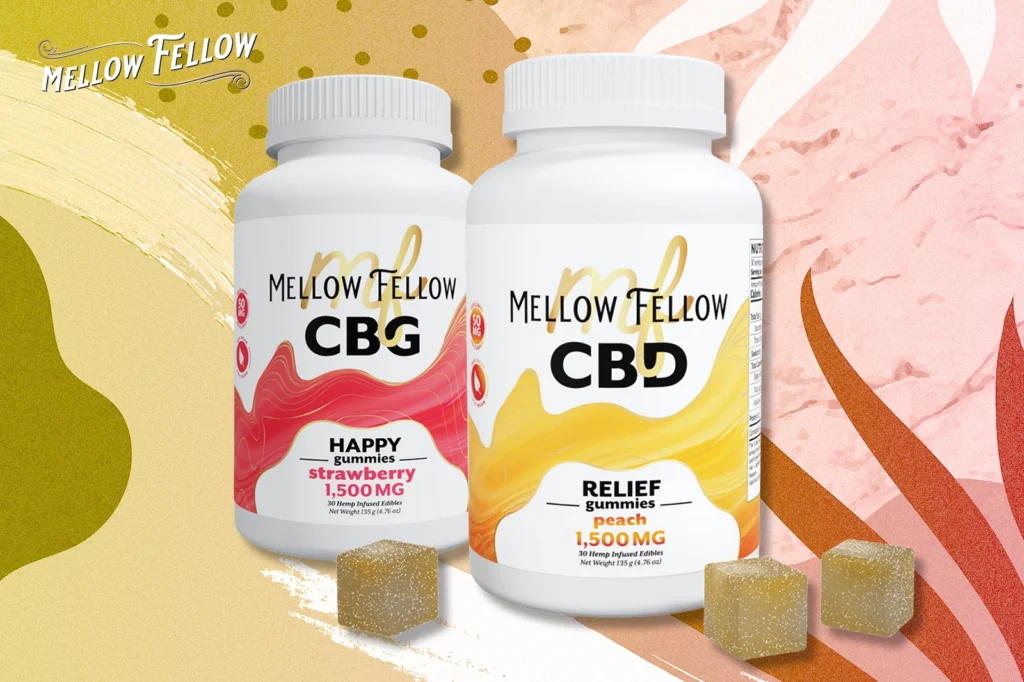
- Mellow Fellow’s Relief CBD Gummies deliver a lab-tested 50mg dose of CBD per gummy for consistent everyday use.
What Are CBD Softgels, Exactly?
A CBD softgel is a swallowable capsule with a gelatin or plant-based shell that encloses CBD oil, often blended with a carrier like MCT oil. There is no chewing and no flavor to work around. You take it whole with water, and the shell dissolves in the stomach before the CBD is absorbed along with the rest of your last meal.
Because softgels are digested rather than held in the mouth, they follow the same first-pass metabolism pathway as any other oral supplement. A 2026 review in AAPS PharmSciTech notes that this route is limited by poor water solubility and extensive liver metabolism, which is the main reason oral CBD in any digested format takes longer to kick in than a tincture held under the tongue.
What Are CBD Gummies, Exactly?
A CBD gummy is a chewable, flavored edible infused with a measured dose of CBD per piece. Like softgels, gummies are swallowed and digested, so the cannabinoid content has to pass through the stomach and liver before it reaches the bloodstream. The difference from a softgel is mostly sensory: gummies bring sugar, fruit flavoring, and a candy-like texture into the mix, which many people find easier to build into a daily habit than swallowing a capsule.
Mellow Fellow’s Relief CBD Gummies in Peach are built around this format, with 50mg of CBD in each gummy formulated to support everyday balance, recovery, and calm.
CBD Softgels vs Gummies: Onset, Duration and Absorption
Since both formats are digested rather than held sublingually, the onset and duration profile is close between them. Ingredients and formulation technology, not the shape of the product, tend to explain the biggest differences in how well the CBD actually gets absorbed.
| Factor | CBD Softgel | CBD Gummy |
| Onset time | 45 to 90 minutes | 45 to 90 minutes |
| Duration of effects | 4 to 8 hours | 4 to 8 hours |
| Flavor | None, shell masks the taste | Fruit-flavored, chewable |
| Common added ingredients | Carrier oil, minimal fillers | Sugar, pectin or gelatin, flavoring |
| Dosing format | Fixed milligrams per capsule | Fixed milligrams per gummy |
| Best for | Flavorless, no-fuss consistency | A tastier daily ritual |
What the Research Says About Oral CBD Bioavailability
The bigger story in the research is not softgel versus gummy. It is that all swallowed CBD formats face the same absorption bottleneck, and formulation science is where the real gains happen.
- Formulation Technology Beats Format: A 2019 study in Molecules found that a self-emulsifying capsule formulation produced a 4.4-fold higher peak concentration and a 2.85-fold higher total absorption compared to a standard oil-filled capsule using the same dose, showing that how a softgel is engineered matters more than the shell itself.
- First-Pass Metabolism Applies to Both: Whether CBD arrives in a softgel or a gummy, it is subject to the same degradation in the gastrointestinal tract and liver metabolism, which explains why both formats take roughly the same amount of time to produce effects.
- Consumer Adoption Is Growing: A Gallup survey found that 14% of American adults use CBD products, citing pain relief, anxiety, and sleep support as the top reasons, a figure that industry tracking suggests has continued climbing in the years since.
Ingredients and Label Accuracy: What to Check
Format matters less than what is actually inside the product you buy. A 2024 study in Frontiers in Pharmacology tested 202 commercial hemp cannabinoid products, including tinctures and gummies, and found that gummy products were significantly more likely to fall below their labeled potency compared to tinctures, with 74% of all products tested deviating from their label claim by at least 10% in either direction.
That finding is not a reason to avoid gummies. It is a reason to buy from a brand that publishes batch-specific lab results rather than a general testing claim, regardless of which format you pick. Federal oversight adds another layer worth tracking: under P.L. 119-37, signed into law in November 2025, the federal definition of hemp is set to tighten starting in November 2026, which will affect how some hemp-derived cannabinoid products can legally be sold and labeled going forward.
| What to Check | Why It Matters |
| Batch-specific Certificate of Analysis (COA) | Confirms the milligrams per softgel or gummy match the label |
| Third-party lab, not in-house testing | Reduces conflict of interest in potency claims |
| Sugar and allergen content (gummies) | Relevant for anyone managing sugar intake or food sensitivities |
| Carrier oil listed (softgels) | MCT oil and similar carriers can affect absorption |
| Total CBD per container vs per piece | Helps you calculate your actual daily dose |
The FDA has raised similar quality concerns about hemp-derived cannabinoid products broadly, noting that some products it evaluated did not contain the levels of CBD advertised on the label.
Matching the Format to Your Wellness Goals
Beyond the pharmacology, the practical question is which format fits your daily life. A few common goals and the format that tends to serve them best:
- Daily Consistency Without Flavor: If you want a set-and-forget dose with nothing to taste, a softgel’s flavorless shell removes that variable entirely.
- Building a Sustainable Habit: Many people find a chewable gummy easier to stick with every day, since it feels more like a small treat than a supplement, similar to what our guide on CBD gummies for beginners covers for first-time users.
- Everyday Stress Management: For ongoing stress relief, either format works, though our breakdown of CBD gummies for stress relief notes that consistent timing matters more than the format itself.
- Post-Workout Recovery: Active people often prefer gummies or softgels for full-body recovery support, as detailed in our guide on CBD for athletes and active recovery.
- Mood Balance and Focus: If your goal is steady mood support throughout the day, our article on how CBD may support mood enhancement walks through dosing and timing considerations that apply to either format.
- Sugar or Diet Considerations: A softgel sidesteps the added sugar and flavoring found in most gummy formulations, which matters if you are tracking daily sugar intake.
There is no rule against switching between the two. Many people keep gummies on hand for a flavorful daily ritual and switch to softgels when they want a precise dose without any added sugar or flavor.
Picking the CBD Format That Fits Your Wellness Routine
CBD softgels vs gummies comes down to a simple trade: softgels give you a flavorless, minimal-ingredient dose with nothing to chew, while gummies add taste and a more habit-friendly daily ritual. Since both formats digest the same way, the timing and duration of effects are close enough that ingredient preference and dosing confidence should drive your decision, not speed.
Whichever format you choose, the label accuracy data above makes one thing clear: buy from a brand that backs its milligram claims with published, batch-level lab results. Mellow Fellow’s Relief CBD Gummies with 50mg of CBD per gummy are formulated with that standard in mind for everyday balance and calm. Browse the full Mellow Fellow shop to compare current options, or visit the Mellow Fellow homepage to see the complete lineup of hemp-derived wellness products.
Frequently Asked Questions
Are CBD Softgels Better Than Gummies for Everyday Use?
Neither format is universally better. Softgels offer a flavorless, fixed dose with minimal added ingredients, while gummies add taste and a more habit-friendly daily ritual. Since both digest at a similar rate, the right choice usually comes down to personal preference and how closely a brand’s lab results back up the label.
How Long Do CBD Softgels Take to Work Compared to Gummies?
Both formats typically take 45 to 90 minutes to produce effects, since each must be digested before the CBD is absorbed. Taking either with a fat-containing meal may improve absorption slightly, since CBD is fat-soluble.
Do CBD Gummies Have Less CBD Than the Label Claims?
Independent lab testing has found that gummy-format cannabinoid products are more likely to fall below their labeled potency compared to tinctures. This makes checking for a batch-specific Certificate of Analysis especially important when buying CBD gummies.
Can I Take CBD Softgels and Gummies Together?
Combining formats is common when people want a flavorless dose at one point in the day and a gummy at another. Track your combined milligrams so you do not exceed your intended daily dose, and check with a healthcare provider if you take other medications.
Are CBD Softgels or Gummies Better for Beginners?
Both formats offer pre-measured, consistent dosing, which makes either a reasonable starting point. Softgels may suit beginners who want to avoid flavor and sugar entirely, while gummies suit those who prefer an edible-style introduction to CBD.
Do CBD Softgels or Gummies Contain Sugar?
Softgels typically contain minimal fillers beyond a carrier oil, while gummies contain sugar, pectin or gelatin, and natural or artificial flavoring. If you are managing sugar intake, a softgel is the more straightforward choice.
Sources
- A Novel Self-Emulsifying Drug Delivery System (SEDDS) Based on VESIsorb Formulation Technology Improving the Oral Bioavailability of Cannabidiol in Healthy Subjects (2019)
- Cannabinoid Oral Mucosal Delivery: Approaches to Formulation, Fabrication, and Permeation Enhancement (2026)
- Product Labeling Accuracy and Contamination Analysis of Commercially Available Cannabidiol Product Samples (2024)
- What You Need to Know (And What We’re Working to Find Out) About Products Containing Cannabis or Cannabis-derived Compounds, Including CBD (2020)
- Change to Federal Definition of Hemp and Implications for Federal Enforcement (2025)
- 14% of Americans Say They Use CBD Products (2019)