
Best Weed for Writing: Strains, Creativity, and Focus
Quick Answer: There is no scientifically proven best weed for writing, though cannabis may make some people feel more imaginative or open to new ideas. If you use cannabis, keep doses manageable and save editing, fact-checking, and final decisions for when you are sober.
Writer’s block creates a strange temptation: if your normal way of thinking is not producing anything useful, changing your mental state can sound like exactly what you need.
That helps explain the long association between cannabis and creative work. Writers, musicians, artists, and other creators often describe cannabis as making ideas feel less predictable or making it easier to follow an unusual thought.
Cannabis strain databases and product menus are full of words such as creative, focused, energetic, and inspired.
The science is less tidy.
Cannabis may change how creative an idea feels without improving its objective quality. Higher levels of intoxication can also make it harder to hold a sentence structure in working memory, organize an argument, remember what you were about to write, or judge whether an idea is actually as useful as it seemed five minutes earlier.
That makes choosing weed for writing less about finding a magical strain and more about protecting the cognitive abilities the job requires.
Key Takeaways
- No cannabis strain has been proven to make people objectively better writers.
- Cannabis can make ideas feel more creative even when independent evaluators do not rate those ideas as more creative.
- High THC exposure can impair divergent thinking.
- Memory and attention are important for writing and are among the cognitive functions affected during acute cannabis intoxication.
- Sativa, indica, and hybrid labels are imperfect predictors of chemistry and effects.
- Manageable potency matters more for writing than maximizing THC.
- Blue Dream, White Widow, Jack Herer, Kali Mist, Lamb’s Bread, and Sour Diesel are commonly associated with creative or energetic use, but those reputations are not clinical guarantees.
- Brainstorming and exploratory writing are more forgiving than editing, source checking, or final proofreading.
- If you write while high, reviewing the work sober is a useful quality-control step.
Does Weed Actually Help With Writing and Creativity?
Cannabis and creativity are difficult to separate because feeling creative and producing objectively stronger creative work are not the same outcome.
A 2023 Journal of Applied Psychology study on cannabis use and creativity tested that distinction across two experiments.
Cannabis use was associated with greater joviality and with participants evaluating creative ideas more favorably. Independent evaluators did not rate the ideas themselves as more creative.
That matters for writers.
A metaphor, plot twist, headline, or argument may feel unusually important while intoxicated. That altered perspective may help someone stop rejecting every idea immediately. It can also make an ordinary idea feel much better than it really is.
Dose complicates things further. In a randomized controlled study of regular cannabis users, researchers compared placebo with cannabis containing lower and higher amounts of THC. The higher-THC condition impaired divergent thinking, while the lower condition did not produce a significant creativity improvement compared with placebo.
More THC is therefore not a reliable route to more imagination.
Creativity Is Only One Part of Writing
Writing also relies on attention, working memory, language organization, inhibition, and decision-making.
A systematic review of cannabinoids and human cognition found verbal learning, memory, and attention among the cognitive domains most consistently affected during acute cannabis exposure. A later meta-review covering more than 43,000 participants found evidence of acute impairment in verbal learning and memory, with additional effects across working memory, decision-making, processing speed, executive function, and attention.
That creates a real trade-off.
A mental state that feels more associative may simultaneously make it harder to organize, remember, and evaluate those associations.
Best Weed for Writing Depends on What You Are Writing
Writing is not one cognitive task.
Brainstorming a fantasy novel, drafting a marketing concept, rewriting a technical report, and proofreading a final article require different types of attention.
| Writing Stage | What the Task Requires | How Cannabis May Interfere | Practical Approach |
| Brainstorming | Idea volume and unusual associations | Ideas may feel better than they are | Capture freely and evaluate later |
| Freewriting | Momentum and low self-censorship | Losing the thread or repeating ideas | Keep the session exploratory |
| Outlining | Organization and idea generation | Working-memory lapses can weaken structure | Build the framework first |
| First draft | Language generation and sustained attention | Distraction and continuity problems | Work from a clear outline |
| Structural revision | Judgment, logic, sequencing | Altered evaluation can hide weak arguments | Review sober |
| Line editing | Precision and error detection | Attention can decline | Do with a clear head |
| Fact-checking | Source accuracy | Memory errors can create mistakes | Do sober |
| Final proof | Fine detail and judgment | Small errors matter | Do sober |
Someone can therefore genuinely feel that cannabis helps them brainstorm while still producing stronger finished work after sober revision.
What Makes the Best Weed for Writing?
If cannabis is already part of your routine, several factors matter more than simply buying the highest-THC strain available.
Keep the Experience Manageable
Writing is cognitively demanding. Once the psychoactive effect becomes the main event, writing stops being the main event.
For a creative session, potency should be treated as something to manage rather than something to maximize. Tolerance matters, but familiarity does not eliminate cognitive effects.
Think Beyond Sativa vs. Indica
Sativa products are traditionally associated with energetic daytime experiences, while indica products are associated with relaxation.
Real product chemistry is much messier. A large 2022 analysis of 89,923 commercial cannabis flower samples found that indica, hybrid, and sativa labels did not reliably separate products according to underlying chemical composition.
The labels can still communicate lineage and broad consumer expectations. They simply should not be the entire decision. For a fuller explanation, see Mellow Fellow’s guide to sativa vs. indica.
Look at the Actual Product, Not Just the Strain Name
Two products sold under the same strain name can have different cannabinoid concentrations and terpene profiles.
Use the product label and COA to check what the actual batch contains. Mellow Fellow maintains searchable lab results by product, strain, and lot number. If you want to compare aroma profiles in more detail, the guide to finding weed strains with specific terpenes provides a more useful framework than assuming a strain name guarantees a specific effect.
Pay Attention to the Writing You Produce
The most useful test is not whether you felt inspired.
It is whether the writing still works later.
Pay attention to whether a product leaves you:
- generating usable ideas
- finishing sentences
- staying with the same project
- remembering your argument
- writing more than you delete later
- able to recognize weak ideas
If the work consistently falls apart during sober review, the product is not helping your writing even if the session feels creative.
Best Weed Strains for Writing: 6 Names to Know
No strain below has been clinically demonstrated to improve writing.
These cultivars are better understood as strains with longstanding consumer reputations around creativity, energy, or mentally engaged experiences.
| Strain | General Reputation | Potential Writing Fit | Main Caveat |
| Blue Dream | Balanced, uplifting hybrid | Brainstorming and exploratory drafts | Individual response varies |
| White Widow | Cerebral, creative hybrid | Ideation and first drafts | High intoxication may become distracting |
| Kali Mist | Daytime, creative sativa reputation | Starting open-ended projects | Reputation is not clinical evidence |
| Lamb’s Bread | Uplifting, contemplative sativa | Freewriting and brainstorming | Effects vary by person and product |
Blue Dream for Creative Writing
Blue Dream appears frequently on consumer creativity lists. Its appeal for writing is often described in terms of balance rather than sheer potency. Writers who dislike feeling heavily sedated or excessively stimulated may be drawn to hybrids with this kind of reputation.
Mellow Fellow’s Blue Dream strain review covers its lineage, aroma, cannabinoids, terpenes, and broader consumer reputation. Mellow Fellow also currently offers Blue Dream within the Introvert King Louis + Creativity Blue Dream 4ml Live Resin Cart Duo.
White Widow for Writing and Creativity
White Widow has spent decades in creative-cannabis conversations and remains common on consumer-generated creative strain lists.
Mellow Fellow’s White Widow strain review covers the cultivar in more detail. For a current product example, the Creativity Blend 2ml Live Resin Vape Cartridge – White Widow pairs the strain name with Mellow Fellow’s Creativity Blend positioning. That positioning is not a clinical guarantee of improved writing or creativity.
Jack Herer as a Classic Creative Sativa
Jack Herer is one of the most familiar answers to “best sativa for writing.” Consumers frequently associate it with alert, energetic, and creative experiences. The useful caveat is that the strain name alone does not tell you the complete chemical profile of the product in front of you.
Kali Mist for Getting a Writing Session Moving
Kali Mist has a longstanding reputation around daytime and creative use.
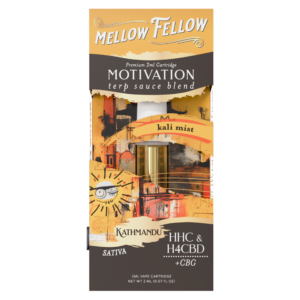
That makes it relevant for someone whose biggest obstacle is getting started rather than polishing detailed copy. Mellow Fellow currently offers a Motivation Blend Terp Sauce 2ml Vape Cartridge – Kali Mist, making it a direct option for shoppers interested in that strain profile.
Lamb’s Bread for Brainstorming and Reflective Writing
Lamb’s Bread has a long cultural reputation for uplifting and contemplative experiences.
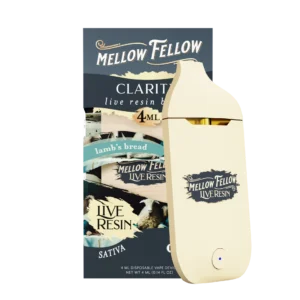
It may appeal to writers looking for a sativa-style profile without automatically choosing the strongest product available. The Clarity Blend 4ml Live Resin Disposable – Lamb’s Bread gives Mellow Fellow shoppers a current Lamb’s Bread option.
Sour Diesel for Idea Generation
Sour Diesel appears frequently in discussions of mentally energetic cannabis.
That makes it more intuitive for brainstorming than for proofreading.
Someone who becomes scattered with stimulating cannabis may find the opposite, which is exactly why strain lists should narrow possibilities rather than make the final decision.
Best Sativa for Writing vs. Indica: Which Is Better?
Sativa strains are more commonly recommended for writing because they are traditionally associated with daytime and energetic use.
That is not the same as saying sativa is scientifically proven to improve writing.
A better selection order is:
- How the product actually affects you
- How intoxicating the amount is for you
- Verified cannabinoid and terpene information
- Product format
- Strain reputation
- Sativa, hybrid, or indica label
For concentration-oriented strain ideas, see Mellow Fellow’s best sativa strains for focus.
Weed for Focus and Creativity: Why More THC Can Be Counterproductive
Creative writing asks the brain to do two opposing things. First, generate possibilities. Then, control them.
You need enough flexibility to imagine a surprising sentence and enough judgment to decide that several other surprising sentences are terrible. High intoxication can interfere with the second half.
The CDC’s cannabis and brain health guidance notes that cannabis affects memory, learning, attention, and decision-making. A placebo-controlled study also found acute impairment in verbal and working memory.
Those functions matter when you are holding a paragraph’s logic in mind while constructing the next sentence. For writing, stronger cannabis can simply mean harder-to-use cannabis.
What About Terpenes for Writing and Creativity?
Terpenes contribute to cannabis aroma and chemistry, but claims that one terpene reliably makes people better writers go beyond the available human evidence.
You may see:
- pinene associated with alertness
- limonene associated with uplifting profiles
- terpinolene associated with energetic products
- myrcene associated with relaxation
- caryophyllene associated with grounding profiles
These associations are not the same as controlled evidence that a terpene improves writing performance. Terpene information is still useful for comparing products and understanding aroma profiles. The guide Are Terpenes More Important Than THC? goes deeper into that distinction.
Best Cannabis Format for Writing
The product format changes how predictable the session can feel.
Vapes
Inhaled products generally produce noticeable effects more quickly than conventional edibles.
For someone who already understands their response, that can make it easier to stop rather than committing to a long edible window before knowing where the session is headed.
The Creativity Blend Terp Sauce 2ml Vape Cartridge – Cajun Kush is one current Mellow Fellow option positioned around creative occasions.
Edibles
Edibles have a slower onset and longer duration. That can make them less adjustable during a writing session. If the experience becomes more impairing than expected, you cannot quickly reverse the decision. Readers specifically interested in this format can use Mellow Fellow’s best edibles for creativity.
Flower
Flower gives strain-oriented shoppers the closest connection to traditional cultivar selection. The same caveat still applies: strain names are not standardized chemical formulas, and smoking carries respiratory risks. Choose format based on your established preferences rather than assuming one format has been scientifically shown to improve creativity.
A Better Weed for Writing Workflow
If an adult who already uses cannabis chooses to include it in a writing session, structure can reduce some of the obvious failure points.
- Define the assignment first.
- Prepare sources, notes, and outlines before consuming anything.
- Use the experimental portion of the session for brainstorming, freewriting, rough scenes, headlines, imagery, or other low-stakes generation.
- Capture ideas immediately rather than trusting working memory.
- Do not keep escalating the dose because inspiration has not arrived dramatically enough.
- Mark facts that need verification instead of improvising them.
- Save the draft before over-editing unusual ideas.
- Review the work sober for logic, repetition, accuracy, citations, grammar, and tone.
The sober review matters because intoxication can change how positively people evaluate their own creative ideas.
When Weed Makes Writing Worse
Cannabis and writing do not always cooperate.
Common warning signs include:
- rereading the same paragraph without processing it
- forgetting the sentence you were constructing
- abandoning the project for unrelated tabs
- generating many ideas but developing none
- obsessing over one phrase
- feeling convinced that ordinary writing is profound
- losing track of sources
- creating more structural mistakes
- becoming anxious about every sentence
- feeling too relaxed to continue
These do not necessarily mean you picked the wrong strain.
They may mean intoxication is not a good fit for the cognitive demands of that particular writing task.
Conclusion: The Best Weed for Writing Should Not Take Over the Writing
There is no strain that reliably turns writer’s block into great prose.
Cannabis may change mood and make ideas feel more interesting, but that does not mean the ideas become objectively stronger. At higher levels of intoxication, several mental abilities writing depends on can decline.
Choose around the task rather than chasing maximum THC.
Consider your own response, the actual product chemistry, the format, and how much precision the next stage requires.
If cannabis fits your brainstorming or drafting routine, save serious fact-checking, editing, and polishing for a clear-headed pass.
Explore the Creativity Blend White Widow Live Resin Cartridge or Creativity Blend Cajun Kush Terp Sauce Cartridge, then check Mellow Fellow Lab Results for the current product or lot.
Frequently Asked Questions
What Is the Best Weed for Writing?
There is no scientifically established best strain for writing.
Blue Dream, White Widow, Jack Herer, Kali Mist, Lamb’s Bread, and Sour Diesel are commonly associated with creative or mentally energetic experiences, but individual response and product chemistry vary.
Does Weed Make You More Creative?
Not reliably in objective testing.
Research has found that cannabis can make people evaluate creative ideas more favorably without making those ideas objectively more creative.
Can Weed Help With Writer’s Block?
Some people report feeling less self-critical or more willing to follow unusual ideas after using cannabis.
There is not strong evidence that cannabis treats writer’s block or reliably improves writing.
What Is the Best Strain for Creative Writing?
Blue Dream, White Widow, and Jack Herer are among the most commonly discussed strains for creative use.
None has been clinically demonstrated to improve creative writing performance.
Is Sativa or Indica Better for Writing?
Sativas are traditionally associated with energetic daytime use, so they are more often recommended for writing.
Commercial sativa and indica labels do not consistently predict underlying product chemistry, however.
Is Blue Dream Good for Writing?
Blue Dream has a longstanding reputation for balanced, creative experiences.
That does not guarantee better writing, but it remains a popular starting point for consumers who already respond well to that strain profile.
Is White Widow Good for Writing and Creativity?
White Widow is widely associated with cerebral and creative experiences.
There is no controlled evidence showing that White Widow specifically improves writing.
What Are the Best Terpenes for Writing?
No terpene has been proven to improve writing performance.
Pinene, limonene, and terpinolene often appear in products marketed around alert or uplifting experiences, but those associations should not be treated as guaranteed cognitive outcomes.
Can Weed Improve Focus While Writing?
Cannabis does not reliably improve focus.
Research shows acute cannabis use can impair attention, working memory, learning, and decision-making.
Are Edibles Good for Writing?
They can fit some experienced users’ routines, but their slower onset and longer duration make them harder to adjust during a writing session.
Should You Write High and Edit Sober?
It is a practical workflow.
Brainstorming and exploratory drafting tolerate rough ideas. Editing, fact-checking, citation work, and proofreading require more precision.
Can High THC Be Bad for Creative Writing?
Yes.
Controlled research has found that higher THC exposure can impair divergent thinking and other cognitive abilities relevant to writing.
Sources
- Cannabis Use Does Not Increase Actual Creativity but Biases Evaluations of Creativity
- Cannabis and Creativity: Highly Potent Cannabis Impairs Divergent Thinking
- The Phytochemical Diversity of Commercial Cannabis in the United States
- Acute and Chronic Effects of Cannabinoids on Human Cognition
- Evidence on the Acute and Residual Neurocognitive Effects of Cannabis Use
- Acute Memory and Psychotomimetic Effects of Cannabis and Tobacco
- Cannabis and Brain Health
- Cannabis Health Effects