
Best CBN Products for Sleep: Gummies, Dosage, and Safety

Quick Answer: Newer research backs CBN as a sleep aid: a 2024 clinical trial gave CBN softgels to more than 1,000 adults and found doses of 25mg to 100mg improved sleep about as well as 4mg of melatonin. Mellow Fellow’s Sleep CBN Gummies deliver a lab-tested 50mg dose of CBN in every gummy, made for a nightly wind-down routine.
Falling asleep and staying asleep are two different problems, and most sleep aids only solve one of them. Melatonin can help some people drift off faster but does little for the 3am wake-up. Prescription sleep medication works for many, but it carries dependency risk and next-day grogginess that a lot of people would rather avoid.
Cannabinol (CBN) has built a reputation as the “sleepy” cannabinoid, and for years that reputation ran ahead of the science backing it. That gap has started to close. New clinical and lab research is giving CBN a firmer evidence base than it had even two or three years ago, while also showing that not every CBN product delivers what its label promises.
This guide breaks down what CBN actually is, what current research says about its effects on sleep, how to dose it responsibly, and how Mellow Fellow’s Sleep CBN Gummies fit into a bedtime routine. If you have tried melatonin, herbal teas, or other natural sleep aids without melatonin with mixed results, CBN is worth understanding on its own terms before you decide if it belongs in your routine.
Key Takeaways
- CBN is a mildly psychoactive cannabinoid that forms as THC ages and breaks down.
- A 2024 trial gave CBN softgels to more than 1,000 adults with sleep issues.
- The same trial found 25mg, 50mg, and 100mg doses worked about as well as 4mg melatonin.
- Rat research using sleep-lab equipment found CBN increased both light and deep sleep stages.
- Mellow Fellow’s Sleep CBN Gummies deliver a consistent 50mg dose of CBN in every gummy.
What Is CBN and Why Is It Called the Sleepy Cannabinoid?
Cannabinol (CBN) is a minor cannabinoid found in cannabis and hemp plants. Unlike THC and CBD, which the plant produces directly, CBN forms as an oxidation byproduct when THC breaks down from exposure to air, heat, and light over time.
This is why older, improperly stored cannabis has historically carried a reputation for a heavier, sleepier effect. That folk wisdom is part of where CBN’s “sleepy cannabinoid” nickname comes from, even though the actual concentration of CBN in aged flower is usually small.
CBN is mildly psychoactive, with a much lower binding affinity at CB1 receptors than THC. At the doses found in most commercial CBN products, it is not expected to produce an intoxicating high, though very large doses could theoretically produce mild effects.

How CBN May Help You Fall and Stay Asleep
CBN interacts with the body’s endocannabinoid system, a network of receptors that helps regulate the sleep-wake cycle among other functions. Researchers believe CBN’s effect on CB1 receptors, along with its influence on neurotransmitters like GABA and serotonin, is what produces its calming and sedating qualities.
A 2024 study published in Neuropsychopharmacology used wireless polysomnography, the same electrode-based technology used in human sleep labs, to measure CBN’s effects on rats’ sleep architecture with objective data rather than self-reported surveys. The research found CBN increased both non-REM and REM sleep, with an effect on deep sleep comparable in size to zolpidem, a common prescription sleep aid.
That same study identified a metabolite called 11-hydroxy-CBN that forms after the body processes CBN, and found this metabolite reaches brain concentrations similar to CBN itself while binding more actively to CB1 receptors.
This detail helps explain why CBN’s effects on sleep tend to build over a few hours rather than hit immediately, a pattern that also shows up in the human trial data covered next. Readers curious how CBN’s effects compare to THC’s well-documented REM suppression can find more detail in our breakdown of how CBN affects REM sleep.
Does CBN Actually Work for Sleep? What the Research Shows
CBN’s evidence base has moved quickly in the past few years, and it is worth knowing both the earlier skepticism and the newer data that followed it.
A widely cited 2021 review in Cannabis and Cannabinoid Research searched the published literature for clinical evidence behind CBN’s sleep claims. The review found the available human studies were decades old, used small sample sizes, and tested doses far lower than what most commercial CBN products now contain, typically 5mg or less. Its conclusion was that manufacturer claims outpaced the science at the time.
Since then, two larger studies have added real data to the conversation. The table below summarizes how the evidence has shifted.
| Study | Subjects | CBN Dose | Key Finding |
| 2021 literature review (Cannabis and Cannabinoid Research) | 8 human studies reviewed | Historical doses, often 5mg or less | Found insufficient published evidence to support sleep claims at the time |
| 2024 randomized trial (Pharmaceuticals) | 1,020 adults with sleep disturbance | 25mg, 50mg, and 100mg softgels | Improved sleep quality about as much as 4mg of melatonin, with no serious side effects |
| 2024 polysomnography study (Neuropsychopharmacology) | Rats, measured with sleep-lab equipment | 10mg/kg to 100mg/kg | Increased non-REM and REM sleep, with an effect on deep sleep similar to zolpidem |
The 2024 human trial, published in Pharmaceuticals, remains the largest CBN sleep study to date. All three CBN dose groups and the melatonin group showed significant improvement over placebo, and there was no significant difference between any CBN dose and the melatonin comparison arm. Participants taking the 100mg dose also reported a larger drop in stress compared to placebo.
Taken together, the newer research suggests CBN’s reputation as a sleep aid now has more backing than it did a few years ago, though researchers still note that large-scale human polysomnography data, the gold standard for objective sleep measurement, remains limited.
CBN Dosage for Sleep: How Much To Take
Dosing cannabinoids is not one-size-fits-all, and CBN is no exception. Body weight, metabolism, and individual sensitivity all play a role in how a given milligram amount feels.
A few practical guidelines can help you find a starting point:
- Start Low: Begin with 25mg to 50mg of CBN taken 30 to 60 minutes before your target bedtime.
- Stay Consistent: Take the same dose at the same time each night for at least a week before judging whether it is working.
- Check The Label: Confirm the milligrams per serving against a batch-specific Certificate of Analysis rather than trusting the front label alone. A 2024 analysis of commercially available hemp products found that gummy-format products were significantly more likely than tinctures to fall below their stated potency, which makes third-party lab results worth a look before you buy.
- Avoid Mixing Blind: Talk to a healthcare provider before combining CBN with melatonin, alcohol, or other sedating medications.
If 25mg to 50mg does not produce a noticeable effect after several nights, the 2024 trial data suggests doses up to 100mg are well tolerated by most adults, though anyone with a medical condition or on prescription medication should check with a doctor first.
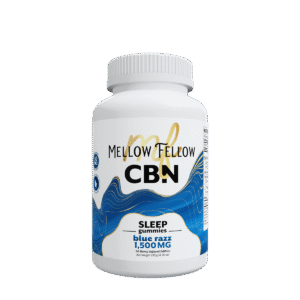
Sleep CBN Gummies: Mellow Fellow’s CBN Formula for Rest
Mellow Fellow’s approach to sleep support is built around dosing accuracy rather than stacking as many cannabinoids into one gummy as possible. Sleep CBN Gummies are formulated as a CBN-only edible, so the milligram count on the label reflects a single, clearly identified cannabinoid rather than a blend where CBN is one ingredient among several.
Each jar contains 30 gummies with 50mg of CBN per gummy, for 1,500mg of total CBN. The gummies come in a tangy Blue Razz flavor and are priced at $25.99 per jar. Because the formula skips added THC or other cannabinoids, it suits people who want a straightforward nighttime routine rather than a multi-cannabinoid experience.
This single-cannabinoid approach also matters for anyone tracking their nightly cannabinoid intake carefully, whether for personal preference or because of an upcoming drug screen (more on that later in this guide). A CBN-only gummy makes it easier to know exactly what you are taking before bed, night after night.
CBN Gummies vs Other CBN Formats
Gummies are one of several ways to take CBN, and the format you choose affects how quickly it kicks in and how long it lasts.
| Format | Onset Time | Duration | Best For |
| Gummies | 45 to 90 minutes | 6+ hours | A tastier, ritual-driven bedtime routine |
| Capsules | 45 to 90 minutes | 6+ hours | A flavorless dose with nothing to chew |
| Tincture (sublingual) | 15 to 45 minutes | Shorter than oral forms | Faster onset with adjustable dosing |
| Vape | Within minutes | Shortest of the formats | Fast relief on nights sleep feels urgent |
Gummies and capsules share a similar timeline because both digest through the stomach before the cannabinoid reaches the bloodstream. A 2026 pharmacology review in AAPS PharmSciTech on oral cannabinoid delivery explains that swallowed formulations are subject to degradation in the gastrointestinal tract and first-pass metabolism in the liver, which is the mechanism behind that 45 to 90 minute delay compared to sublingual or inhaled formats that bypass the stomach entirely.
For a deeper side-by-side comparison of capsules and gummies, including how label accuracy tends to differ between the two, see our full breakdown of CBN capsules vs gummies.
How To Store CBN Gummies To Protect Potency
CBN gummies deserve a bit more storage care than most other cannabinoid edibles. Since CBN itself is a degradation product of THC, a poorly stored CBN gummy does not just lose potency the way a CBD gummy might. It can also shift its own cannabinoid profile further over time.
Keep gummies sealed in their original, opaque container in a cool spot between 60°F and 70°F, away from direct light and humidity. Heat and light both accelerate cannabinoid breakdown, and a jar left on a sunny counter or in a hot car will not test the same after a few months as it did on day one. For the full breakdown of temperature ranges, light exposure, and shelf-life estimates by cannabinoid type, see our guide on storing edible gummies for potency.
CBN Side Effects and Who Should Use Caution
CBN is well tolerated in the doses studied so far, and the 2024 clinical trial found no significant difference in side effect frequency between CBN groups and placebo. That said, a few groups should be more careful:
- Pregnant Or Breastfeeding Individuals: Cannabinoid safety data during pregnancy and breastfeeding is limited, so this group should avoid CBN unless a doctor advises otherwise.
- People On Sedating Medications: CBN may amplify drowsiness when combined with benzodiazepines, sleep medications, or alcohol.
- Anyone With A Liver Condition: Cannabinoids are processed through the liver, so existing liver conditions warrant a conversation with a healthcare provider first.
- First-Time Users: Mild drowsiness, dry mouth, or grogginess the next morning are the most commonly reported effects, and starting at a lower dose reduces the odds of an unwanted next-day carryover.
CBN is sometimes discussed alongside anxiety support since both sleep and anxiety involve the same underlying stress response. If daytime anxiety is part of what is keeping you up, our guide on whether CBN helps with anxiety covers that question in more depth.
Will CBN Show Up on a Drug Test?
This is one of the most practical questions for anyone considering CBN, and the answer is yes, it can.
A 2020 study in the Journal of Applied Laboratory Medicine tested how common urine immunoassays react to CBN and found that two widely used tests both cross-reacted with it. The researchers reported that roughly 5 times more CBN than actual THC metabolite was needed to trigger a positive result on one assay, and about 20 times more on the other, meaning CBN alone at typical supplement doses is unlikely to cause a false positive on its own, but it is not impossible at higher concentrations.
The bigger risk comes from combination products. Because CBN forms from THC, full-spectrum products that pair CBN with trace THC carry more drug test risk than an isolate. If an upcoming test is a concern, review the Certificate of Analysis for total THC content, not just the CBN amount, before use. For a closer look at how CBN and other cannabinoids interact with workplace drug screens, see our guide on whether CBN or HHC is more likely to cause a failed drug test.
The Federal Hemp Definition Is Changing: What CBN Shoppers Should Know
Hemp-derived cannabinoid products, including CBN, currently operate under the definition set by the 2018 Farm Bill, which classifies hemp based on a delta-9 THC concentration of no more than 0.3% on a dry weight basis. That definition is set to change.
Under P.L. 119-37, signed into law in November 2025, the federal definition of hemp shifts to a total THC standard rather than a delta-9-only threshold, according to a Congressional Research Service analysis of the legislation. The new standard, expected to take effect in November 2026, would cap total THC, including THCa, at 0.4 milligrams per container for many hemp-derived products.
This change is still working through implementation details, and enforcement questions remain open as of this writing. Because Sleep CBN Gummies are formulated as CBN in isolation rather than blended with THC, shoppers concerned about the shift can still confirm total cannabinoid content directly through the product’s Certificate of Analysis. Given the pace of change in this area, it is worth checking Mellow Fellow’s current lab results or product pages for the latest compliance updates before you buy.
Conclusion
CBN has moved from an unproven marketing claim to a cannabinoid with genuine, if still growing, clinical support behind it. The 2024 human trial and the newer polysomnography data both point in the same direction: measured doses of CBN taken consistently before bed can meaningfully support sleep, with a safety profile that looks comparable to melatonin in the research so far.
Format, dose, and label accuracy still matter more than any single ingredient. A CBN-only product with a clear milligram count and a batch-specific COA gives you the most predictable results night after night. Ready to build CBN into your bedtime routine? Try Mellow Fellow’s Sleep CBN Gummies in Blue Razz tonight, or browse the full CBN collection to see every current formulation that includes it.
Frequently Asked Questions
What Is CBN and How Does It Differ From CBD?
CBN forms when THC breaks down from age, heat, and light exposure, while CBD is produced directly by the cannabis plant. CBN is mildly psychoactive at high doses, while CBD is non-intoxicating. CBN is primarily associated with sedation, while CBD is more commonly used for calm and relaxation without drowsiness.
How Much CBN Should I Take for Sleep?
Most research and product labels point to a starting range of 25mg to 50mg taken 30 to 60 minutes before bed. The 2024 clinical trial found doses up to 100mg were well tolerated, but starting low and adjusting gradually is the safer approach for first-time users.
How Long Do CBN Gummies Take To Work?
CBN gummies typically take 45 to 90 minutes to produce effects, since the cannabinoid must be digested before it reaches the bloodstream. Taking a gummy with a small, fat-containing snack may help absorption slightly, since CBN is fat-soluble.
Will CBN Make Me Fail a Drug Test?
CBN alone is unlikely to trigger a positive result at typical supplement doses, since research shows it requires 5 to 20 times more concentration than actual THC metabolite to cross standard test cutoffs. The bigger risk comes from full-spectrum products that also contain trace THC, so checking the COA for total THC content matters if a test is coming up.
Is CBN Legal?
Hemp-derived CBN with less than 0.3% delta-9 THC by dry weight is currently legal under the 2018 Farm Bill’s federal hemp definition. That definition is scheduled to shift to a total THC standard under recent legislation, so shoppers should confirm current state and federal rules before purchasing.
Can I Take CBN Every Night?
Many people use CBN nightly as part of a consistent bedtime routine, and the available research has not identified serious safety concerns with regular use at studied doses. Long-term daily use beyond the length of published trials has not been extensively studied, so periodic breaks and checking in with a healthcare provider are reasonable precautions.
Does CBN Get You High?
CBN is mildly psychoactive but is not expected to produce a noticeable high at the doses found in most commercial sleep products. Its binding affinity for CB1 receptors is much weaker than THC, which is why most users describe the effect as sedating rather than intoxicating.
Can I Combine CBN With Melatonin or Other Sleep Aids?
CBN and melatonin have been directly compared in clinical research and produced similar improvements in sleep quality, but combining the two together has not been extensively studied. Talk to a healthcare provider before stacking CBN with melatonin, herbal sleep aids, or prescription sleep medication.
What Makes Mellow Fellow’s Sleep CBN Gummies Different?
Sleep CBN Gummies are formulated as a CBN-only edible rather than a multi-cannabinoid blend, so the 50mg-per-gummy label reflects one clearly identified compound. That makes dosing and drug-test considerations more predictable compared to blended formulas that combine CBN with THC, HHC, or other cannabinoids.
Sources
- A Randomized, Double-Blind, Placebo-Controlled Trial to Assess the Effectiveness and Safety of Melatonin and Three Formulations of Floraworks Proprietary TruCBN for Improving Sleep (2024)
- A Sleepy Cannabis Constituent: Cannabinol and Its Active Metabolite Influence Sleep Architecture in Rats (2024)
- Cannabinol and Sleep: Separating Fact from Fiction (2021)
- Product Labeling Accuracy and Contamination Analysis of Commercially Available Cannabidiol Product Samples (2024)
- Cannabinoid Oral Mucosal Delivery: Approaches to Formulation, Fabrication, and Permeation Enhancement (2026)
- Cannabinol (CBN) Cross-Reacts with Two Urine Immunoassays Designed to Detect Tetrahydrocannabinol (THC) Metabolite (2020)
- Change to Federal Definition of Hemp and Implications for Federal Enforcement (2025)