
Best Cannabinoids for Stress Relief: CBD, CBG, and CBN Compared
Quick Answer: CBD, CBG, and CBN are the three best-studied hemp cannabinoids for stress relief, and each works differently. CBD is the most broadly researched option for lowering anxious tension throughout the day. CBG shows clinical evidence for reducing acute anxiety and stress without sedation. CBN is best known for nighttime relaxation when stress interferes with sleep. Many people pair two or three depending on when stress hits hardest.
Stress is not a niche complaint. Nearly a quarter of U.S. adults rated their average stress between 8 and 10 on a 10-point scale in 2023, up from 19% before the pandemic, according to the American Psychological Association’s Stress in America survey. That climbing baseline is a big part of why hemp-derived cannabinoids have moved from niche wellness shelves into daily routines.
Three cannabinoids come up again and again in that conversation: CBD, CBG, and CBN. They are all non-intoxicating, all legal under the 2018 Farm Bill when derived from hemp, and all backed by at least some human or animal research on stress-related outcomes. What they are not is interchangeable. This guide breaks down what the evidence actually shows for each one, when to reach for which, and how to build a routine around them.
Key Takeaways
- CBD, CBG, and CBN are non-intoxicating hemp cannabinoids with distinct mechanisms for stress relief
- A landmark study found 300mg of CBD significantly reduced anxiety during a simulated public speaking test
- The first human clinical trial on CBG found 20mg significantly lowered anxiety and stress without intoxication
- A placebo-controlled trial of 321 adults found 20mg of CBN reduced nighttime awakenings and overall sleep disturbance
- Mellow Fellow’s Happy CBG, Relief CBD, and Sleep CBN gummies each target a different stage of the stress cycle
What Makes a Cannabinoid Good for Stress Relief
Before comparing CBD, CBG, and CBN directly, it helps to know what “good for stress relief” actually means in research terms. Stress shows up in the body through a few measurable channels: subjective anxiety ratings, cortisol and other physiological stress markers, and downstream effects like disrupted sleep. A cannabinoid earns a place on this list when it moves the needle on at least one of these in a controlled setting, not just in marketing copy.
A few things to look for in the research itself:
- Study Design: Double-blind, placebo-controlled trials carry more weight than open-label or observational studies
- Dose Specificity: Cannabinoids often show narrow effective dose windows, so a study needs a clear, tested dose
- Outcome Measure: Validated scales (like the Visual Analogue Mood Scale) are more reliable than single self-report questions
- Sample Size: Larger trials reduce the chance that a result is a fluke of a small group
CBD for Stress Relief: The Most Researched Option
CBD (cannabidiol) has the deepest research base of the three cannabinoids covered here, spanning more than a decade of human trials.
The Dose-Response Evidence
One of the clearest human studies on CBD and acute stress comes from a 2019 trial published in the Brazilian Journal of Psychiatry. Researchers gave 57 healthy men either 150mg, 300mg, or 600mg of oral CBD, or a placebo, before a simulated public speaking test, a well-validated method for inducing acute anxiety. Only the 300mg dose produced a statistically significant reduction in anxiety during the speech compared to placebo. The 150mg and 600mg doses showed little to no effect, forming what researchers call an inverted U-shaped dose-response curve.
That detail matters for anyone assuming more CBD automatically means more stress relief. It does not. The therapeutic window appears to sit in a specific middle range, and doses outside it may simply do less.
How CBD Works in the Body
CBD does not bind strongly to CB1 or CB2 receptors the way THC does. Instead, it modulates serotonin 5-HT1A receptors, inhibits the breakdown of anandamide, and interacts with vanilloid and adenosine receptor systems. This broad, indirect mechanism is likely why CBD’s effects show up across so many stress-adjacent outcomes: mood, sleep, inflammation, and general calm.
Real-World Evidence
Controlled lab trials are not the only source of evidence. A retrospective case series covering 72 adults using CBD for anxiety or sleep complaints found that 79.2% reported lower anxiety scores within the first month of use, a pattern that held up over time in the majority of participants.
For a deeper look at how CBD specifically compares to CBG for daytime versus nighttime stress, our guide on CBG vs. CBD for anxiety and calming breaks down the receptor differences in detail.
CBG for Stress Relief: The Newest Clinical Evidence
CBG (cannabigerol) is often called the “mother cannabinoid” because it is the chemical precursor from which THC, CBD, and CBN are all synthesized in the plant. It only recently got its first human clinical trial, but the results were notable.
The First Human Clinical Trial
A 2024 double-blind, placebo-controlled, crossover trial published in Scientific Reports gave 34 healthy adult cannabis users either 20mg of hemp-derived CBG or a placebo tincture. CBG produced a significant overall reduction in anxiety compared to placebo, along with a meaningful drop in stress ratings shortly after ingestion. Participants also showed no signs of intoxication or motor impairment, and unexpectedly performed better on a verbal memory test after taking CBG.
Researchers at Washington State University, who led the trial, noted that the study represents the first placebo-controlled evidence that CBG can reduce feelings of anxiety and stress in a controlled setting, a meaningful step beyond the animal and self-report data that came before it.
CBG’s Receptor Profile
Unlike CBD, CBG binds more directly to CB1 and CB2 receptors, and it also engages alpha-2 adrenoceptors and serotonin 5-HT1A receptors. A detailed molecular review published in Molecules mapped these receptor affinities and found CBG behaves as a moderately potent 5-HT1A antagonist and a highly potent alpha-2 adrenoceptor agonist, two pathways closely tied to stress and arousal regulation. This receptor profile may explain why CBG tends to feel alerting and clear-headed rather than sedating, making it a fit for stress that shows up as daytime tension or scattered focus rather than nighttime restlessness.
For a full walkthrough of what that experience actually feels like, see our guide on how CBG makes you feel, and for the fundamentals of the cannabinoid itself, our what is CBG guide covers the basics.
CBN for Stress Relief: Nighttime Support When Stress Disrupts Sleep
CBN (cannabinol) forms when THC oxidizes over time, and it has built a reputation almost entirely around sleep rather than daytime calm.
What the Clinical Trial Data Shows
A placebo-controlled trial covered by NORML’s review of the published research assessed 321 adults who rated their sleep quality as “poor” or “very poor.” Participants took either 20mg of CBN, a combined CBN and CBD dose, or a placebo for seven consecutive nights. The study’s authors reported that individuals receiving 20mg of CBN alone showed reduced nighttime awakenings and overall sleep disturbance relative to placebo. Notably, adding CBD to the CBN dose did not improve on CBN’s effects by itself, suggesting CBN’s sleep benefit does not depend on pairing it with other cannabinoids.
Why Sleep and Stress Are Linked
Stress and poor sleep feed each other. Elevated stress makes it harder to fall and stay asleep, and poor sleep lowers the threshold for feeling stressed the next day. CBN’s role in a stress-relief routine is less about calming an anxious moment and more about breaking that cycle at the point where stress most reliably shows up: bedtime.
CBN binds to CB1 receptors at a much lower affinity than THC, which is part of why it is classified as only mildly psychoactive at typical hemp product doses. Most users report a settled, sedating effect rather than any noticeable high. Our guide on “feel-good” cannabinoids covers how CBD, CBG, and CBN work together across a full day, including where CBN fits into an evening routine.
CBD vs. CBG vs. CBN: A Side-by-Side Comparison
| Cannabinoid | Best Use Case | Primary Mechanism | Strongest Evidence |
| CBD | All-day stress management, general anxiety | Serotonin (5-HT1A) modulation, FAAH inhibition | Multiple human trials across a decade |
| CBG | Daytime tension, acute stress without sedation | CB1/CB2 binding, alpha-2 adrenoceptor agonism | First human RCT (2024) |
| CBN | Nighttime relaxation, stress-driven sleep disruption | Low-affinity CB1 binding | Placebo-controlled trial (321 participants) |
For a broader comparison that also covers dosing ranges and product formats across all three, our guide on CBD vs. CBG vs. CBN walks through the full picture.
How to Choose the Right Cannabinoid for Your Stress Pattern
Different stress patterns call for different tools. A few starting points based on when and how stress shows up:
- Constant Background Tension: CBD taken consistently, since its effects build with regular daily use rather than a single dose
- Sudden Daytime Stress or Racing Thoughts: CBG, since it tends to clear mental noise without the drowsiness CBD or CBN can produce
- Trouble Winding Down at Night: CBN, ideally taken 30 to 45 minutes before bed to match its slower onset
- Stress That Spans the Whole Day: A combination approach, using CBG or CBD earlier in the day and CBN in the evening
None of these are mutually exclusive. Many people rotate based on the day rather than committing to one cannabinoid permanently.
Mellow Fellow Products for Every Stage of Stress
Matching the right cannabinoid to the right moment is easier with products built around a single, clearly dosed compound.
For daytime stress that shows up as scattered focus or low-grade tension, the Happy CBG Gummies (1500mg, Strawberry) deliver 50mg of CBG per gummy across 30 gummies per jar, giving you the same cannabinoid studied in the 2024 clinical trial in a format you can dose consistently.
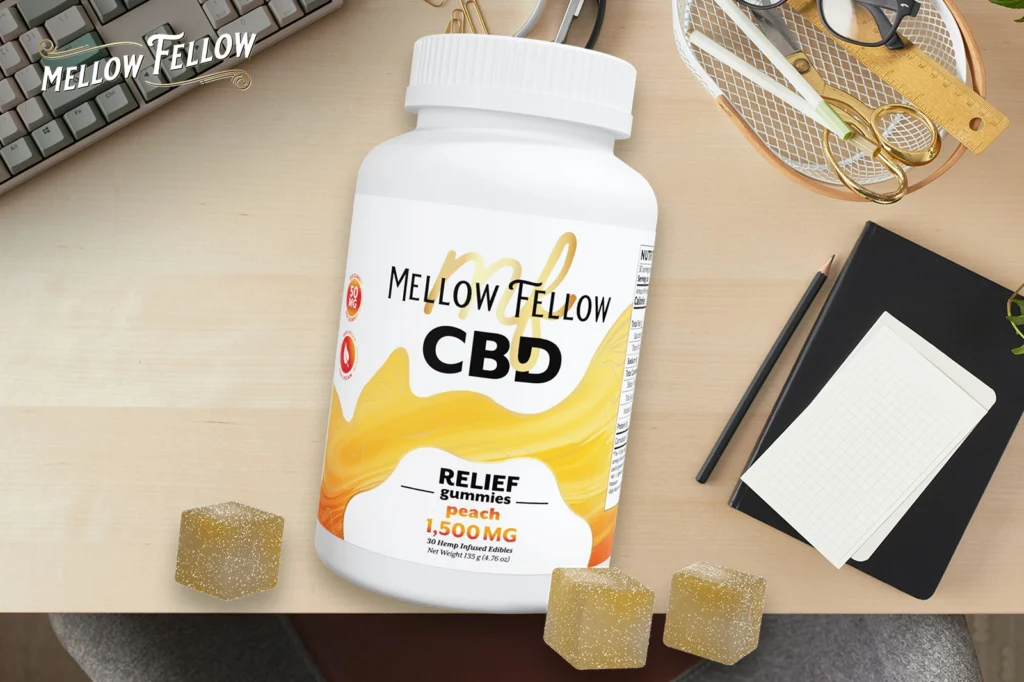
For general, all-day stress relief, the Relief CBD Gummies (1500mg, Peach) provide 50mg of CBD per gummy, formulated for the kind of everyday balance and recovery that CBD’s research base supports best.
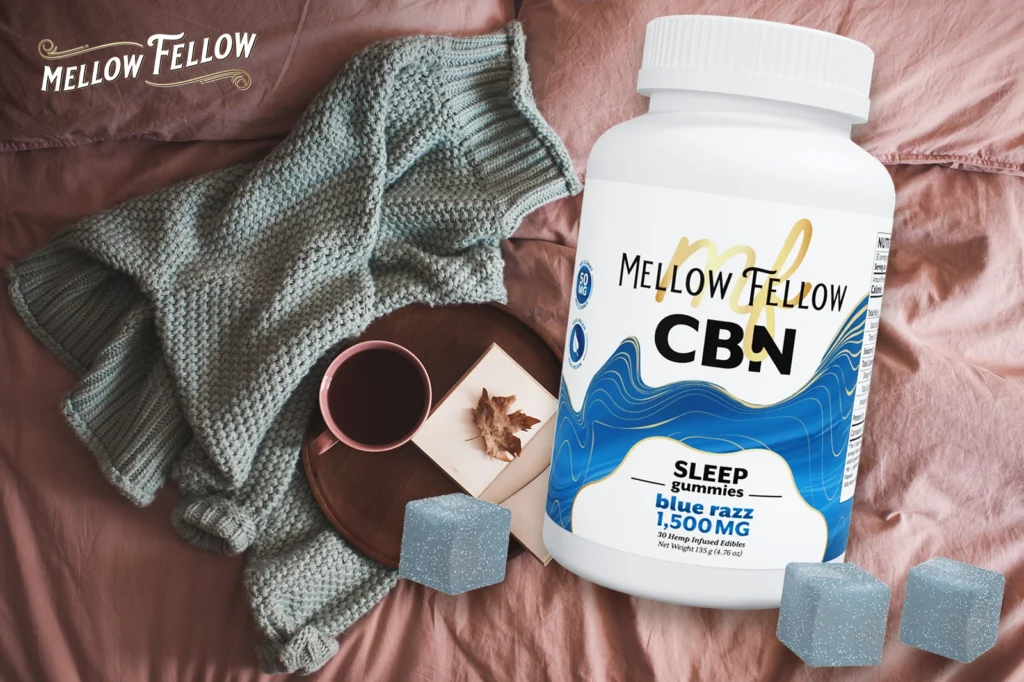
For stress that disrupts sleep, the Sleep CBN Gummies (1500mg, Blue Razz) pack 50mg of CBN per gummy, designed for nighttime use when winding down is the goal rather than staying sharp.
All three are lab tested with results available on our testing page, and each uses a single-cannabinoid formula so you know exactly what you are taking and in what amount.
Conclusion: Matching the Cannabinoid to the Moment
There is no single best cannabinoid for stress relief because stress itself does not show up the same way twice. CBD has the deepest and longest-running body of research behind it, making it the safest default for general, ongoing stress management. CBG offers the newest and arguably most exciting clinical evidence, particularly for stress that hits during the day and needs to be managed without sedation. CBN remains the most targeted option when stress is keeping you up at night rather than weighing on you during it.
The honest takeaway is that all three deserve a place in a well-thought-out routine, not because one beats the others, but because they are built to solve different problems. Ready to match a cannabinoid to your own stress pattern? Take a look at the product breakdown above and build out a routine that covers your whole day, from morning focus to evening wind-down.
Frequently Asked Questions
What Is The Best Cannabinoid For Stress Relief?
There is no single best option because stress presents differently for different people. CBD has the strongest overall research base for general stress management, CBG shows the newest clinical evidence for daytime stress without sedation, and CBN is best suited to stress that disrupts sleep.
Can You Take CBD, CBG, And CBN Together For Stress?
Yes. Many people use CBG or CBD during the day and switch to CBN in the evening, timing each cannabinoid to when stress is most disruptive. There is no known risk in combining them at standard hemp product doses, though starting with one at a time helps you understand how each affects you individually.
How Long Does It Take For Cannabinoids To Relieve Stress?
In the clinical trials covered here, effects on anxiety and stress ratings showed up within 20 to 90 minutes of an oral dose, depending on the study and format. Onset is generally faster with vapes and tinctures and slower with gummies and capsules.
Is CBG Or CBD Better For Anxiety?
Neither is categorically better. CBD has more human trials behind it and works well for ongoing, background anxiety. CBG has the newest clinical trial data and tends to suit daytime anxiety that needs addressing without drowsiness. Many people use both, timed to different parts of the day.
Does CBN Actually Help With Stress, Or Just Sleep?
The strongest evidence for CBN is specifically for sleep quality and nighttime awakenings, not daytime stress relief. Because poor sleep and stress reinforce each other, improving sleep with CBN can indirectly ease next-day stress, but CBN is not typically used as a standalone daytime anti-anxiety cannabinoid.
Are These Cannabinoids Safe To Use Daily?
CBD, CBG, and CBN have each shown favorable safety profiles in the clinical trials referenced here, with mild and infrequent side effects reported at standard doses. As with any supplement, anyone taking prescription medications or managing a health condition should check with a healthcare provider before starting daily use.
What Dose Of Each Cannabinoid Was Used In The Studies Cited Here?
The CBD study used doses of 150mg, 300mg, and 600mg, with 300mg producing the clearest anxiolytic effect. The CBG trial used a 20mg dose. The CBN trial used a 20mg dose taken nightly for seven days.
Sources
- Cannabidiol presents an inverted U-shaped dose-response curve in a simulated public speaking test
- Acute effects of cannabigerol on anxiety, stress, and mood: a double-blind, placebo-controlled, crossover, field trial
- Cannabinoid CBG reduces anxiety and stress in first human clinical trial
- Cannabigerol (CBG): A Comprehensive Review of Its Molecular Mechanisms and Therapeutic Potential
- Clinical Trial: Nighttime Use of Cannabinol (CBN) Reduces Sleep Disturbances
- Stress in America 2023: A Nation Grappling With Psychological Impacts of Collective Trauma