Is THCa Flower Natural or Synthetic? The Real Answer
Quick Answer: THCa flower is natural. It comes from the Cannabis sativa plant through enzymatic biosynthesis, the same process that produces other cannabinoids. No lab synthesis is involved.
There’s a lot of confusion around THCa flower right now, and most of it comes down to one question: is it actually natural? With synthetic cannabinoids and sprayed products floating around the market, it’s a fair concern. The reality is much simpler. THCa flower is produced by the cannabis plant itself through a natural biological process, not in a lab.
Key Takeaways
- THCa is a naturally occurring cannabinoid acid made inside the cannabis plant’s trichomes.
- All authentic THCa flower is plant-derived – it is not manufactured or synthesized in a lab
- Synthetic cannabinoids are a separate, chemically distinct category with an unpredictable and well-documented adverse risk profile.
- Sprayed or adulterated flower does exist in the market – third-party lab testing (COA) is the most reliable way to verify THCa flower authenticity.
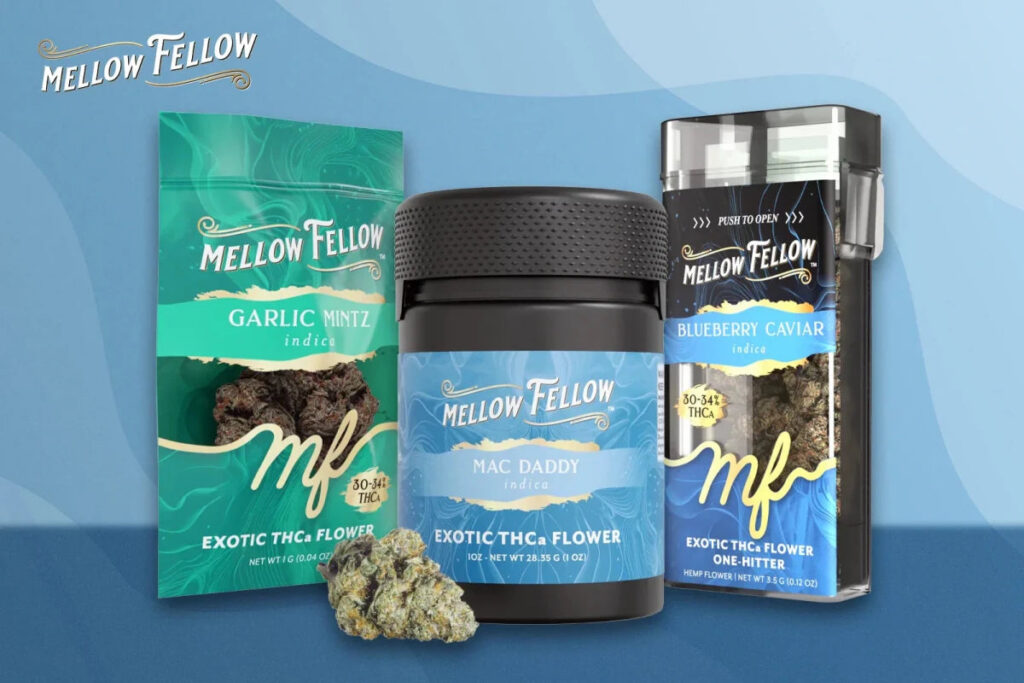
- Mellow Fellow’s THCa flower lineup runs 30-34% THCa, is batch-tested, and sourced from real cannabis genetics.
How the Cannabis Plant Produces THCa Naturally
Inside the glandular trichomes of a living cannabis plant, a specific enzyme – tetrahydrocannabinolic acid synthase (THCAS) – converts cannabigerolic acid (CBGA) into THCa. This is a natural enzymatic process rooted in plant biology, not chemistry done in a lab.
The pathway starts with hexanoic acid being processed by a type III polyketide synthase into olivetolic acid (OLA). OLA and a compound from the plant’s isoprenoid pathway combine to form CBGA. THCAS then catalyzes the final step, converting CBGA into THCa.
This has been mapped in detail in peer-reviewed research, including the biosynthesis of cannabinoids review, and a 2021 study on phytocannabinoid biosynthesis published via PMC/NIH.
When exposed to heat – a process called decarboxylation – THCa converts to Delta 9 THC. Before that conversion, raw THCa flower is non-intoxicating when consumed cold (eaten), but fully active when smoked or vaporized. That’s the fundamental science behind why THCa flower falls under federal hemp guidelines when Delta 9 THC stays below 0.3% by dry weight.
For a broader breakdown of how naturally occurring cannabinoid acids work, see our complete list of cannabis terpenes and their effects and our guide to rare cannabinoids.
Synthetic Cannabinoids vs. Natural THCa Flower: Key Differences
Synthetic cannabinoids – sold under names like Spice or K2 – are chemically engineered compounds designed to interact with cannabinoid receptors. They are typically sprayed onto dried plant material or dissolved into liquid for vaping. They share no botanical origin with THCa.
The National Institute on Drug Abuse (NIDA) classifies synthetic cannabinoids as a separate drug category with documented severe adverse health effects, including unpredictable receptor binding profiles and reported hospitalizations.
Unlike phytocannabinoids, many synthetic cannabinoids act as full agonists at CB1 receptors – meaning their effects can be far more intense and harder to predict than plant-derived THC.
THCa flower, by contrast, is cultivated cannabis. The distinction matters – for safety, for legality, and for what you’re actually consuming.
|
Feature |
Natural THCa Flower |
Synthetic Cannabinoids |
|
Origin |
Cannabis plant (botanical) |
Chemically manufactured in a lab |
|
Active compound |
THCa (phytocannabinoid) |
Engineered receptor agonists |
|
Decarboxylates to THC |
Yes, with heat |
No |
|
Federally regulated under |
2018 Farm Bill (hemp) |
Controlled Substances Act |
|
Lab-testable for purity |
Yes – full COA available |
Testing standards vary widely |
|
Risk profile |
Consistent with cannabis research |
Unpredictable; adverse effects documented |
|
Visual indicators |
Trichomes, pistils, botanical structure |
Often looks uniform or coated |
Mellow Fellow’s THCa flower is cultivated, harvested, and third-party tested – not sprayed, blended, or synthesized. You can verify any batch through our testing and COA page.
Does “Sprayed” THCa Flower Exist? A Real Problem
Here’s where consumer confusion is warranted. While authentic THCa flower is always plant-derived, a portion of the market does sell what’s commonly called “sprayed” flower – hemp biomass coated with THCa isolate, synthetic compounds, or concentrated extracts to artificially inflate potency numbers.
This practice is distinct from naturally cultivated THCa flower. The result can look similar on the outside but behaves very differently in lab results and in experience. Sprayed flower often shows abnormally high THCa percentages (above 35-40%) with an unusually narrow cannabinoid profile and low terpene content. Natural genetics produce a fuller range of minor cannabinoids and a terpene percentage typically between 1-3%.
Forensic chemistry research, including work using GC-MS for cannabis cannabinoid analysis published in Forensic Science International, has shown that gas chromatography-mass spectrometry can detect the difference between botanically produced cannabinoid profiles and adulterated products. This is exactly the type of testing that reputable brands run before releasing any batch.
The Takeaway: “natural THCa flower” refers to cultivated cannabis with inherent THCa content. Any product achieving THCa content through spraying, coating, or isolate application is not authentic botanical THCa flower, regardless of what the label says.
How to Verify THCa Flower Authenticity
Authentic, plant-derived THCa flower has several reliable identifiers. Knowing what to look for protects you from adulterated products.
Visual and Sensory Signs
- Bud Structure: Real cannabis flower shows dense, trichome-covered buds with visible pistils (the small hair-like structures). Sprayed material tends to look uniformly coated or unnaturally frosty.
- Aroma Profile: Botanical THCa carries terpene-driven scent – earthy, citrus, fuel, or floral notes depending on genetics. Synthetic or sprayed material often smells flat, chemical, or artificially strong.
- Burn Quality: Natural cannabis burns evenly and leaves a gray-to-white ash. Adulterated or sprayed product can burn unevenly, run hot, or leave dark residue.
What a COA Should Show
A certificate of analysis (COA) from a reputable third-party lab is the most reliable verification tool. Here’s what to look for:
- THCa Percentage: Natural top-shelf genetics typically show 25-34% THCa. Numbers above 35-38% warrant scrutiny.
- Minor Cannabinoid Profile: Natural flower contains measurable CBDA, CBGA, CBG, and other minor cannabinoids. A COA showing only THCa with almost zero others is a warning sign.
- Terpene Panel: Natural flower should show 1-3% total terpenes with several named compounds (myrcene, limonene, caryophyllene, etc.). A near-zero terpene panel in high-THCa flower suggests isolate application.
- Pesticide and Residual Solvent Screens: Any reputable brand will include these.
If a brand doesn’t publish COAs or makes them hard to find, that’s reason enough to look elsewhere.
Natural THCa Flower: Decarboxylation
One of the most frequently misunderstood aspects of THCa is why it exists in plant form at all rather than as THC. The plant produces THCa as its default state – raw, non-decarboxylated, and stable. THC only forms through non-enzymatic decarboxylation, which happens when the acidic cannabinoid is exposed to heat above approximately 220°F (105°C).
This is supported by research on THCA synthase published in Structure and Function of THCA Synthase in ScienceDirect, which mapped the enzyme responsible for CBGA-to-THCa conversion at the molecular level. In fresh, live cannabis – and in properly cured, stored flower – THCa is the dominant compound. The conversion to THC only fully occurs during combustion, vaporization, or baking.
This is why THCa flower is federally legal under the 2018 Farm Bill provisions outlined by the USDA Agricultural Marketing Service: the plant material contains less than 0.3% Delta 9 THC by dry weight before decarboxylation.
For more on this, see our blog on does THCa get you high and THCa vs Delta 9.
Mellow Fellow THCa Flower: Plant-Based, Batch-Tested, Strain-Specific
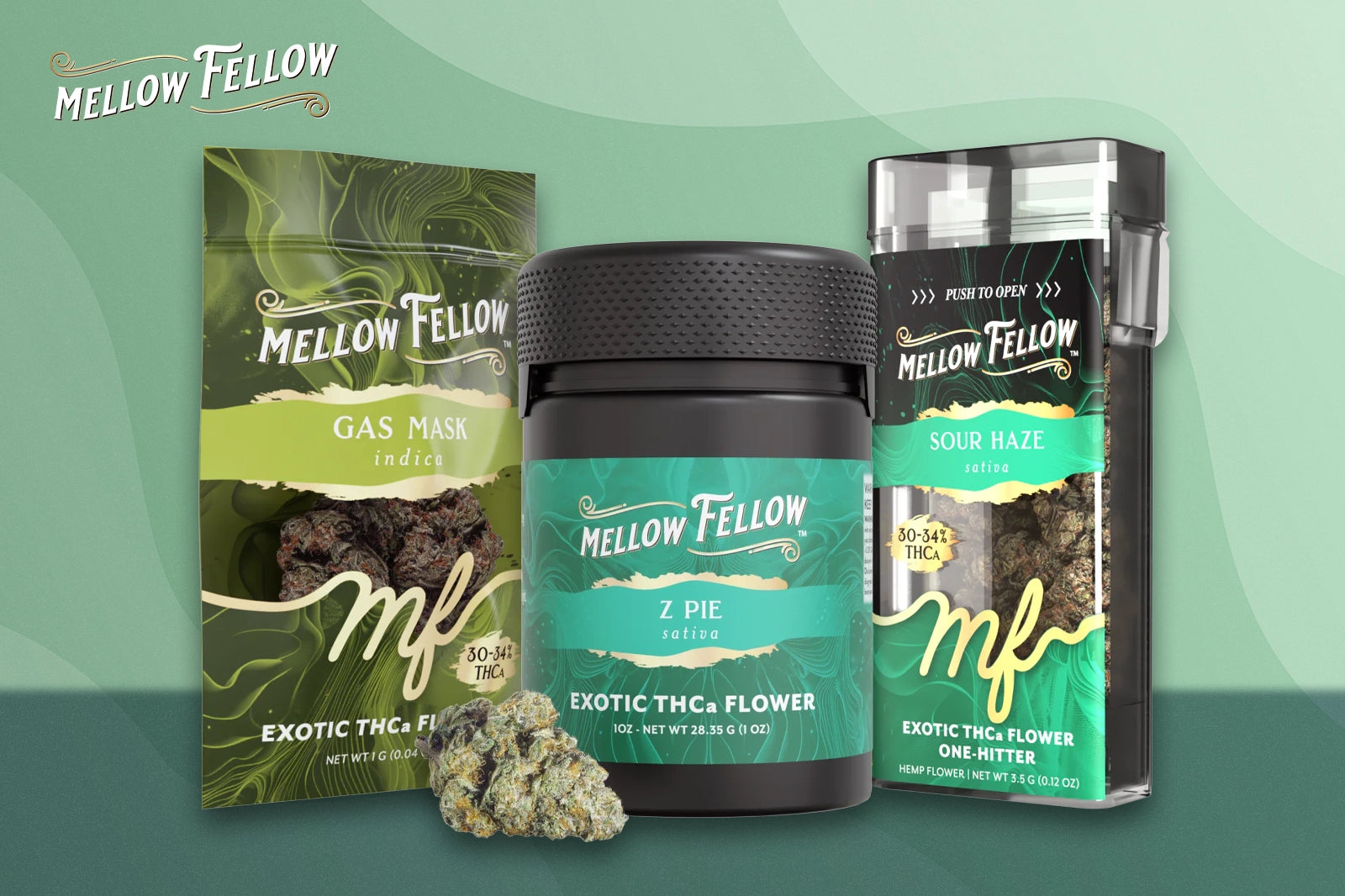
Mellow Fellow’s THCa flower collection covers a range of effects and genetics – all from cultivated cannabis, all with COA access, and all running 30-34% THCa from natural cultivation.
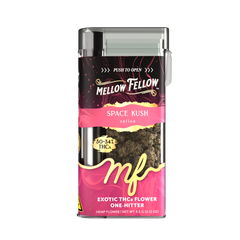
Exotic 3.5g Jar + One Hitter Picks
|
Product |
Type |
Terpene Character |
|
Hybrid |
Sweet, nutty, earthy – balanced cerebral and body |
|
|
Indica |
Savory, creamy, high-myrcene – relaxing |
|
|
Sativa |
Earthy-sweet with fuel and spice – uplifting |
|
|
Sativa |
Citrus-forward, limonene-dominant – energizing |
|
|
Hybrid |
Gassy, fruity, floral – creative and calm |
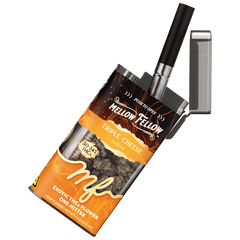
Each 3.5g jar includes a signature one hitter and resealable snap packaging for freshness.
1g Sachets: Try Before You Commit
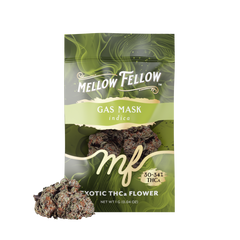
For sampling across strains, the 1g sachet format is a practical entry point at $8.99 per sachet. Pink Runtz (Hybrid) brings sweet strawberry and cherry candy flavor with giggly, body-easing effects. Gas Mask (Indica) delivers a fuel-forward, heavy-hitting indica with deep relaxation from top to bottom – not for beginners.
3.5g Jars: The Perfect Middle Ground
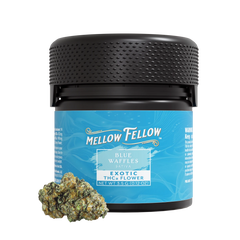
For most users, 3.5g jars strike the balance between variety and value. You get enough product to experience the strain properly without committing to bulk. California Gold (Indica) delivers smooth, body-heavy relaxation with subtle earthy and citrus notes – ideal for evening use.
Other options like Blue Waffles (Hybrid) lean more balanced, while Straight A’s Haze (Sativa) brings a brighter, more uplifting profile suited for daytime sessions.
1oz Jars: Volume for Regular Users
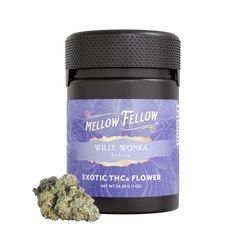
For heavier consumers or those who found a strain they love, the 1oz jars offer the same quality genetics in bulk. Willy Wonka (Hybrid) offers a balanced, creative experience with candy-sweet notes. Apricot Haze (Sativa) runs bright fruit, citrus, and spice with a fast-acting sativa onset – a solid daytime option.
All products link to batch-specific COAs on the testing page, and shipping availability by state is listed on the shipping restrictions page.
Browse all options at the THCa flower collection.
Getting Quality THCa Flower at Mellow Fellow
THCa flower is natural, but not everything sold as THCa lives up to that standard. The difference comes down to how the product is grown, handled, and verified. Understanding how THCa forms, what synthetic cannabinoids actually are, and how to read a COA puts you in control of what you’re buying.
Browse Mellow Fellow’s THCa flower collection for batch-tested, plant-derived options across indica, sativa, and hybrid profiles – with COAs available for every product.
Sources
- Hemp Production (website updates in progress) | Agricultural Marketing Service
- GC–MS as a valuable tool for analysing cannabinoid-containing gummies and identifying the synthetic process used for their production – ScienceDirect
- Structure and Function of ∆1-Tetrahydrocannabinolic Acid (THCA) Synthase, the Enzyme Controlling the Psychoactivity of Cannabis sativa – ScienceDirect
- Synthetic Cannabinoids | National Institute on Drug Abuse (NIDA)
- The biosynthesis of the cannabinoids | Journal of Cannabis Research | Springer Nature Link
- Biosynthesis of Phytocannabinoids and Structural Insights: A Review – PMC