
Best Voltage for THC Carts: Flavor, Potency, and Fewer Burnt Hits
Quick Answer: The best voltage for most THC carts falls between 2.4 V and 3.2 V. Live resin and rosin carts run best at the lower end (2.4-2.8 V) to protect terpenes. Distillate carts handle 2.8-3.2 V without issue. Going above 3.4 V regularly causes burnt hits and shortens coil life.
Getting the right voltage for your THC cart can make or break the experience. Too low, and you barely get any vapor. Too high, and you risk burnt hits, harsh flavor, and wasted oil. The ideal setting depends on the type of extract you’re vaping, the hardware you’re using, and how you like your hits to feel. In this guide, we’ll break down the best voltage ranges for live resin, distillate, terp sauce, and ceramic carts so you can get smoother pulls, better flavor, stronger effects, and fewer frustrating clogs or burnt hits.
Key Takeaways
- Ideal voltage range for most THC carts is 2.4-3.2 V, depending on oil type and coil material.
- Live resin and rosin carts need lower voltage to preserve terpene profiles.
- Distillate carts tolerate higher voltage due to lower terpene content.
- Burnt taste almost always means the voltage is too high or pulls are too long.
- One study on cannabis aerosol found temperature directly affects cannabinoid and terpene output, with higher heat degrading volatile compounds faster.
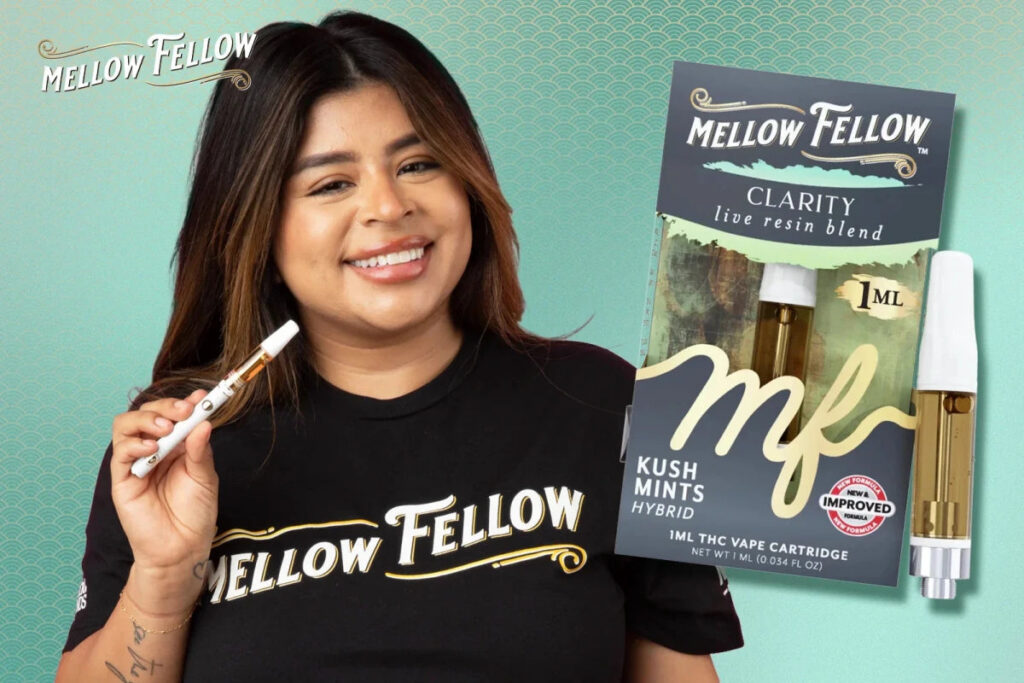
- Mellow Fellow’s live resin vape cartridges and terp sauce 2 mL carts are formulated for low-to-mid voltage use.
Why Voltage Matters for THC Carts
Voltage controls the temperature your coil reaches. Higher voltage = hotter coil = faster vaporization. That sounds good in theory, but heat also breaks down terpenes, degrades cannabinoids, and scorches the wicking material when oil can’t flow fast enough to keep up.
Terpenes – the compounds responsible for flavor and aroma – start degrading above roughly 230°C (446°F). Research published in RSC Advances found that THC and terpene transfer occurred with less degradation at lower power levels, and that degradation became significant even at moderate wattage settings. Matching voltage to oil type is the single most useful adjustment most people skip.
Most 510-thread batteries offer voltage settings between 2.0 V and 4.0 V. The sweet spot for the majority of carts is 2.4-3.2 V. Below 2.4 V, thick oils may not vaporize fully. Above 3.4 V, you risk burning the coil and producing harsh, acrid vapor.
THC Cart Voltage Chart by Oil Type
|
Cart Type |
Recommended Voltage |
Why |
|
Live Resin |
2.4-2.8 V |
High terpene content; low heat preserves flavor |
|
Rosin |
2.4-2.8 V |
Full-spectrum; sensitive to heat |
|
Distillate |
2.8-3.2 V |
Lower terpene load; handles more heat |
|
THC Oil (broad blend) |
2.6-3.0 V |
Depends on viscosity and formulation |
|
Terp Sauce |
2.4-2.6 V |
Terpene-rich; lowest voltage for best taste |
|
Thick Oil / High-Viscosity |
3.0-3.4 V |
Needs extra heat to flow through the wick |
Best Voltage for Live Resin Carts
Live resin is extracted from fresh-frozen cannabis, which preserves the full terpene and cannabinoid profile of the plant. That’s the exact reason you keep voltage low when vaping it. Run a live resin cart above 3.0 V and you’re burning off the terpenes that make it taste and feel different from a standard distillate.
The target range for live resin carts is 2.4-2.8 V. Start at 2.4 V, take a short two-second pull, and pause 30 seconds before the next draw. If the vapor feels thin, nudge up to 2.6 V.
Most live resin carts hit their best flavor-to-potency balance at 2.6 V.
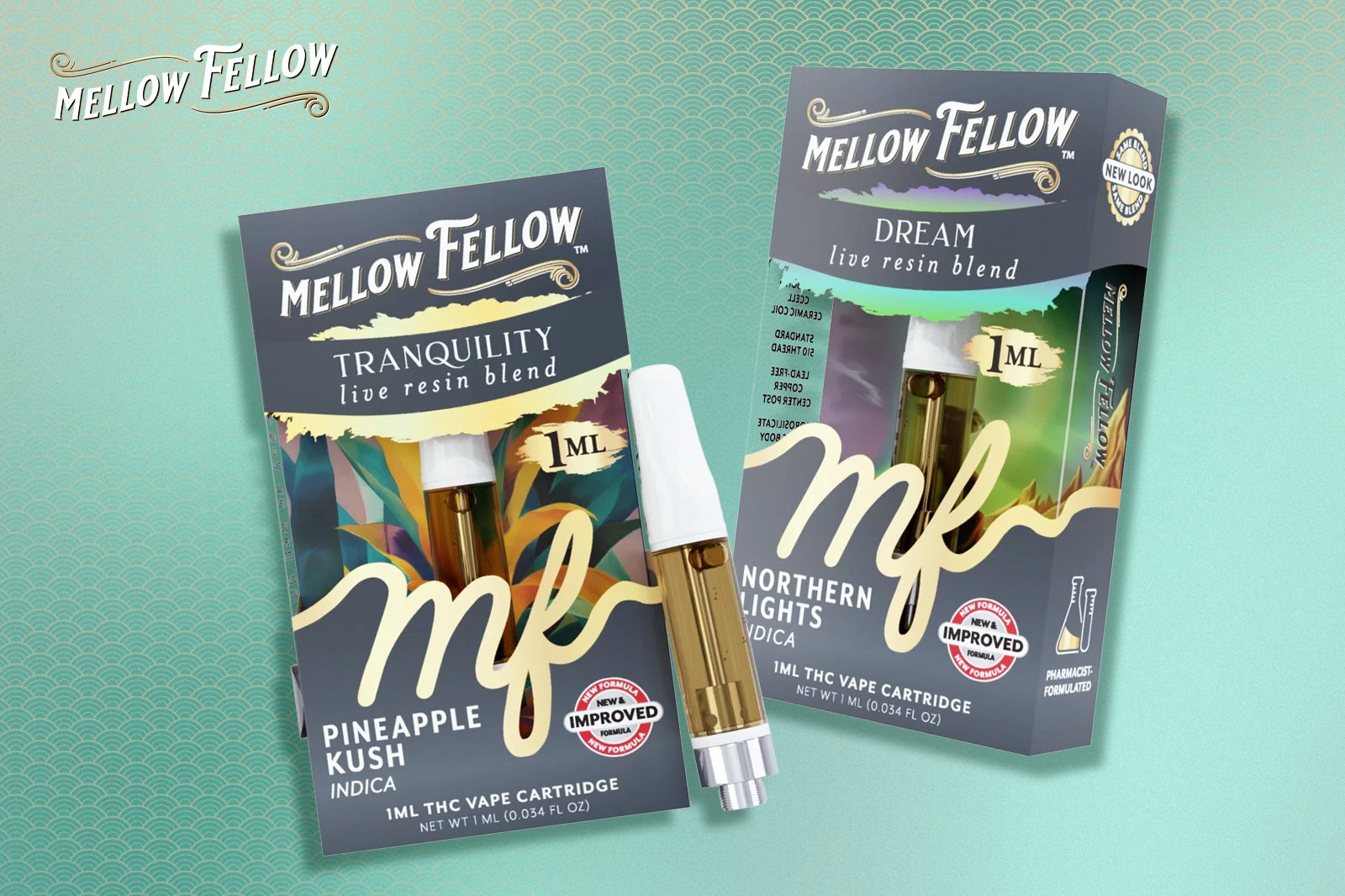
Mellow Fellow’s live resin carts are built for this range. The Clarity Blend 1 mL Kush Mints cart delivers clean, minty flavor best at 2.4-2.6 V, while the Tranquility Blend 1 mL Pineapple Kush cart opens up beautifully at 2.6 V – fruity and smooth without any harshness. For evening use, the Dream Blend 1 mL Northern Lights cart runs quietly at 2.4-2.8 V, keeping the earthy, relaxing profile intact.

Best Voltage for Distillate and THC Oil Carts
Distillate is a refined, high-potency extract with most terpenes removed during processing. Because it lacks sensitive volatile compounds, it handles higher voltage without much flavor penalty.
The practical range is 2.8-3.2 V.
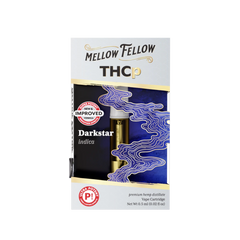
Thicker distillate oil benefits from slightly more heat to flow through the wick properly. If your cart feels like it’s not hitting well but the battery is charged, try raising voltage from 2.8 V to 3.0 V. This improves wick saturation and gives you a fuller pull. If you’re looking for a great distillate cart, the THCp Darkstar Cart is a great starting point.
Best Voltage for Terp Sauce Carts
Terp sauce sits between live resin and distillate. It’s a high-terpene concentrate mixed with THCA diamonds or distillate, giving you strong effects and rich flavor.
The terpene load means you should treat terp sauce like live resin: 2.4-2.6 V.
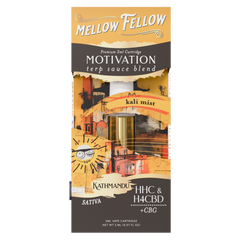
Mellow Fellow’s terp sauce 2 mL carts are a good example of why this matters. The Kathmandu Motivation Blend Kali Mist cart is a sativa-leaning option with a bright, energetic terpene profile that benefits from 2.4-2.6 V to stay sharp and clean. The Amsterdam Euphoria Blend Green Crack cart performs the same way – keep it low and the citrus notes stay vivid. For something more laid-back, the Barcelona Dream Blend Orange Cream cart is an indica-dominant option best run at 2.4 V for creamy, smooth flavor.

Low Voltage vs. High Voltage: Flavor vs. Bigger Hits
The tradeoff is straightforward. A study on cannabis vape aerosol chemistry published in RSC Advances confirmed what most experienced users already know: lower voltage produces denser, cooler vapor with more terpene intact, while higher voltage creates larger clouds at the cost of flavor fidelity and compound stability.
Low voltage (2.4-2.6 V):
- Better terpene preservation
- Smoother, cooler vapor
- More nuanced flavor
- Longer cart life
- Less risk of burnt taste
High voltage (3.2-3.6 V):
- Bigger, thicker clouds
- Stronger immediate hit
- More likely to produce burnt taste
- Faster oil consumption
- Higher risk of coil damage over time
For most users, 2.6-2.8 V is the practical middle ground – enough vapor to feel the effect quickly, cool enough to keep flavor and coil intact.
How to Fix a Burnt Cart Taste
Burnt taste is the most common cart complaint, and it almost always traces back to voltage or technique. A burnt weed vape cart isn’t ruined – adjust voltage first.
Step-by-step to fix a burnt taste:
- Drop voltage to 2.4 V immediately
- Let the cart sit upright for 5 minutes to let oil re-saturate the wick
- Take one short, slow draw (1-2 seconds) and wait 30 seconds
- If the burnt taste persists, the coil may be damaged – the oil is gone or the wick is scorched
- Check that you’re not chain-hitting (back-to-back pulls without pausing)
Research from a study on cannabis vaporizer coil temperatures published in PLOS ONE found that at a 4.0 V setting, average coil temperatures reached 543°C – well into the range where thermal degradation byproducts form. Prevention is significantly easier than recovery.
If you’re also dealing with clogging, the approach is slightly different – warming the cart gently (body heat or a brief low-heat source near the mouthpiece) helps oil flow before you draw. See our full guide on how to keep carts from clogging for more detail.
Voltage Settings for 510-Thread Batteries
Most 510-thread batteries use three-click cycling to change voltage. The standard presets are 2.4 V, 3.0 V, and 3.6 V (some vary slightly by brand).
A few points:
- Start at the lowest setting every time you try a new cart
- Cold weather thickens oil – if you’re outdoors in winter and the cart isn’t hitting, a single voltage step up often solves it
- Preheat mode on compatible batteries warms oil gently without full vaporization, which helps thick or cold carts prime the wick without burning
For a deeper comparison of cart types and how hardware affects your draw, our live resin vs. distillate carts guide and live resin vs. rosin carts breakdown both cover the hardware side in detail.
Voltage and Ceramic Coils
Ceramic coils are now standard in premium carts because they heat more evenly than metal coils, produce cleaner vapor, and don’t react chemically with cannabinoids or terpenes. Research published in ACS Omega found that cannabis vaping devices using ceramic heating elements tended to produce fewer metallic contaminants in aerosol compared to metal coil designs, though the study noted more research is still needed.
For ceramic coils, 2.6-3.0 V covers the full range of cart types. Ceramic tolerates the same voltages as other coils but is less forgiving of dry burning – if the wick runs dry at high voltage, ceramic cracks. Keep your cart above one-quarter full and voltage moderate, and ceramic coils last the life of the cart without issue.
Our cotton vs. ceramic coil breakdown covers the material science in plain terms if you want the full comparison.
Find Your Ideal THC Cart Voltage
The best voltage for THC carts comes down to balance. Lower settings preserve terpenes, improve flavor, and reduce the risk of burnt hits, while higher settings create larger clouds and stronger immediate effects. Most carts perform best somewhere between 2.4 V and 3.2 V, but the ideal range depends on the oil type, coil material, and your personal preferences.
Starting low and adjusting gradually is the easiest way to protect your cart, extend coil life, and get a smoother overall experience. Whether you prefer live resin, distillate, or terp sauce, dialing in the right voltage can dramatically improve both flavor and performance.
Browse Mellow Fellow’s live resin vape cartridges or terp sauce 2 mL carts to find a formulation that fits your preferred voltage range and flavor profile.
Sources
- The influence of terpenes on the release of volatile organic compounds and active ingredients to cannabis vaping aerosols – RSC Advances (RSC Publishing) DOI:10.1039/D1RA00934F
- Thermography of cannabis extract vaporization cartridge heating coils in temperature- and voltage-controlled systems during a simulated human puff – PMC
- Emissions from Heated Terpenoids Present in Vaporizable Cannabis Concentrates – PubMed
- In-situ TD-GCMS measurements of oxidative products of monoterpenes at typical vaping temperatures: implications for inhalation exposure to vaping products – PMC
- Evidence That Metal Particles in Cannabis Vape Liquids Limit Measurement Reproducibility | ACS Omega
- Vaping cartridge heating element compositions and evidence of high temperatures – PMC