
Kief vs Hash: Trichome Collection vs Pressed Concentrate
Quick Answer: Kief is loose trichome powder sifted from cannabis flower, while hash is that same trichome material pressed into a solid concentrate. Kief is the raw starting point; hash is the refined, denser product made from it. Both boost potency over flower, and kief-coated prerolls are the easiest way to try trichome-powered smoke without any tools.
Walk into any conversation about stronger flower and two words come up fast: kief and hash. They sound like two totally different products, but they come from the exact same place on the plant. Kief is the fine, sandy powder that collects in the bottom of a grinder. Hash is what you get when you take that powder, apply heat and pressure, and press it into a firm block or a sticky concentrate.
The difference matters because it changes potency, how each one burns, and how you actually use them. This guide breaks down where kief and hash come from, how their strength compares, and the simplest way to fold trichome potency into a normal smoking routine. If you have ever looked at a frosty jar of flower and wondered what all those crystals do, this is the practical answer, minus the guesswork.
Key Takeaways
- Kief is loose sifted trichomes; hash is kief pressed into a solid concentrate.
- Trichomes hold most of a plant’s cannabinoids, so both formats hit harder than raw flower.
- Sifted trichome material has been measured at cannabinoid content as high as 60.7%.
- Hash burns slower and denser; kief is easier to sprinkle, coat, and portion.
- Kief prerolls are the lowest-effort way to try trichome-powered smoke.
What Is Kief? Understanding Trichome Collection
Kief is a collection of trichomes, the tiny resin glands that coat cannabis flower. Under magnification these look like frosted, mushroom-shaped stalks, and they are where the plant actually builds its active compounds. According to a review in Frontiers in Plant Science, stalked glandular trichomes on female flowers produce the resin that contains cannabinoids like THCa and CBDa, making them the true source of a plant’s potency rather than the leafy material around them.
Because trichomes concentrate so much of the plant’s chemistry, separating them from the flower gives you a much stronger product by weight. Analysis of laser-isolated trichomes published in Phytochemistry confirms that the capitate-stalked glandular hairs are the main sites of cannabinoid production, with THCa and CBDa the most abundant compounds inside them. Kief collection is simply the mechanical process of knocking those resin heads loose and gathering them, usually through a fine mesh screen or the sifting chamber of a grinder.
There is no solvent involved. That is why kief, along with pressed hash made from it, falls under the solventless category. You are not extracting anything chemically; you are just separating the most potent part of the plant from the rest.
What Is Hash? The Pressed Concentrate Explained
Hash, short for hashish, is one of the oldest cannabis concentrates in the world, and at its core it is pressed kief. Once you have gathered loose trichomes, applying heat and pressure binds them into a solid mass. That is traditional dry-sift hash. Modern versions expand on the idea: ice water hash agitates fresh or frozen flower in cold water to knock trichomes off, and rosin presses that material with heat and pressure to squeeze out a resinous, terpene-rich concentrate.
The key point is the relationship. Kief is the loose powder. Hash is that powder refined and compacted into something denser, more stable, and often more potent. A study in MDPI Molecules that isolated pure trichomes through cold sifting measured concentrated cannabinoid content as high as 60.7%, illustrating just how much stronger separated trichome material is compared to the flower it came from. That same research points out that hashish-making techniques, despite being ancient, are the direct ancestors of today’s solventless concentrates.
Pressed concentrate also changes how the material behaves when you smoke it. Compacted trichomes burn slower and more evenly than loose powder, which is part of why hash is prized for longer, steadier sessions.
Kief vs Hash: Potency and Cannabinoid Comparison
The single biggest reason people reach for kief or hash is potency. Standard flower has come a long way, but concentrates built from pure trichomes still sit well above it. Data from the National Institute on Drug Abuse shows that average Delta 9 THC in seized cannabis flower rose from 3.96% in 1995 to 16.14% in 2022, while cannabis concentrates can exceed 40%. Kief and hash live in that higher tier because they strip away most of the plant matter and keep the resin.
One thing worth clearing up: raw sifted trichomes are loaded with acidic cannabinoids like THCa, which are not intoxicating until heat converts them. A decarboxylation kinetics study in the Journal of Cannabis Research found that this heat-driven reaction, which turns THCa into active THC, runs faster as temperature rises. When you light a bowl topped with kief or a hash-infused joint, combustion heat handles that conversion on the spot.
Here is how the two formats stack up side by side.
| Factor | Kief (Trichome Collection) | Hash (Pressed Concentrate) |
| Physical Form | Loose, sandy powder | Solid block, ball, or pliable concentrate |
| Processing | Sifted, no pressing | Kief pressed with heat and pressure |
| Typical Potency | Higher than flower, up to ~60% cannabinoids | Similar to higher, denser by volume |
| Burn Behavior | Fast, can scatter if uncoated | Slow, even, longer-lasting |
| Best For | Sprinkling, coating, easy dosing | Extended sessions, dabbing, connoisseur use |
How to Use Kief and Hash in a Real Session
Knowing the difference is one thing; using each without wasting product is another. The two formats reward different handling. Kief is versatile and forgiving, while hash usually needs a little more setup.
Common ways to use each format include:
- Topping a Bowl: Sprinkle kief over packed flower for an easy potency boost with no extra gear.
- Coating a Joint or Preroll: Roll a lightly tacky joint in kief for a slower burn and a stronger hit.
- Adding Hash to Flower: Break small pieces of hash into a bowl or crumble it into a joint for a denser, longer session.
- Pressing Kief Into Rosin: Squeeze kief with a low-temperature press to make a solventless concentrate at home.
- Dabbing Hash: Vaporize higher-grade hash or rosin on a dab rig for fast, intense effects.
A quick note on flavor and effect quality: solventless formats tend to preserve more of the plant’s aromatic compounds. A review in MDPI Pharmaceuticals notes that terpene levels sit around 1% in cannabis flowers but can reach up to 10% within the trichomes themselves.
Since kief and hash are concentrated trichomes, they carry a bolder terpene load, which is why a well-made hash joint often tastes richer than plain flower. If you want to compare solid concentrate textures, our guide on live resin vs wax covers how different formats feel and burn, and the breakdown of what THCa budder is explains a softer pressed-style concentrate in detail.
Kief Prerolls: The Easy Way to Try Trichome Potency
Sifting your own kief takes time, and pressing hash takes equipment most people do not own. That is exactly why kief-coated prerolls exist. They take the potency upgrade of trichome collection and put it into a ready-to-smoke joint, no grinder chamber or press required.
A kief preroll is a standard joint of quality flower rolled with a coating of fine trichome powder on the outside. The kief layer adds cannabinoid density and slows the burn slightly, giving you a stronger, longer draw than flower alone. It is the middle ground between a regular joint and a full concentrate format like a hash hole, where a solventless rosin core runs through the center of the joint. If you want to understand that heavier format, our explainer on what a hash hole is and the comparison of a hash hole vs a regular joint both walk through how concentrate placement changes the experience.
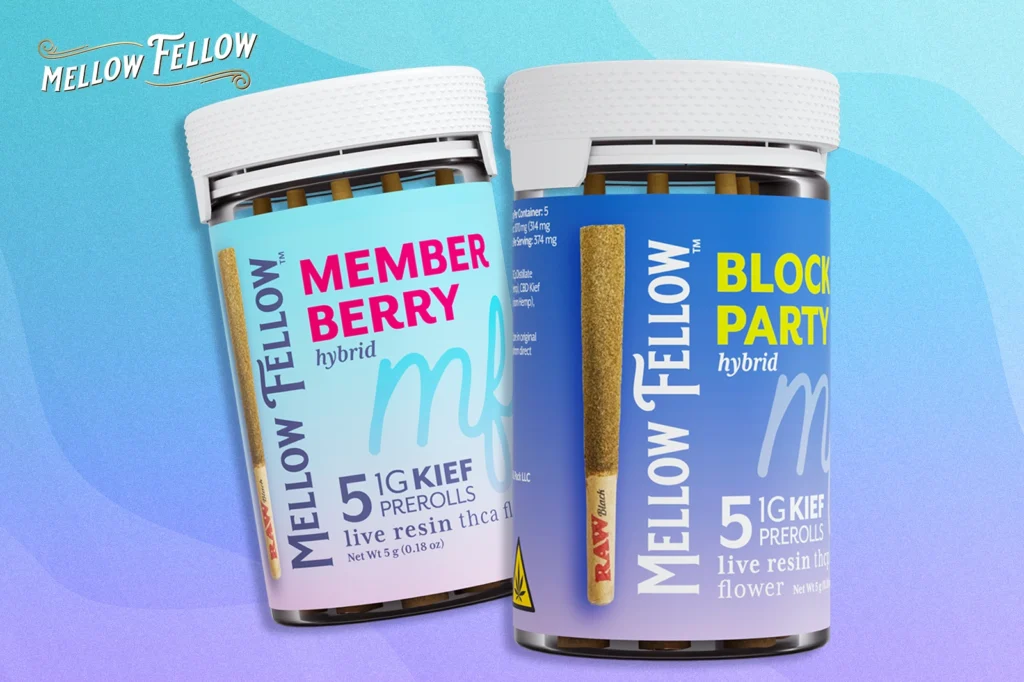
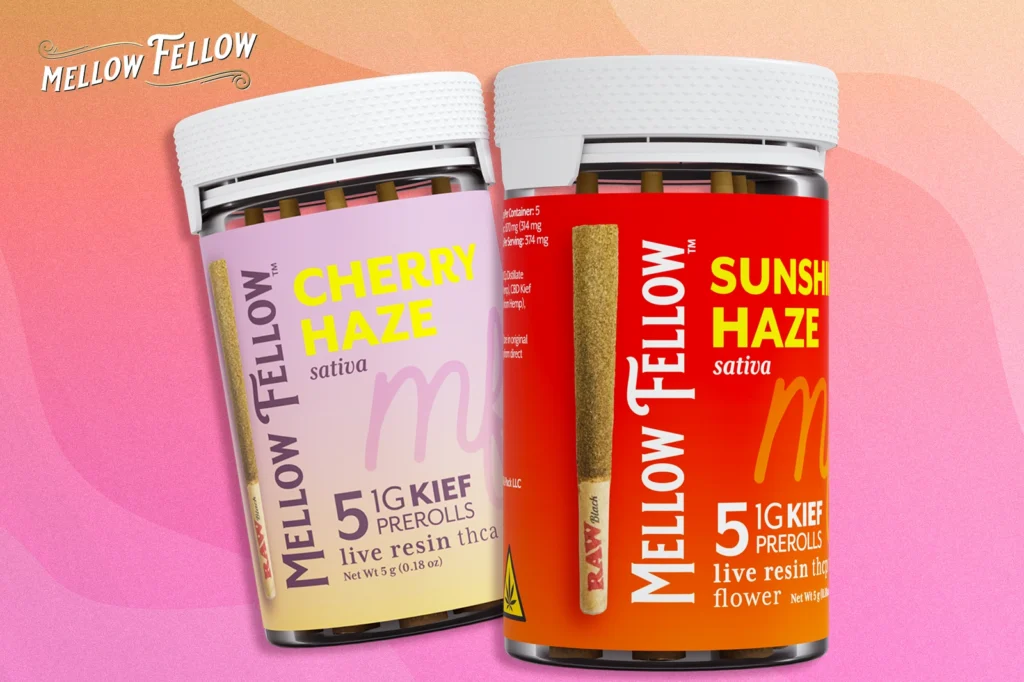
Mellow Fellow’s kief prerolls come in five-count jars of 1g joints, built on either THCa or THCp flower depending on how strong you want to go. THCp options like Sunshine Haze (Sativa), Block Party (Hybrid), and Banana Jelly (Indica) each carry 374mg of cannabinoids per joint. The THCa lineup, including 24K (Indica), Member Berry (Hybrid), and Cherry Haze (Sativa), steps up to 545mg per joint. Both are ready to light out of the jar, which makes them the simplest entry point for anyone curious about trichome-powered smoke.
The table below lays out how the two kief preroll tiers compare so you can match potency to your tolerance.
| Kief Preroll | Cannabinoid | Per Joint | Strain Examples |
| THCp 5pc 1g Kief Joints | THCp | 374mg | Sunshine Haze, Block Party, Banana Jelly |
| THCa 5pc 1g Kief Joints | THCa | 545mg | 24K, Member Berry, Cherry Haze |
If you would rather see the broader menu first, browse the THCa prerolls collection to compare strains and potency tiers. New to infused formats altogether? Our best infused prerolls buyer’s guide is worth a read before you commit to a pack.
For anyone who wants the pressed-concentrate side of the equation instead, the THCa 2g budder jars give you a soft, terpene-rich concentrate you can dab or add to flower yourself. And if you are still deciding between formats, the full prerolls collection lays out everything from standard joints to kief-coated and hash-core options in one place.
Conclusion
Kief and hash are two stages of the same idea: collect the plant’s trichomes and put that potency to work. Kief is the loose, sifted powder, easy to sprinkle and quick to burn. Hash is that powder pressed into a denser, slower-burning concentrate built for longer sessions. Both outperform flower on strength because they concentrate the resin where cannabinoids and terpenes actually live, and both convert to active compounds the moment heat touches them.
If you want the benefits without the labor of sifting or pressing, a kief-coated preroll is the shortcut. It delivers trichome potency in a familiar joint you can light straight from the jar. Ready to feel the difference for yourself? Shop the THCp prerolls collection and pick the strain that matches your pace.
Frequently Asked Questions
What Is the Difference Between Kief and Hash?
Kief is loose trichome powder sifted directly from cannabis flower. Hash is that same trichome material pressed with heat and pressure into a solid, denser concentrate. Kief is the raw ingredient; hash is the refined finished product made from it.
Is Kief or Hash Stronger Than Flower?
Both are stronger than flower because they concentrate trichomes, where most cannabinoids sit. Sifted trichome material has been measured at cannabinoid content as high as 60.7%, well above typical flower, which averages around 16% THC in recent testing.
How Do You Use Kief in a Preroll?
You can sprinkle kief into ground flower before rolling, or lightly moisten the outside of a finished joint and roll it in kief so the powder sticks. Kief-coated prerolls do this for you, so no rolling or sifting is needed.
Does Kief Need to Be Decarboxylated to Get You High?
Raw kief is high in non-intoxicating THCa. Smoking or vaping applies enough heat to instantly decarboxylate it, converting THCa into active THC. You only need to manually decarb kief if you are cooking it into edibles.
Are Kief Prerolls the Same as a Hash Hole?
No. A kief preroll has trichome powder coating the outside of the joint. A hash hole has a solid rosin or hash core running through the center. Both are infused prerolls, but the hash hole packs more concentrate and typically hits harder.
What Cannabinoids Are in Mellow Fellow Kief Prerolls?
Mellow Fellow’s THCp kief prerolls carry 374mg of cannabinoids per 1g joint, while the THCa versions carry 545mg per joint. Both come in five-count jars across sativa, hybrid, and indica strains.
Sources
- Cannabis Glandular Trichomes: A Cellular Metabolite Factory (2021) https://www.frontiersin.org/journals/plant-science/articles/10.3389/fpls.2021.721986/full
- Analysis of Cannabinoids in Laser-Microdissected Trichomes of Medicinal Cannabis Sativa Using LCMS and Cryogenic NMR (2013) https://pubmed.ncbi.nlm.nih.gov/23280038/
- Novel Solventless Extraction Technique to Preserve Cannabinoid and Terpenoid Profiles of Fresh Cannabis Inflorescence (2021) https://www.mdpi.com/1420-3049/26/18/5496
- Cannabis (Marijuana), National Institute on Drug Abuse (2025) https://nida.nih.gov/research-topics/cannabis-marijuana
- Thermo-Chemical Conversion Kinetics of Cannabinoid Acids in Hemp (2024) https://link.springer.com/article/10.1186/s42238-024-00243-x
- The Entourage Effect in Cannabis Medicinal Products: A Comprehensive Review (2024) https://www.mdpi.com/1424-8247/17/11/1543