
THC Drinks vs. Alcohol: Which Is Better and Why?
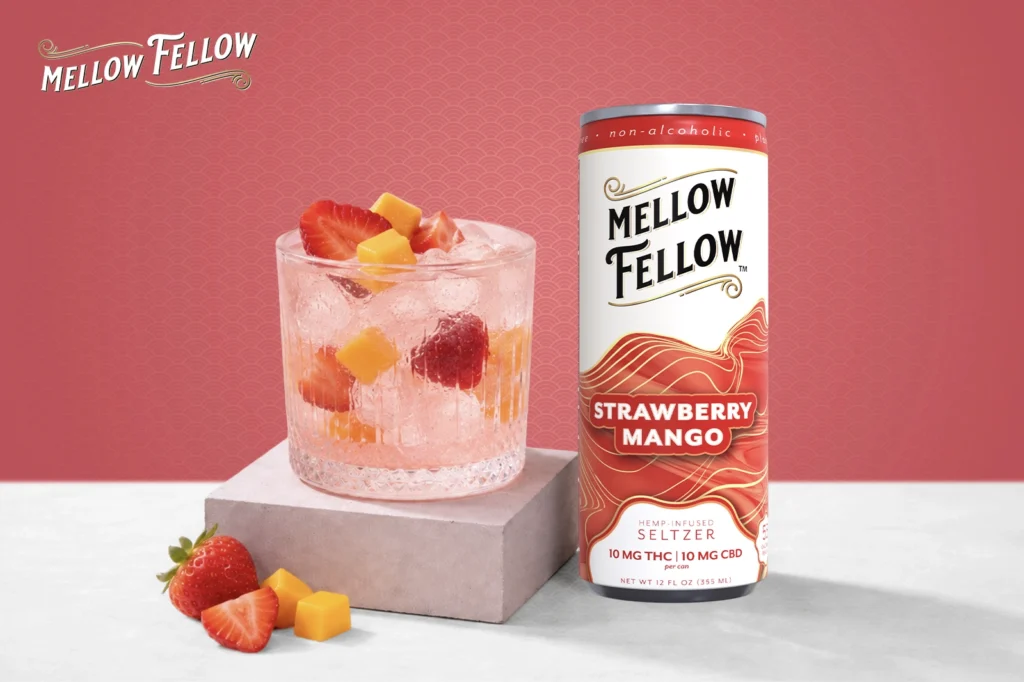
Quick Answer: Hemp-derived Delta 9 THC drinks tend to kick in faster, carry far fewer calories, and skip the next-day hangover compared to alcohol, though alcohol is legal nationwide with none of the state-by-state gray areas that still surround hemp beverages.
Bars are starting to stock more than beer and wine. Hemp-derived THC seltzers and mixers now sit next to the cocktail list at a growing number of venues, and plenty of shoppers are picking them up at home instead of a six-pack. The pitch is simple: a social buzz without the ethanol. This overview of cannabis beverages covers the wider category if you want more background before diving into the comparison.
That pitch only holds up if the details check out. This guide lines up THC drinks vs. alcohol on the things that actually matter: how each one works in the body, how fast each one hits, what a hangover really comes from, how the calories and long-term health picture stack up, how dosing translates from one category to the other, and where the law currently stands on hemp-derived beverages. Mellow Fellow’s guide to what THC drinks are covers the basics if you’re brand new to the category.
Whether you’re planning a dry-ish weekend, cutting back on alcohol, or just curious what all the seltzer cans at the store are about, the goal here is a clear, source-backed answer rather than a marketing pitch for one side or the other.
Key Takeaways
- Delta 9 THC seltzers typically start working within 15 to 30 minutes
- Alcohol contributes to about 178,000 U.S. deaths a year, per federal data
- Hemp-derived THC seltzers run under 30 calories a can versus 100 to 150 for a standard drink
- THC skips the ethanol byproducts that drive most alcohol hangovers
- Alcohol is a leading preventable cause of cancer, according to a 2025 Surgeon General advisory
- Mellow Fellow’s Delta 9 THC and CBD seltzers offer a lab-tested, hangover-free alternative for social settings
THC Drinks vs Alcohol: The Core Differences
The two categories work on the body in completely different ways, which is the root of almost every other difference on this page. A side-by-side table makes the comparison easier to scan before we break down each row in detail:
| Category | Hemp-Derived THC Drink | Standard Alcoholic Drink |
| Active Compound | Delta 9 THC and CBD | Ethanol |
| Typical Onset | 15 to 30 minutes | 10 to 20 minutes |
| Typical Duration | 2 to 4 hours | Builds and fades with blood alcohol level |
| Calories per Serving | Under 30 | 100 to 150 |
| Next-Day Symptoms | Uncommon | Common, tied to ethanol levels and oxidative stress |
| Long-Term Risk Profile | Still being studied; some cardiovascular concerns noted | Established link to at least seven cancers |
| Legal Status | Federal legal if hemp-derived at 0.3% THC or less; state rules vary | Legal nationwide for adults 21 and older |
Neither column is universally “better.” Alcohol has a long, well-understood dosing culture behind it. THC drinks are newer, and the format rewards patience since the effects build more gradually than a shot or a beer.
How Alcohol Affects the Body
Alcohol is a central nervous system depressant. The liver processes it at a fixed rate, roughly one standard drink per hour, regardless of how much you’ve had, which is why blood alcohol levels keep climbing if you drink faster than that pace. At low doses it produces relaxation and lowered inhibitions. At higher doses it slows reaction time, impairs judgment, and eventually causes sedation.
How Hemp-Derived THC Affects the Body
Delta 9 THC binds to CB1 receptors concentrated in the brain and central nervous system, producing relaxation and mild euphoria through a pathway that has nothing to do with alcohol’s mechanism. There’s no fixed metabolic ceiling in the same sense as alcohol’s one-drink-per-hour rule, which is part of why pacing matters so much with THC drinks. CBD, often paired with Delta 9 THC in beverages, tends to soften the peak intensity of the high.
How Hemp-Derived THC Drinks Are Made and Regulated
Understanding the format helps explain why THC drinks feel different from both alcohol and traditional edibles.
What Nano-Emulsification Actually Does
Most THC beverages, including Mellow Fellow’s THC seltzer lineup, rely on nano-emulsification. The process breaks Delta 9 THC into microscopic, water-soluble particles instead of leaving it suspended in oil, which is how traditional edibles are made. Water-soluble particles absorb through the gut faster and more consistently than an oil-based dose has to.
The research backs this up. A 2025 crossover study in the Journal of Cannabis Research compared a nano-emulsified cannabinoid powder against a standard oil-based drop formulation in 14 healthy adults. The nano-emulsified version reached the oil formulation’s peak blood concentration in just 54 minutes, versus 4.3 hours for the oil drops to reach that same point on their own, and delivered nearly triple the overall bioavailability. That is the mechanism behind the “kicks in faster than a gummy” claim you’ll see on most THC drink packaging.
The 2018 Farm Bill and the 0.3% Rule
Legally, these drinks exist because of a narrow definition. The 2018 Farm Bill carved hemp out of the Controlled Substances Act by defining it as cannabis containing no more than 0.3% Delta 9 THC on a dry-weight basis. Anything under that line is federally legal hemp rather than a Schedule I substance, which is why brands like Mellow Fellow can ship THC seltzers to most states while marijuana dispensaries remain limited to licensed markets. Because a 12 oz can is mostly water, a 10mg or 20mg dose of Delta 9 THC stays well under the 0.3% threshold when measured against the full weight of the liquid.
The 2026 Hemp Definition Change to Watch
That federal definition is set to shift. Congress passed a change to the statutory definition of hemp as part of the FY2026 Agriculture Appropriations Act, moving from a delta-9-only threshold to a total THC standard that would count other cannabinoids toward the 0.3% cap. The new rule is scheduled to take effect November 12, 2026, though lawmakers have discussed delaying it. Anyone buying or selling hemp-derived THC drinks later this year should keep an eye on how this plays out at the federal and state level, since it could reshape which products qualify as legal hemp going forward.
THC Drinks vs Beer, Wine, and Cocktails
Alcohol isn’t one thing. A beer, a glass of wine, and a mixed cocktail each bring a different calorie count, alcohol content, and pace to the table, so it helps to compare THC drinks against each format individually rather than “alcohol” as a single category.
THC Seltzers vs Beer
Beer and THC seltzers share a format (cold, carbonated, canned) but nothing else under the hood. A standard 12 oz beer runs about 150 calories and 14 grams of alcohol, while a 12 oz Delta 9 THC seltzer runs under 30 calories with no alcohol at all. This side-by-side breakdown of a THC seltzer versus beer goes further into how the buzz and the calories compare can for can, including how onset timing changes the pace of a cookout or game-day gathering.
THC Drinks vs Wine
Wine’s calorie count sits between beer and liquor, at roughly 120 calories for a 5 oz pour, and its alcohol content is typically higher per ounce than beer. THC drinks don’t have a direct wine equivalent since there’s no fermentation or grape sugar involved, but the social role often overlaps: a slow sipping drink meant to accompany a meal or a long conversation. A 10mg to 20mg Delta 9 THC seltzer fills a similar pacing niche without the tannins or the next-day dehydration.
THC Drinks vs Cocktails and Liquor
Cocktails are the biggest wildcard on the alcohol side, since a mixed drink’s calorie count depends entirely on what’s poured into it. A simple 1.5 oz shot of liquor runs about 100 calories, but a sugary cocktail can climb past 300 calories once syrups, juices, and multiple pours are added in. THC mixers, like the sachets covered later in this guide, are built to replace that “add it to your drink” step with a controlled, labeled dose instead of a free-pour, which makes portion control considerably easier.
Calories, Hangovers, and Next-Day Recovery
Calories are one of the more concrete differences between the two categories. According to CDC data on alcohol consumption, a standard 12 oz beer runs about 150 calories, a 5 oz glass of wine about 120, and a 1.5 oz shot of liquor around 100, before any mixers are added. Hemp-derived THC seltzers typically land under 30 calories a can, since there’s no ethanol contributing calories and most formulas use a light touch of cane sugar or none at all. The comparison holds up cleanly side by side:
| Drink | Serving Size | Approx. Calories |
| Beer | 12 oz | ~150 |
| Wine | 5 oz | ~120 |
| Liquor | 1.5 oz | ~100 |
| Hemp-Derived THC Seltzer | 12 oz can | Under 30 |
Why Alcohol Hangovers Happen
A review of alcohol hangover research published in the Journal of Clinical Medicine found that hangover severity tracks most closely with blood ethanol levels and markers of oxidative stress generated as the liver breaks ethanol down. That entire metabolic chain, ethanol to acetaldehyde to acetate, along with the oxidative stress it produces, is the biological root of the grogginess, dry mouth, and headache that show up the next morning.
Why THC Drinks Skip the Hangover
Delta 9 THC does not go through that same ethanol metabolism, which is why most people who swap a nightcap for a THC seltzer wake up without the classic hangover symptoms. This does not make THC drinks risk-free. Overdoing a hemp-derived seltzer can still cause dry mouth, an elevated heart rate, or an uncomfortable amount of drowsiness, particularly for anyone new to Delta 9 THC.
Onset Time and How the Effects Feel
Alcohol’s effects arrive fast and scale directly with how much and how quickly you drink. A single beer or glass of wine tends to produce mild relaxation within 10 to 20 minutes, while several drinks in a short window pushes toward slower reaction times and impaired judgment.
THC drinks take a slightly different curve. Nano-emulsified Delta 9 THC starts registering in 15 to 30 minutes for most people, builds gradually, and holds for 2 to 4 hours rather than spiking and crashing. Users commonly describe the high as more mental and less physically impairing than a comparable amount of alcohol, though everyone’s tolerance and body chemistry play a role. This guide on how long a THC drink takes to kick in breaks down the factors, like metabolism and tolerance, that speed up or slow down onset.
A few practical differences worth knowing before your first can:
- THC drinks have no fixed “one drink per hour” metabolism rule the way alcohol does
- Effects can still be building 45 minutes after your first sip, so pacing matters
- Mixing formats (edibles plus a seltzer, for example) can stack doses in ways that surprise beginners
- CBD paired with Delta 9 THC, as in most Mellow Fellow formulations, tends to soften the edges of the high
Dosing Guide: How Much THC Drink Equals a Drink?
There’s no exact clinical conversion between milligrams of THC and standard alcoholic drinks, since the two substances work through entirely different mechanisms. That said, the industry has settled on rough social comparisons that help first-time buyers pick a starting dose:
| Approx. Delta 9 THC Dose | Rough Social Comparison | Best Suited For |
| 2.5mg to 5mg | Milder than a single light beer | First-time users |
| 10mg | Roughly one standard drink | Most social settings |
| 20mg | Comparable to two or three standard drinks | Experienced users |
| 50mg or more | Well beyond a typical evening’s alcohol | Very experienced users only |
A regional magazine review of Mellow Fellow’s lineup put it plainly: a 20mg Delta 9 THC seltzer can feel socially comparable to two or three drinks, but with a longer tail than alcohol and a slower, more gradual onset. That combination is exactly why patience matters more with THC drinks than with a beer you can just stop drinking mid-glass.
Beginner Dosing
New users should start with half a can, roughly 5mg to 10mg of Delta 9 THC, and wait a full 45 minutes before deciding whether to have more. This guide on how long THC drink effects last walks through what to expect hour by hour at different dose levels, which is worth reading before your first can.
Experienced User Dosing
Regular cannabis users often find that 10mg to 20mg hits a comfortable range for a full social evening. Mellow Fellow’s guide to the strongest THC drinks covers higher-dose formats and how carbonation and nano-emulsification interact to change the way strength is perceived, for anyone considering doses above 20mg.
Safety, Impairment, and Driving Risks
Alcohol’s public health toll is well documented. Federal data shows that excessive alcohol use contributes to roughly 178,000 deaths in the United States each year, and alcohol played a role in more than 4.2 million emergency department visits in 2022. Alcohol-impaired driving alone accounted for 12,429 traffic fatalities in 2023, about 30% of all driving deaths that year.
Cannabis is not automatically safer behind the wheel. NHTSA research on drug-impaired driving confirms that THC impairs motor skills, lane tracking, and the ability to multitask, all of which matter for safe driving. THC-impaired driving carries real legal and safety consequences in every state, hemp-derived or not.
A short list of guardrails applies to both categories:
- Never Drive: Wait until effects have fully worn off before getting behind the wheel, regardless of which substance you used
- Avoid Mixing: Combining THC drinks with alcohol can amplify impairment in unpredictable ways
- Start Low: Try half a can and wait 30 to 45 minutes before deciding whether to finish it
- Check State Law: Some states restrict or ban hemp-derived THC products even though they’re federally legal
- Store Securely: Keep THC drinks away from children and pets, just as you would alcohol
Drug Tests and Other Practical Questions
One area where THC drinks and alcohol diverge sharply: drug testing. Standard workplace and legal drug tests screen for THC metabolites, not alcohol, so a THC seltzer carries a detection risk that a beer or a glass of wine simply doesn’t. This guide on whether THC drinks show up on drug tests explains how the liver converts Delta 9 THC into THC-COOH, the metabolite most tests screen for, and why nano-emulsified drinks don’t clear your system any faster than other THC formats even though they hit faster.
If drug testing is a factor in your life, whether for work, sports, or a legal situation, that single difference may matter more than calories or hangovers when deciding between the two categories for a given evening.
Long-Term Health Considerations
Both categories carry long-term health questions worth knowing about, even though the research bases are at very different stages of maturity.
Alcohol’s long-term risk profile is well established and, as of 2025, formally recognized at the federal level. A U.S. Surgeon General’s Advisory on Alcohol and Cancer Risk identifies alcohol as the third leading preventable cause of cancer in the United States, behind tobacco and obesity, contributing to nearly 100,000 cancer cases and about 20,000 cancer deaths annually. The advisory notes that risk for certain cancers, including breast, mouth, and throat cancer, can begin to climb at around one drink a day or less.
Cannabis research is comparatively newer, and the picture is still developing. A 2020 American Heart Association scientific statement on cannabis and cardiovascular health flagged emerging associations between cannabis use and cardiovascular events, while noting that much of the existing research does not distinguish between routes of administration or isolate Delta 9 THC beverages on their own. In plain terms: alcohol’s long-term risks are well quantified, while THC’s are still being actively studied, which is worth factoring into any decision about frequent use of either category.
Best Occasions for Each Option
Neither category fits every occasion equally well, and matching the format to the moment tends to produce the better experience.
Cookouts, tailgates, and daytime gatherings often favor THC seltzers, since the lower calorie count and lack of a hangover make it easier to stay functional for the rest of the day. Mellow Fellow’s guide to THC drinks for July 4th and summer parties covers dosing and flavor picks built around exactly that kind of daytime, multi-hour event.
Cozy, seasonal gatherings are another strong fit for THC mixers and mocktails. This collection of fall THC seltzer mocktail recipes shows how the mixer format turns a can or sachet into a full mocktail experience for a Friendsgiving table or a cool-weather night in.
Alcohol still holds an edge for occasions built around long-standing rituals like wine pairings with a formal dinner or a champagne toast, where the format itself carries cultural weight that a THC drink doesn’t replicate.
How Mellow Fellow Compares to Other Beverage Brands
THC drinks aren’t the only new category competing for the same “something other than alcohol” occasion. Non-intoxicating wellness drinks built around adaptogens and amino acids, rather than cannabinoids, have also grown quickly.
This comparison of Moment, Recess, and Mellow Fellow breaks down the difference clearly: Moment and Recess rely on ingredients like L-theanine and ashwagandha for a non-psychoactive calm, while Mellow Fellow uses federally legal, nano-emulsified Delta 9 THC for an actual buzz. If you want a mild high, Mellow Fellow is the category that delivers it. If you’d rather skip THC entirely, a wellness drink may be the better fit.
Mellow Fellow THC Drinks Worth Trying
Mellow Fellow’s beverage lineup is formulated by a PhD pharmacist and lab tested for potency and purity, with the same nano-emulsification approach described above built into every can and sachet. The seltzer line also comes in Blue Raspberry, Pineapple Orange, and Strawberry Mango individual flavors alongside the variety pack, and the mixer line includes Pomegranate Ginger Mojito and Blueberry Raspberry Lemonade in addition to the two flavors below, so there’s room to find a favorite as the lineup expands.
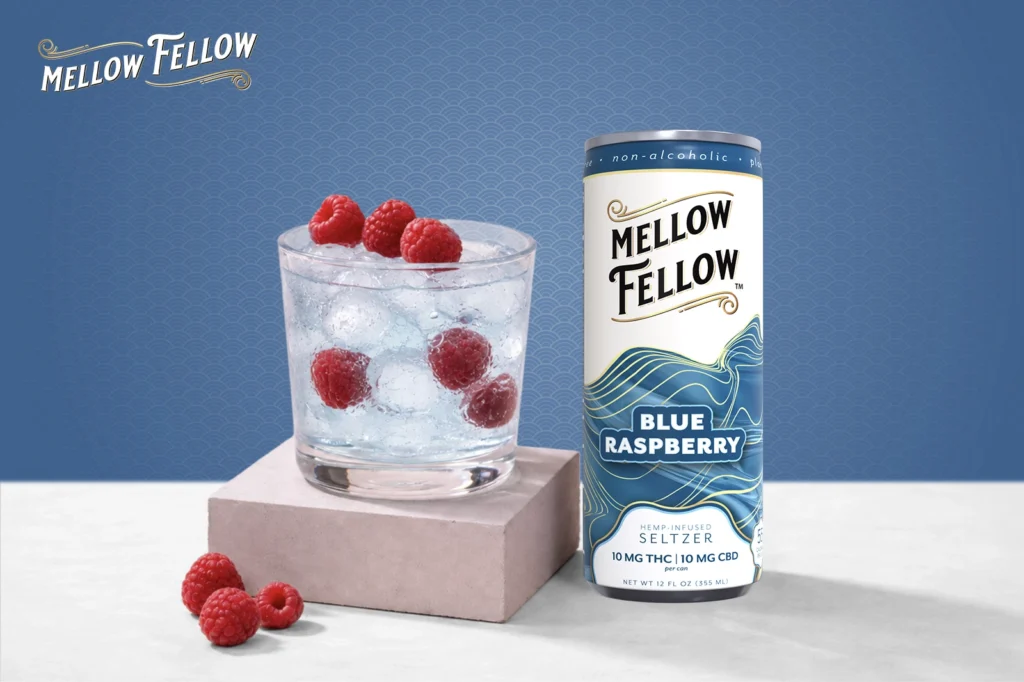
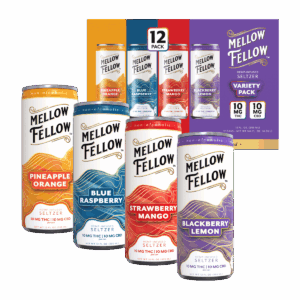
The Delta 9 THC + CBD Seltzer Beverage 20mg Variety 12 Pack is the most straightforward starting point if you’re comparing THC drinks vs. alcohol for the first time. Each can delivers 10mg Delta 9 THC paired with 10mg CBD, and the pack spans four flavors (Blackberry Lemon, Blue Raspberry, Pineapple Orange, and Strawberry Orange) so you can find a favorite before committing to a single flavor.
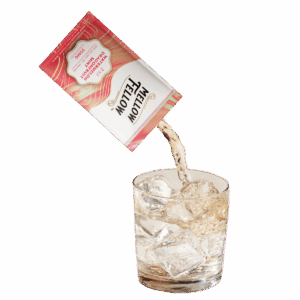
For a more flexible format, the Delta 9 + CBD & CBG Mixers in Peach Mango Lime pack 10mg Delta 9 THC, 5mg CBD, and 5mg CBG into a single-serve sachet that stirs into sparkling water, lemonade, or a mocktail base, giving you control over strength and serving size. The Watermelon Dragonfruit Mint version carries the same 10mg Delta 9 THC, 5mg CBD, 5mg CBG formulation in a cooler, mint-forward flavor profile.
Both mixer flavors fit the same use case: a hangover-free way to unwind that doesn’t require pouring a drink. You can browse the full beverage lineup to compare formats and flavors side by side, and if THC drinks end up becoming a regular part of your routine, Mellow Fellow’s drink subscription keeps your preferred flavors arriving on a set schedule instead of reordering one-off.
Choosing Between THC Drinks and Alcohol
Neither option is objectively correct for everyone. Alcohol comes with a familiar dosing culture and universal legality for adults 21 and up, but it also carries the calorie load, hangover risk, and long-term cancer risk outlined above. Hemp-derived THC drinks trade that familiarity for fewer calories, a gentler next-day recovery, and a newer product category that still has some legal variation by state and carries its own drug-testing and cardiovascular research questions.
If you’re weighing the two for a specific evening, the deciding factors usually come down to how you want to feel tomorrow, how many calories you’re tracking, whether a drug test is on the horizon, and whether hemp-derived products are treated as legal where you live. Ready to see the difference for yourself? Pick up the Delta 9 THC + CBD Seltzer Variety Pack or grab a set of mixers and build your own low-calorie, hangover-free round the next time you’re hosting.
Frequently Asked Questions
Are THC Drinks Better Than Alcohol?
It depends on your priorities. THC drinks offer fewer calories, a milder next-day recovery, and no ethanol-driven hangover, while alcohol offers more predictable dosing and nationwide legal clarity. Mellow Fellow’s deeper comparison walks through more of the trade-offs.
Do THC Drinks Cause Hangovers?
Most people report a much milder next-day experience with THC drinks than with alcohol, since THC does not go through the same ethanol-to-acetaldehyde metabolic process tied to hangover symptoms. Overconsumption can still cause grogginess or dry mouth.
Are THC Drinks Legal Everywhere?
Hemp-derived THC drinks containing 0.3% Delta 9 THC or less by dry weight are federally legal under the 2018 Farm Bill, though some states restrict or ban them outright. A pending federal rule change set for November 2026 could also shift how “hemp” is legally defined, so it’s worth checking current state and federal rules before ordering.
Can You Mix THC Drinks and Alcohol?
Combining the two is not recommended, since alcohol and THC can amplify each other’s impairing effects in ways that are hard to predict. If you choose to try both in one evening, use less of each and pace yourself carefully.
How Long Do THC Drinks Take To Kick In?
Nano-emulsified Delta 9 THC seltzers typically start working within 15 to 30 minutes, though full effects can keep building for up to an hour. This is faster than traditional THC edibles but slightly slower than the near-immediate feel of a shot of liquor.
How Many Calories Are In A THC Drink Compared To Alcohol?
Hemp-derived THC seltzers run under 30 calories per can, while a standard beer, wine, or liquor serving ranges from about 100 to 150 calories, as outlined in the calorie comparison above.
Do THC Drinks Show Up On A Drug Test?
Yes. THC drinks produce the same THC-COOH metabolite that standard drug tests screen for, regardless of how fast the drink itself takes effect. Anyone facing an upcoming drug test should treat a THC seltzer the same as any other cannabis product.
How Much THC Drink Equals One Alcoholic Drink?
There’s no exact clinical conversion, but a common social comparison puts 10mg of Delta 9 THC in the range of one standard alcoholic drink, with 20mg landing closer to two or three drinks worth of social effect.
Are THC Drinks Safe To Use Every Day?
Long-term research on daily THC drink use is still limited compared to the decades of data behind alcohol’s health risks. Some cardiovascular associations with regular cannabis use have been flagged by researchers, so treating THC drinks as an occasional choice rather than a daily habit is the more cautious approach.
Can You Take THC Drinks With Medication?
THC and CBD can interact with certain medications, and hemp-derived beverages are not evaluated by the FDA for safety or efficacy. Anyone taking prescription medication should talk with a doctor or pharmacist before adding THC drinks to their routine.
Sources
- Alcohol-Related Emergencies and Deaths in the United States
- Enhancing Cannabinoid Bioavailability: A Crossover Study Comparing a Novel Self-Nanoemulsifying Drug Delivery System and a Commercial Oil-Based Formulation
- The Role of Alcohol Metabolism in the Pathology of Alcohol Hangover
- Drug-Impaired Driving
- The 2018 Farm Bill’s Hemp Definition and Legal Challenges to State Laws Restricting Certain THC Products
- Changes to the Statutory Definition of Hemp and Issues for Congress
- Calories Consumed From Alcoholic Beverages by U.S. Adults, 2007-2010
- Alcohol and Cancer Risk: The U.S. Surgeon General’s Advisory
- Medical Marijuana, Recreational Cannabis, and Cardiovascular Health: A Scientific Statement From the American Heart Association
- Best THC Seltzer: Features, Dosage, and Effects